



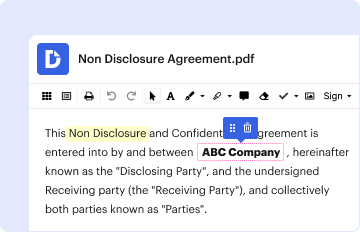
01. Edit your satisfaction of judgment letter example online
Type text, add images, blackout confidential details, add comments, highlights and more.

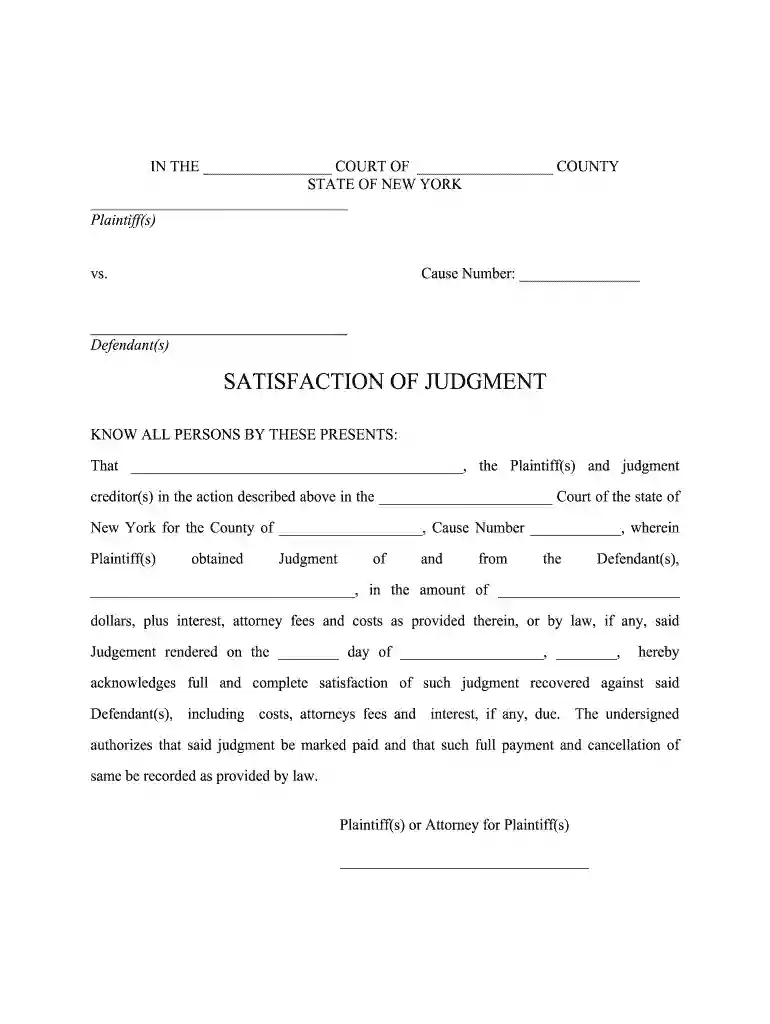
Type text, add images, blackout confidential details, add comments, highlights and more.
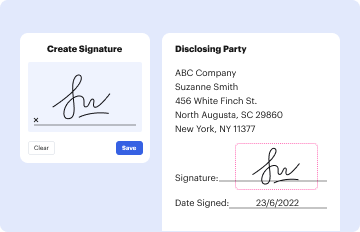
Draw your signature, type it, upload its image, or use your mobile device as a signature pad.

Send satisfaction of judgment example via email, link, or fax. You can also download it, export it or print it out.
The satisfaction judgment form is a legal document that officially indicates the fulfillment of a judgment entered against a defendant, thereby acknowledging that the creditor has received full payment of the owed amount. This form is essential for both parties involved. It protects the rights of the creditor by providing documented evidence that the debt has been satisfied, while also providing the debtor with the means to clear their name and confirm that their financial obligation has been met.
In most jurisdictions, including New York, the form typically includes sections for both the creditor and the debtor to confirm their identities, notarization, and instructions for filing with the appropriate court. Completing this form is vital for restoring the debtor's creditworthiness, as it serves as a formal release of the judgment and informs relevant parties that there is no further legal claim against the debtor regarding that specific judgment.
Using the satisfaction judgment form involves a series of steps that require attention to detail to ensure compliance with legal requirements. The process begins with obtaining the form, typically from the court or legal resources. Once obtained, it needs to be filled out accurately, outlining details such as the case number, names of the parties involved, and confirmation of payment received.
After completing the form, it must be signed by the creditor, notarized, and sent to the court where the original judgment was filed. This informs the court of the satisfied debt and initiates its removal from the public record.
Completing the satisfaction judgment form accurately is crucial for its acceptance by the court.
Once the form is submitted, it is important to follow up with the court to confirm it has been accepted and processed, which will ultimately update the public record.
The satisfaction judgment form has significant legal implications that ensure the formal acknowledgment of a debt being paid. In the United States, under the Uniform Commercial Code (UCC) and various state laws, the completion and filing of this form help prevent further legal actions by confirming the discharge of financial obligations.
A thorough understanding of the key elements of the satisfaction judgment form is essential for its proper use.
Practical examples can help illustrate how the satisfaction judgment form is applied in real-world scenarios.
Consider a scenario where a creditor sues a debtor for an unpaid loan. After the debtor pays the owed amount, the creditor fills out the satisfaction judgment form to document that the debt has been paid. This form is then filed with the court to update the debtor's legal status, ensuring that no further action can be taken against them concerning that debt.
This structured, detailed approach to understanding the satisfaction judgment form ensures clarity and compliance, highlighting its importance in legal and personal finance contexts.
At DocHub, your data security is our priority. We follow HIPAA, SOC2, GDPR, and other standards, so you can work on your documents with confidence.
Tells the court and others that a judgment has been paid in full or in part. Can be recorded with a county to release a lien against the judgment debtors land.Read more
A satisfaction of judgment is a document signed by a judgment creditor and generally filed with the court, indicating that a judgment has been paid in full.Read more


