
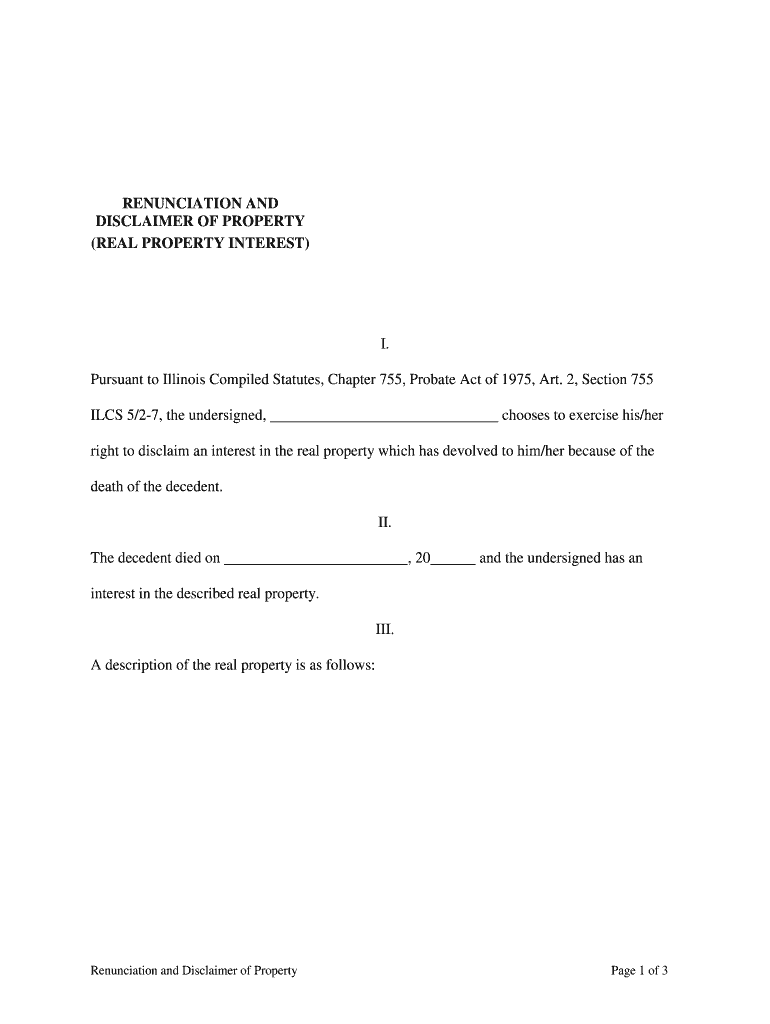







Definition and Purpose of the Disclaimer of Interest Form
A disclaimer of interest form is a legal document that allows an individual to formally refuse any claim to property or assets they have inherited. This form is particularly vital for ensuring that the property in question will pass to other intended heirs as if the disclaiming party had predeceased the deceased individual. The overarching purpose of this form is to clarify the intent of the heir to renounce their interest, thereby preventing potential disputes among heirs after the passing of a loved one.
This form is typically used in cases involving estates with real property, financial assets, or other inheritances. Various jurisdictions in the United States, including states like California, Texas, and Florida, have specific disclaimer of interest forms, often customized to meet local legal requirements. By using the form, potential heirs can clearly communicate their decision to decline the inheritance, facilitating the smoother transfer of assets and minimizing the risk of conflict.
Legal Context of the Disclaimer of Interest Form
-
State-Specific Regulations: Each state has its laws governing inheritance and property transfers. For instance, the Texas disclaimer of interest form has particular stipulations as set forth by Texas law, while California has its own requirements that must be met for the disclaimer to be valid.
-
Tax Implications: The rejection of an inheritance can also have tax consequences, particularly concerning capital gains or estate taxes. It is crucial for individuals considering this form to consult with a tax professional to understand the implications of their decision.
How to Complete a Disclaimer of Interest Form
Filling out a disclaimer of interest form correctly is essential to ensure that your renunciation is legally binding. It typically involves several key steps:
-
Obtain the Correct Form: Begin by acquiring the appropriate disclaimer of interest form for your state. This form can usually be downloaded in PDF format from legal websites or local government resources.
-
Provide Personal Information: Fill in your personal details, including your name, address, and relationship to the deceased. This information is critical for establishing your connection to the estate.
-
Specify the Property: Clearly define what property or assets you are disclaiming, typically with sufficient detail to identify the specific interests you are renouncing.
-
State Your Intent: Include a statement expressing your intention to decline the interest, clarifying that by doing so, the property will pass to other heirs as per the relevant state laws.
-
Signature and Notarization: Finally, sign the document in the presence of a notary public. Many states require a notary's acknowledgment to authenticate the document, adding a layer of legal validity.
Important Considerations
-
Time Limits: In many states, disclaimers must be filed within a specific time frame after the death of the property owner. It is crucial to be aware of these deadlines to ensure the disclaimer is effective.
-
Legal Advice: Consulting with an attorney who specializes in estate law can provide additional guidance to navigate any complexities involved, ensuring compliance with state laws.
Common Scenarios for Using the Disclaimer of Interest Form
Utilization of a disclaimer of interest form can arise in various contexts. Understanding these common scenarios can help individuals evaluate their options:
-
Multiple Heirs: When a decedent leaves behind multiple heirs, one heir may decide to disclaim their interest to simplify the distribution of property and reduce the likelihood of family disputes over inheritance.
-
Financial Burdens: An heir might choose to renounce their claim to avoid potential financial liabilities associated with the property, such as maintenance costs, taxes, or debts linked to the estate.
-
Intent to Benefit Other Heirs: Sometimes, individuals may wish to ensure that their share of the inheritance directly benefits other specific heirs, such as children or grandchildren, rather than being divided among all heirs.
Example Scenarios
-
Example 1: In a case where siblings inherit a family home, one sibling may disclaim their interest to allow the remaining siblings to manage the property's upkeep without the need for consensus.
-
Example 2: An heir inherits a stock portfolio that they believe will incur a large tax liability upon transfer. They may choose to disclaim their interest to alleviate the burden on their family.
Key Elements of the Disclaimer of Interest Form
Understanding the essential elements included in a disclaimer of interest form is vital for anyone considering using this document. The form typically contains the following key components:
-
Title of Document: Clearly states that the document is a disclaimer of interest.
-
Decedent’s Information: Identifies the deceased individual, including full name and date of death.
-
Disclaiming Party’s Information: Includes the name, address, and relationship of the person disclaiming the inheritance.
-
Detailed Description of Property or Interest: Specifies the property, assets, or interests being renounced to prevent any ambiguity about what is being disclaimed.
-
Date of Disclaimer: The effective date on which the disclaimer is executed.
-
Signature Lines: Spaces for the disclaiming party's signature and additional legal acknowledgments, including witness signatures if required by state law.
Examples of Disclaimer Language
Many disclaimer of interest forms will contain standard legal language, such as:
-
"I hereby disclaim all rights, title, and interest in the property described herein, effective immediately."
-
"This disclaimer shall be construed in accordance with the laws of the domicile state of the decedent."
Electronic vs. Paper Versions of the Disclaimer of Interest Form
In today’s digital age, understanding the differences between electronic and paper versions of a disclaimer of interest form can influence how individuals choose to submit their documents:
-
Paper Form Submission: Traditional paper forms are physically printed, filled out, and then mailed or delivered to the relevant estate executor or court. This method may require notarization, depending on state laws.
-
Electronic Submission: Many jurisdictions now allow for electronic filing of a disclaimer of interest form. Users can fill out and submit the form securely online, streamlining the process. It is essential to confirm that the electronic version is compliant with legal standards in the applicable state.
Benefits of Electronic Submission
-
Speed: Electronic submissions are generally processed faster, which can be critical when deadlines are involved.
-
Convenience: Individuals can fill out and submit forms from anywhere, eliminating the need for physical travel and mailing delays.
-
Trackability: Online submissions often provide tracking features, allowing users to confirm receipt and monitor any actions taken on their disclaimer.
Common Variants of the Disclaimer of Interest Form
Given the varying requirements across states, the disclaimer of interest form may have several variants, each tailored to specific legal jurisdictions or circumstances:
-
State-Specific Forms: Different states may form their own disclaimer of interest templates, such as the Florida disclaimer of interest form or the California version. It is crucial to use the correct template for your state to ensure compliance.
-
Templates for Different Situations: Individuals may find templates specifically designed for different scenarios, such as disclaiming an interest in life insurance policy proceeds or real property inherited through intestate succession.
Importance of Template Validity
-
Legal Enforceability: Using an official state-specific form ensures the disclaimer meets legal standards and is likely to be honored by the estate's executor and within the court system.
-
Clarity and Comprehensiveness: Official templates often guide users on necessary language and details, enhancing the completeness and clarity of the disclaimer.




