




01. Edit your default judgement form online
Type text, add images, blackout confidential details, add comments, highlights and more.

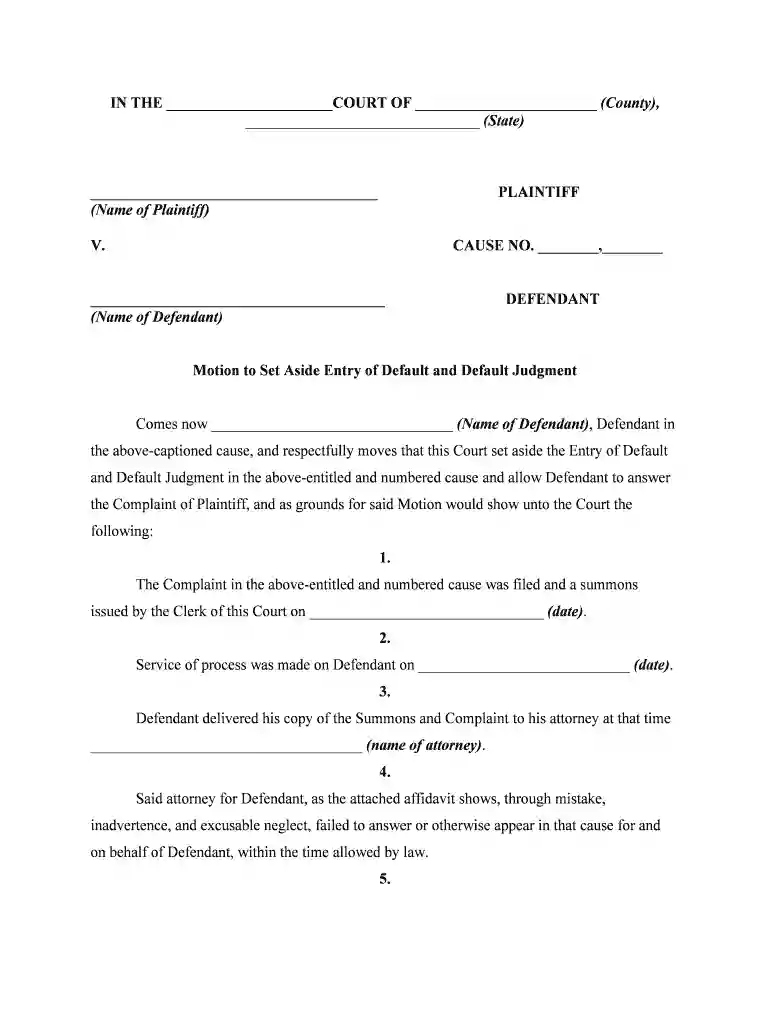
Type text, add images, blackout confidential details, add comments, highlights and more.

Draw your signature, type it, upload its image, or use your mobile device as a signature pad.

Send what is default judgement via email, link, or fax. You can also download it, export it or print it out.
Default judgment occurs when a court makes a decision in favor of one party due to theother party's failure to respond or appear in court. This typically happens in civil cases where the defendant does not file a response to a complaint within the stipulated time. Understanding the implications and the process surrounding default judgment is crucial for both plaintiffs and defendants.
A default judgment is a legal ruling issued by a court when one party does not respond to a lawsuit. It serves as a critical mechanism that upholds the efficiency of judicial processes. The plaintiff can request a default judgment after the defendant has failed to submit a response within the required timeframe, usually 20 to 30 days after being served with the complaint.
Default judgments can be classified into two main types based on the nature of the relief sought:
A motion for default judgment is a formal request made by the plaintiff to the court. This includes several vital components:
The implications of a default judgment can be significant for the defendant:
Defendants may have the option to appeal a default judgment if they believe there are valid grounds to do so. The appeal process generally requires:
Consider a situation where a landlord files for eviction against a tenant for non-payment of rent. If the tenant fails to respond to the eviction notice within the legally required time, the landlord can secure a default judgment that allows for eviction without further contestation. The tenant, in this case, would miss the chance to argue their side, potentially facing immediate eviction and financial penalties.
Various forms are necessary when involved in the default judgment processes, including:
Default judgments play a crucial role in maintaining judicial efficiency but also present significant risks for defendants who may unintentionally overlook their legal obligations. Awareness of how these judgments function, their implications, and the appeal processes associated is essential for all parties involved.
Managing your documentation with DocHub this way is very easy after you have downloaded its extension for Google Chrome. Navigate to the Chrome Web Store and install DocHub - Sign PDF from Gmail to get it. Give our tool access to your Google account, and then open an email with the default judgment example attached and point to the file with your cursor - the DocHub extension button will automatically appear there. Click on it to open your file in our editor. Make any required modifications, fill out the blanks, and click Sign to create your legally-binding electronic signature.
Document editing with DocHub is equally convenient on desktop and mobile devices. You only need an internet browser to revise your default judgement example on Android. Open our website and sign in to access the instruments you need. Add your document and introduce your intended changes. After that, you can keep your form in your document storage or send it out instantly.
At DocHub, your data security is our priority. We follow HIPAA, SOC2, GDPR, and other standards, so you can work on your documents with confidence.
A default judgment (also known as judgment by default) is a ruling granted by a judge or court in favor of a plaintiff in the event that the defendant in aRead more
Default Judgement. English. Audio file. A judgment awarding a plaintiff the relief sought in the complaint because the defendant has failed to appear in courtRead more
(a) The court may enter a default judgment in the following situations: (1) If a defendant fails to either appear or file a written answer on or before the timeRead more


