






Definition and Meaning of the Contract to Purchase Real Estate 501
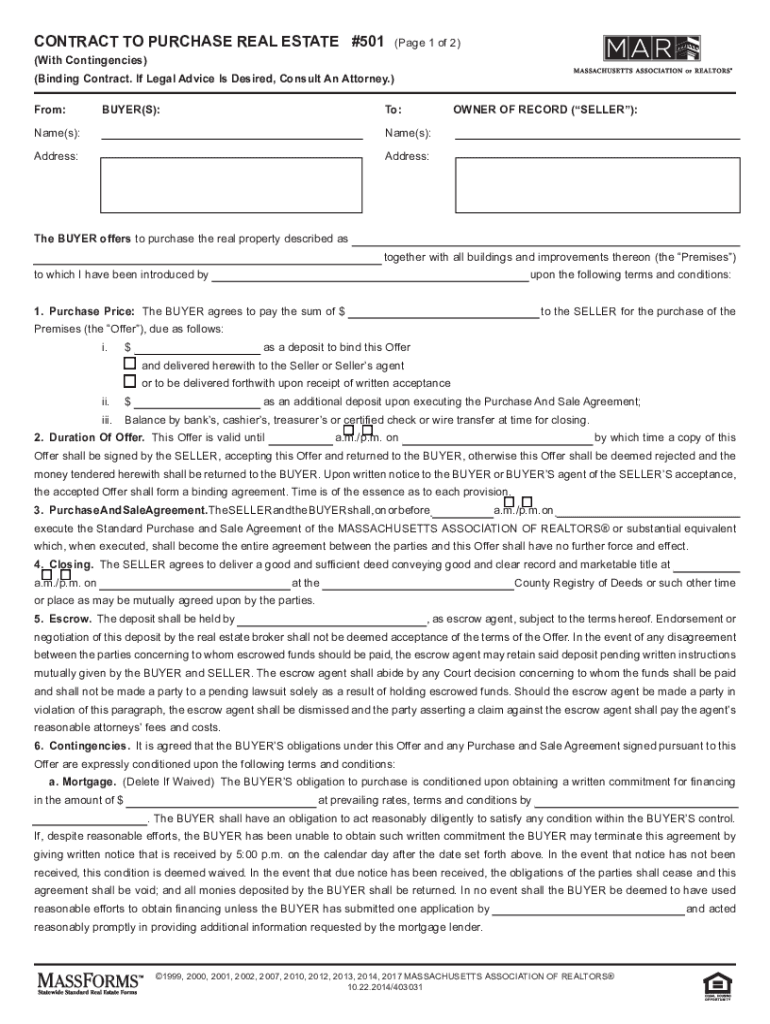
The contract to purchase real estate 501 serves as a binding legal document between a buyer and a seller in real estate transactions, primarily focused on defining the terms under which a property will be sold. It outlines critical components such as the purchase price, closing date, and any contingencies that may affect the completion of the transaction. This form is essential in real estate transactions, ensuring clarity and legal enforceability of the agreement between both parties involved.
Core Components of the Contract
- Purchase Price: Specifies the amount the buyer agrees to pay for the property.
- Contingencies: Details conditions that must be met for the sale to proceed, such as financing, home inspections, or the sale of another property.
- Closing Date: Indicates when the transaction will be finalized, and the buyer will take possession.
- Obligations: Sets forth the duties of both the buyer and seller, ensuring that both parties understand their responsibilities leading up to the closing date.
The clarity provided by the contract to purchase real estate 501 is vital for mitigating disputes that may arise during the sale process. It serves both as a protection mechanism for the seller and a guarantee for the buyer regarding the security of their investment.
Key Elements of the Contract to Purchase Real Estate 501
Understanding the key elements of this contract is crucial for both buyers and sellers in a real estate transaction. Essential elements include:
- Property Description: A clear legal description of the property being sold, including its address and any distinguishing features.
- Financing Terms: Specifications on how the buyer intends to finance the purchase, which may include the type of mortgage or payment schedule.
- Disclosure Requirements: Information that the seller must provide concerning the property's condition, including any known defects or issues.
- Default Clauses: Conditions outlining what happens if either party fails to adhere to the agreed terms, including potential forfeiture of deposits or legal actions.
Each of these elements must be carefully considered and clearly articulated within the contract to ensure both parties are in agreement and protected.
Important Terms Related to Contract to Purchase Real Estate 501
Familiarity with specific terms related to the contract is essential for comprehension and navigation of the real estate transaction process:
- Offer to Purchase: A preliminary step in the buying process where the buyer indicates their willingness to buy the property under specified conditions.
- Earnest Money: A deposit made by the buyer as a show of good faith that their offer is serious, typically applied towards the purchase price at closing.
- Escrow: A process by which a third party temporarily holds funds or documents until conditions of the sale are met.
- Inspection Contingency: A provision allowing the buyer to conduct inspections to ensure the property meets certain standards before finalizing the purchase.
Understanding these terms helps buyers and sellers communicate effectively and ensures all parties are aware of their rights and responsibilities.
Steps to Complete the Contract to Purchase Real Estate 501
Completing the contract involves several key steps, each requiring attention to detail and clear communication between the involved parties:
- Initial Offer: The buyer presents an offer that includes the terms and conditions they wish to negotiate.
- Review and Counteroffer: The seller reviews the offer and may present a counteroffer with modified terms.
- Mutual Agreement: Once both parties agree on the terms, they will finalize the contract by signing it.
- Due Diligence: The buyer conducts any necessary inspections and secures financing according to the agreed terms.
- Closing: Upon satisfying all conditions, both parties execute the final documents, and the transaction is completed.
Each of these steps requires careful consideration and documentation to facilitate a smooth transaction.
Legal Use of the Contract to Purchase Real Estate 501
The contract to purchase real estate 501 has distinct legal implications that vary by state but uniformly encompass certain core principles:
- Legally Binding Agreement: Once signed by both parties, it forms a binding contract enforceable in court.
- Disclosure Requirements: Both parties are often required to disclose specific material facts about the property, especially concerning its condition and legality.
- Contingencies and Obligations: These are enforceable by law and must be adhered to unless renegotiated by the parties.
Understanding the legal weight of this contract is crucial, as failure to comply with any stipulated terms can lead to legal ramifications, including potential lawsuits or damages.