Type text, add images, blackout confidential details, add comments, highlights and more.
02. Sign it in a few clicks
Draw your signature, type it, upload its image, or use your mobile device as a signature pad.
03. Share your form with others
Send it via email, link, or fax. You can also download it, export it or print it out.
How to use or fill out form f656 with our platform
Ease of Setup
DocHub User Ratings on G2
Ease of Use
DocHub User Ratings on G2
Click ‘Get Form’ to open it in the editor.
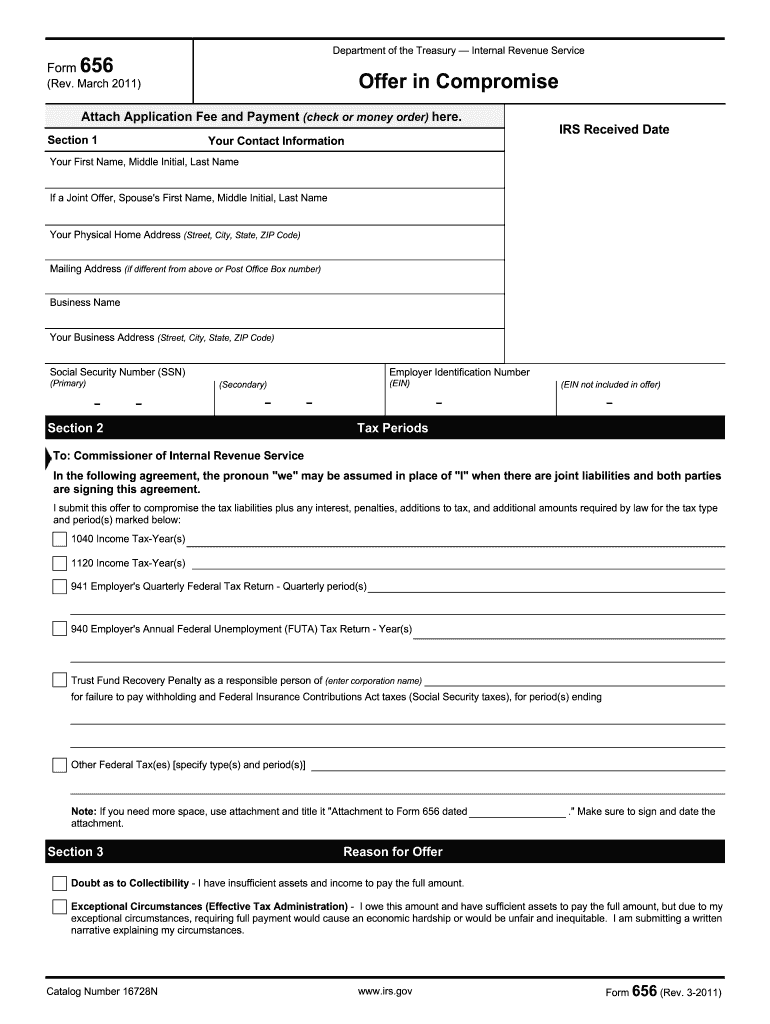
Begin with Section 1, where you will enter your contact information. Fill in your name, address, and Social Security Number (SSN). If applicable, include your spouse's details for a joint offer.
In Section 2, specify the tax periods for which you are submitting the offer. Clearly mark the relevant tax types and years.
Proceed to Section 3 to explain your reason for the offer. Choose between 'Doubt as to Collectibility' or 'Exceptional Circumstances' and provide a detailed narrative if necessary.
In Section 4, check if you qualify for Low-Income Certification based on your household income. This may exempt you from making payments during consideration of your offer.
Complete Section 5 by entering your offer amount and selecting a payment option that suits your financial situation.
Finally, review all sections for accuracy before signing in Section 9. Ensure all required documents are attached before submission.
Start using our platform today to simplify filling out form f656 for free!
IRS Form 656-B, offer in Compromise PDFForm f656 instructionsForm f656 pdfIRS Form 656 PDFIRS Form 656-B PDF download freeForm f656 2022Form 656, offer in CompromiseIRS forgiveness Form PDF
Security and compliance
At DocHub, your data security is our priority. We follow HIPAA, SOC2, GDPR, and other standards, so you can work on your documents with confidence.
Meets ASTM F-656. Clear cleaner for use on ABS, PVC and CPVC Excellent soldering flux, in paste form, for joining copper to copper copper to brass.Read more
The attached Form 656 is not a stand-alone form and is intended for tax professional use only. Individuals requesting consideration of an offer must useRead more
Cookie consent notice
This site uses cookies to enhance site navigation and personalize your experience.
By using this site you agree to our use of cookies as described in our Privacy Notice.
You can modify your selections by visiting our Cookie and Advertising Notice.