







Definition and Meaning of Separation Certificates
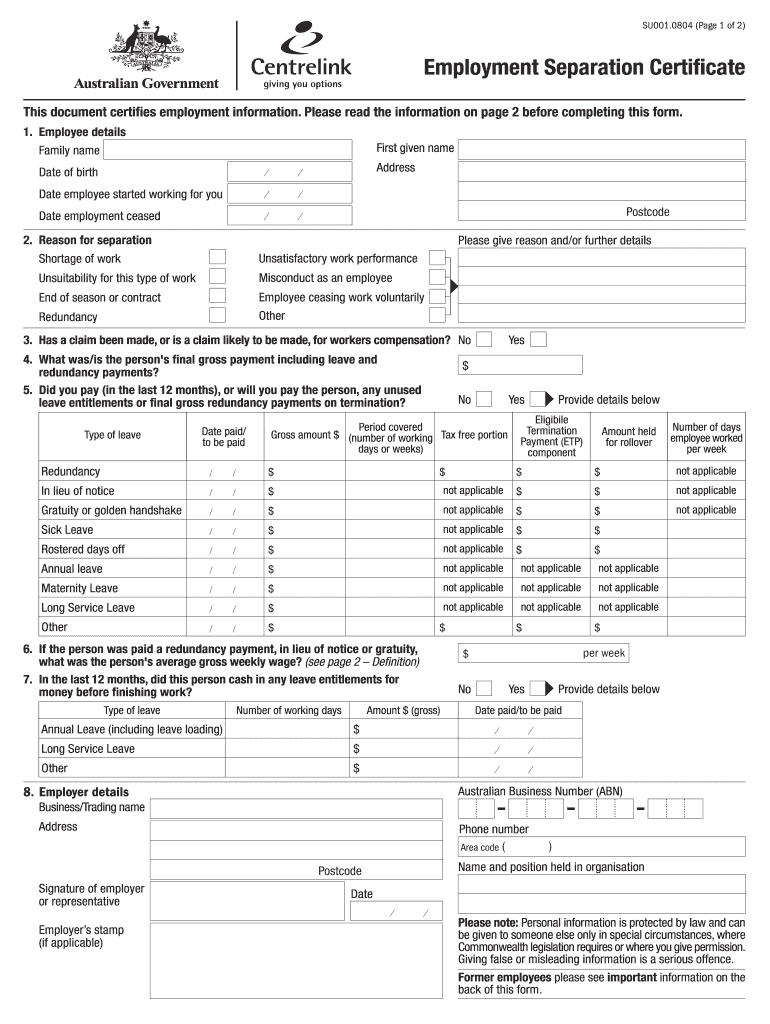
Separation certificates are official documents used to certify the employment details of individuals who have ceased working. These certificates typically contain vital information such as the employee's work history, reasons for leaving, details of any final payments, and employer identification. In the United States, while the specific contents can vary by employer and state, the primary purpose is to provide documentation for former employees seeking unemployment benefits or other financial assistance. Employers must ensure that the information is accurate and comprehensive to support the future financial needs of the employee.
Significance in Claiming Benefits
When former employees apply for financial support like unemployment benefits, separation certificates can play a crucial role. This document provides a structured report of employment history and termination details necessary for agencies like the Department of Labor or state-specific unemployment offices. By having accurate details about an employee's work history and termination reasons, authorities can more efficiently process claims and determine eligibility for benefits.
How to Use Separation Certificates
Separation certificates are used primarily by employees and state agencies. For employees, presenting the separation certificate to the relevant unemployment office or support agency is often required to begin processing claims for unemployment benefits. Additionally, it can assist employees in resolving any disputes about employment termination details or final payout calculations. Employers are tasked with accurately filling out the certificates and providing them promptly to the departing employees.
Employee Action Steps
- Obtain the Certificate: Upon employment termination, request your separation certificate from your former employer.
- Review the Details: Ensure that all personal and employment details listed are accurate.
- File with Relevant Authorities: Submit the certificate to the appropriate unemployment office or agency managing income support benefits.
How to Obtain Separation Certificates
Obtaining a separation certificate involves a straightforward process. Typically, an employer is responsible for issuing this document upon termination of employment. Employees may need to formally request the certificate from their human resources department if it is not automatically provided.
Employer Procedures
Employers should prepare and issue separation certificates immediately following an employee’s exit. This involves recording precise employment details and accurately noting reasons for separation to prevent any disruptions or misunderstandings.
Employee Guidelines
- Formal Request: If a certificate isn’t immediately provided, contact the HR department to formally request it.
- Follow Up: If there are delays, follow up to ensure timely completion of the request.
Steps to Complete the Separation Certificates
Completing a separation certificate involves several careful steps, usually taken by the employer:
- Gather Employee Information: Ensure all personal and employment details are current and accurate.
- Detail Reason for Separation: Clearly specify reasons for termination or resignation.
- Calculate Final Payments: Include details of last payments, including severance, if applicable.
- Review and Accuracy Check: Double-check all entered data for accuracy and completeness.
- Distribute to Employee: Provide the employee with the original certificate and keep a copy for company records.
Key Elements of the Separation Certificates
A typical separation certificate includes several key components, which are essential for both employers and employees:
- Personal Information: Full name, address, and contact information of the former employee.
- Employment History: Dates of employment, job role/position, and department.
- Separation Details: Clear explanation of the reason for termination.
- Last Payment Information: Details about final wages and any other payouts.
- Employer Details: Contact name, address, and signature of HR or relevant department head.
Who Typically Uses Separation Certificates
Separation certificates are primarily used by former employees seeking unemployment benefits. However, various stakeholders rely on these documents:
- State Agencies: For assessing and processing unemployment claims.
- Legal Advisors: To assist in resolving disputes regarding employment termination.
- Employers: For maintaining accurate records of former employees and compliance.
Use Cases
- Unemployed Individuals: To provide proof of employment and termination for benefit claims.
- Employment Lawyers: In cases of disputed employment termination claims.
Important Terms Related to Separation Certificates
Understanding terminology associated with separation certificates is crucial for accurate comprehension:
- Severance Pay: Compensation paid to an employee upon termination, which may affect unemployment benefits.
- Termination Date: The last date of employment, crucial for claiming deadlines.
- Employment Verification: A process where previous employment details are confirmed.
Variances and Exceptions
In some states, specific terms might have nuanced interpretations, impacting how separation certificates are utilized.
Legal Use of Separation Certificates
Separation certificates serve as vital legal documents in employment and unemployment benefit contexts. Their legal importance extends to compliance verification and ensuring that terminated employees receive entitled benefits.
Legal Implications
- Employer Compliance: Mandatory in many states for confirming employment termination.
- Dispute Resolution: Used as evidence in legal proceedings regarding wrongful termination or discrepancies in final payment.
Understanding the legal nuances of separation certificates ensures that organizations and individuals use them correctly to avoid potential legal challenges or delays in benefit processing.




