Trust amendment form 2026

Get Form
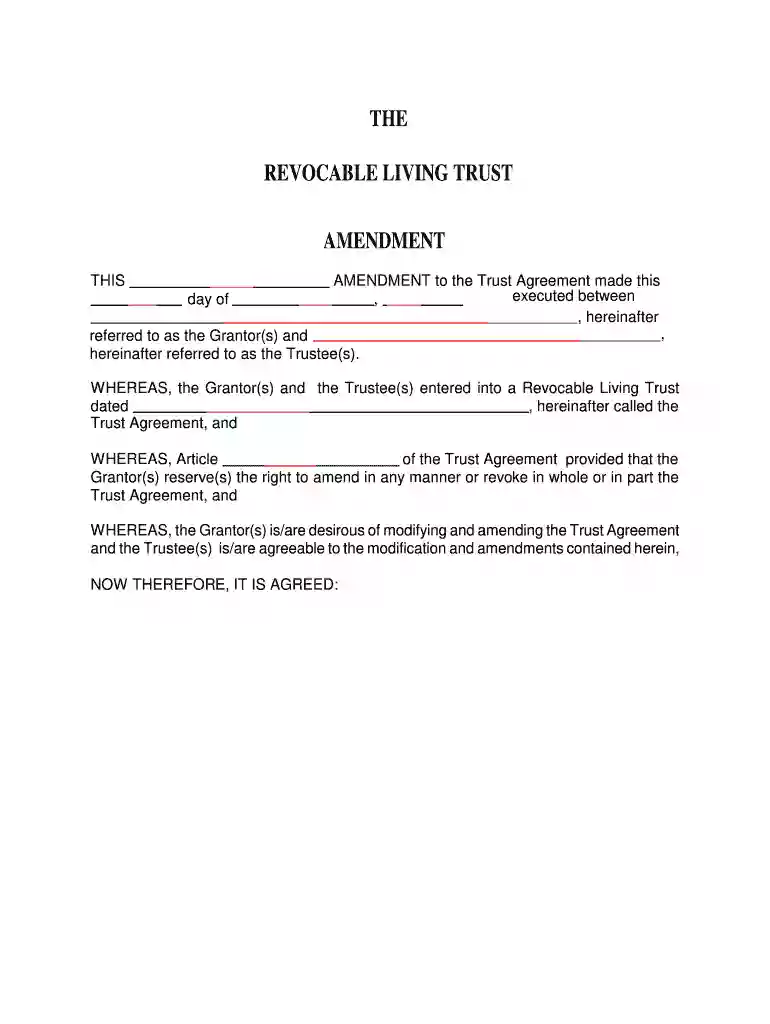
form to amend a living trust Preview on Page 1

Here's how it works

01. Edit your form to amend a living trust online
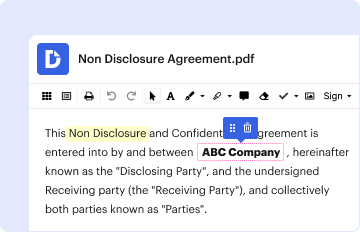
Type text, add images, blackout confidential details, add comments, highlights and more.

02. Sign it in a few clicks
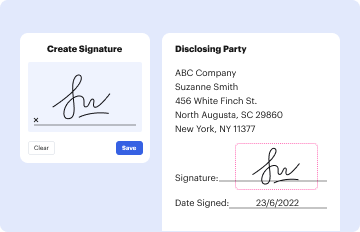
Draw your signature, type it, upload its image, or use your mobile device as a signature pad.

03. Share your form with others
Send sample amendment to trust agreement via email, link, or fax. You can also download it, export it or print it out.

Understanding the Trust Amendment Form

The trust amendment form is a legal document that facilitates changes to the terms of an existing trust. Typically used for revocable living trusts, this form allows the grantor to modify terms relating to trustees, beneficiaries, or asset distribution. Amendments must be in writing and signed by both the grantors and trustees to ensure legal standing. This process empowers trust creators to adapt the trust to reflect changing circumstances or wishes, serving as a vital tool for maintaining an up-to-date estate plan.

Key Elements of the Trust Amendment Form

  • Identification of the Original Trust: Each amendment must clearly reference the original trust document, including the date of its establishment, to avoid ambiguity.
  • Details of the Amendment: Clearly specify what is being altered, whether it’s the appointment of new trustees, changes in beneficiary designations, or asset distributions.
  • Signatures: The amendment must be signed by the trust grantor and may require the trustee's signature. Depending on state laws, it might also need to be notarized to verify authenticity.
  • Date of Effectiveness: Amendments should include the date when the changes will take effect, ensuring clear communication and implementation.

How to Use the Trust Amendment Form

Proper usage of the trust amendment form involves several methodical steps:

  1. Review the Original Trust: Begin by thoroughly reviewing the original trust document to identify clauses intended for amendment.
  2. Draft the Amendment: Explicitly state the modifications. Each change should be detailed and aligned with the original trust terms for seamless integration.
  3. Legal Consultation: Engage a legal professional to review the amendment for compliance with state-specific legislation.
  4. Execute the Amendment: Upon finalizing the document, collect all required signatures. Witnesses or notarization might be necessary depending on jurisdictional requirements.
  5. Distribute Copies: Once executed, distribute copies to all involved parties, ensuring that everyone affected by the changes is informed.

Legal Use and Significance of the Trust Amendment Form

The trust amendment form offers a flexible mechanism to alter irrevocable aspects of a trust legally. These changes must comply with legal standards to ensure that the amended trust document is enforceable. The amendment form plays a crucial role in estate planning by providing an adaptive capacity to trust structures, preserving the trust’s alignment with its creator's current intentions and the beneficiaries' needs.

State-Specific Rules for the Trust Amendment Form

Each state has unique statutes governing trust amendments, impacting their execution, witnessing, and notarization requirements:

  • California: Requires amendments to be in writing, signed, and sometimes notarized.
  • New York: While oral amendments are possible for revocable trusts, documentation and signatures strengthen legality.
  • Texas: Demands written amendments with strict adherence to the original trust terms and statutory guidelines.

Understanding and adhering to these state-specific protocols ensures the legal effectiveness of trust amendments.

Examples of Using the Trust Amendment Form

Practical applications of the trust amendment form include:

  • Adding Beneficiaries: When new family members, like children or grandchildren, are to be included as beneficiaries.
  • Changing Trustees: Adjustments can be made if trustees are no longer able or suitable to manage the trust.
  • Revising Distribution Terms: Altering how and when beneficiaries will receive their inheritance, often citing changes in financial or personal circumstances.

These examples highlight the form's ability to address dynamic family and financial situations efficiently.

Required Documents for Filing a Trust Amendment

Compiling the necessary documentation is crucial for the successful filing of a trust amendment:

  • Original Trust Document: This is needed for reference and to detail the changes accurately.
  • Amendment Document: The complete drafted amendment ready for execution.
  • Identification: Valid identification for the grantor and trustees involved in the amendment process.
  • Notarization Credentials: If required by state law, obtaining notarization confirms the authenticity of the signatures.

Organizing these documents beforehand streamlines the amendment process.

Form Submission Methods (Online / Mail / In-Person)

Depending on the jurisdiction and the trust establishment, different submission methods may apply:

  • In-Person: Directly submit to relevant financial institutions or attorneys managing the trust.
  • Mail: Securely sending copies of the amendment and additional required documents via mail.
  • Online Platforms: Some jurisdictions or trust management services allow electronic submissions through secure portals.

Choosing the appropriate submission method ensures proper acknowledgment and processing of the amendment.

Differences Between Digital and Paper Versions

The choice between digital and paper forms can influence ease of use and record-keeping:

  • Digital Versions: These often provide convenience, ease of access, and secure electronic storage options. They also facilitate quick distribution among parties.
  • Paper Versions: Traditionally used for formal processes, providing a tactile sense of authenticity and security, particularly for those less comfortable with digital formats.

Evaluating the suitability of each version depends on personal preference, technological access, and legal advice.

Who Typically Uses the Trust Amendment Form

The trust amendment form serves a wide range of individuals and entities:

  • Estate Planners: Professionals helping clients update their estate plans to reflect life changes.
  • Attorneys: Legal representatives ensuring amendments comply with legislative requirements.
  • Individuals: Trust grantors wishing to modify trust terms following significant personal circumstances.

These users rely on the form to maintain legally compliant and up-to-date trust documents.

decoration image ratings of Dochub
be ready to get more

Complete this form in 5 minutes or less

Get form

Security and compliance

At DocHub, your data security is our priority. We follow HIPAA, SOC2, GDPR, and other standards, so you can work on your documents with confidence.

Learn more
ccpa2
pci-dss
gdpr-compliance
hipaa
soc-compliance
be ready to get more

Complete this form in 5 minutes or less

Get form