




01. Edit your proxy vote form online
Type text, add images, blackout confidential details, add comments, highlights and more.

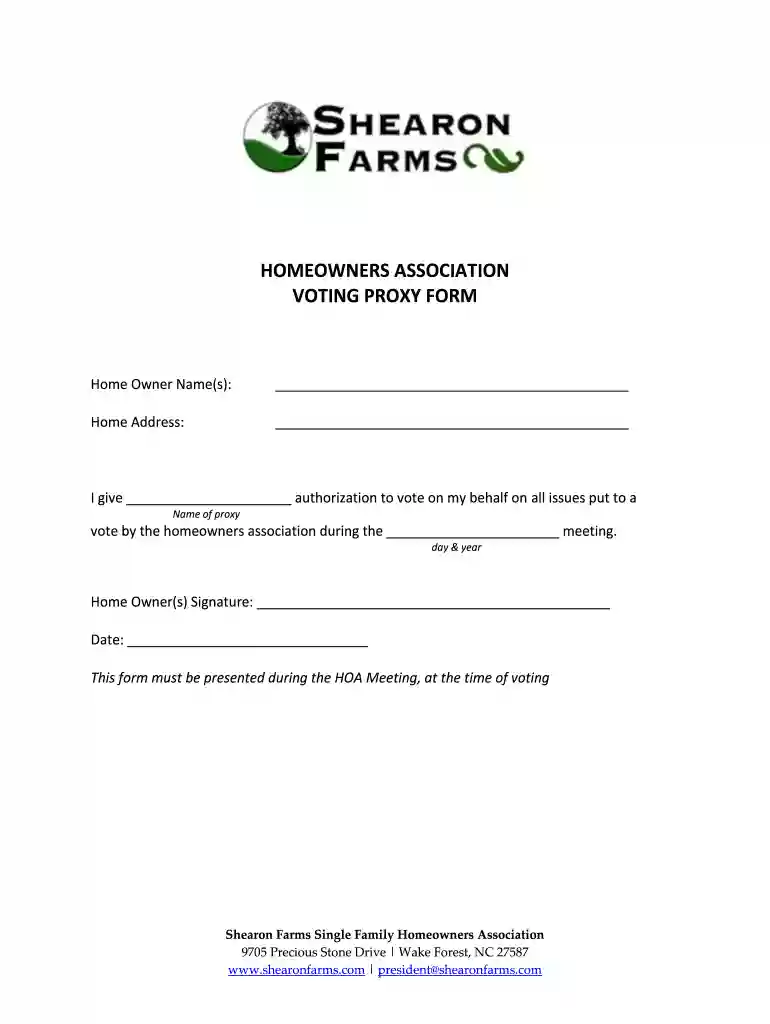
Type text, add images, blackout confidential details, add comments, highlights and more.

Draw your signature, type it, upload its image, or use your mobile device as a signature pad.

Send proxy voting form via email, link, or fax. You can also download it, export it or print it out.
A voting proxy form is a legal document that allows individuals to authorize another person to vote on their behalf during an official meeting, such as those held by homeowner associations (HOAs) or corporate shareholders. This is particularly useful when the original voter cannot attend the meeting in person but still wishes to have a say in the decision-making process.
The structure of a voting proxy form typically includes several essential elements:
These components ensure that the form is properly filled out and legally binding for the intended purpose.
Completing a voting proxy form involves several careful steps:
Gather Necessary Information: Collect all required details, including personal information for both the appointer and proxy holder. Ensure you have the specifics regarding the meeting (date, time, location).
Fill Out the Form Accurately: Begin entering the appointing party’s details, followed by the proxy holder’s information. Be diligent about spelling names correctly and providing accurate contact information.
Specify Voting Instructions: Detail how decisions should be made. You may specify issues to be voted on and provide guidelines on supporting or opposing resolutions.
Signature Collection: Ensure that the appointing party signs the document. Depending on regulations, the proxy holder may also be required to sign.
Submission: Submit the completed form according to the procedures set by the governing body—this might include emailing, mailing, or delivering it in person.
Using a voting proxy form comes with legal implications, which vary by state, so it’s crucial to familiarize oneself with relevant laws. Here are several critical factors to consider:
Legitimacy: Ensure that the voting proxy form complies with state laws regarding proxy voting, particularly for HOAs or corporate meetings.
Expiration: Understand the duration for which the proxy is valid. Some proxy votes are limited to a single meeting, while others might cover a specified time period or multiple meetings.
Revocation: The appointing party has the right to revoke the proxy at any time. This should be communicated in writing.
There are various forms of voting proxy documents that may serve specific purposes:
Voting proxy forms are commonly used in various settings:
Homeowner Associations (HOA): Members who cannot attend meetings can authorize a fellow community member to vote on issues affecting the property, such as budget approvals or rule changes.
Corporate Shareholder Meetings: Shareholders can appoint another individual, such as a trusted colleague, to vote on their behalf regarding corporate governance matters.
Non-Profit Organizations: Members of these groups may use voting proxies to ensure their opinions are represented even if they do not attend meetings.
By understanding these facets of voting proxy forms, individuals can participate in governance processes effectively, even in their absence.
Sure, a typed name is accepted as a legitimate electronic signature when you create it on your form using a compliant solution like DocHub. Simply upload your simple proxy form template to our editor, click Sign in the top tool pane → Create your signature → Type your name in the appropriate tab, and select how it will look on your document.
As a comprehensive document modifying platform, DocHub is available on mobile devices. Open DocHub in your choice of mobile browser and employ our intelligent mobile-friendly toolset to fill out your proxy vote template.
At DocHub, your data security is our priority. We follow HIPAA, SOC2, GDPR, and other standards, so you can work on your documents with confidence.
Mar 26, 2021 I/We herewith issue a proxy to the following bank/association of shareholders/other intermediary and instruct it to vote in accordance with theRead more
PROXY FORM: FOR VOTING MEMBERS ONLY. FSA BOARD OF DIRECTORS. [Voting Board members are requested to complete this section only if they are not attending theRead more


