




Definition and Meaning of a California Utility Bill Template
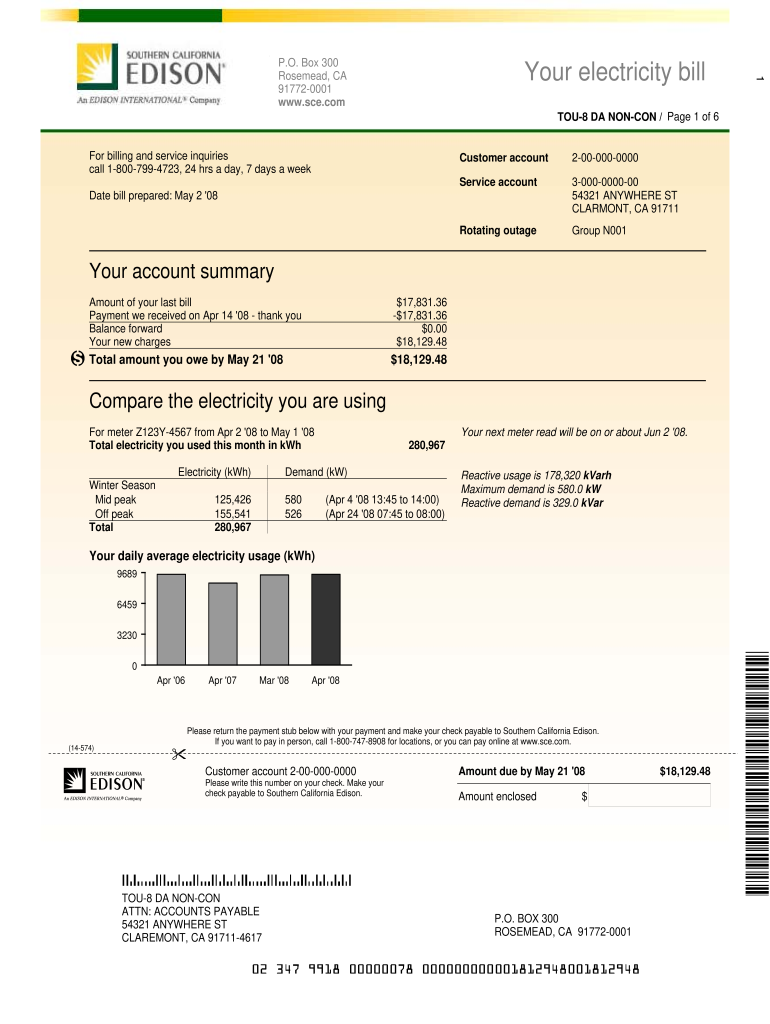
A California utility bill template refers to a standardized format used to generate utility bills for services such as electricity, gas, water, or other utilities within California. Utility bills typically include essential account details, charges for services rendered during a specified billing period, and payment information. This template serves as a practical tool for both customers and service providers to manage and monitor utility use, payments, and billing statements.
Elements commonly included in a utility bill template are:
- Customer Information: This features the name, address, and account number of the utility customer.
- Billing Period: The start and end dates for which the bill is being issued.
- Charges Summary: Detailed breakdowns of usage, rate per unit, and total amount due.
- Payment Instructions: Information on how to pay the bill, acceptable payment methods, and due dates.
- Customer Service Information: Contact details for queries or issues regarding the bill.
Understanding the utility bill format helps consumers keep a clearer record of their energy and water consumption and assists companies in issuing comprehensible bills.
Steps to Complete the California Utility Bill Template
Filling out a California utility bill template involves a series of straightforward steps designed to ensure accurate recording of necessary information. Both businesses and individuals can utilize these templates to generate proof of residence or for budgeting purposes.
-
Gather Required Information: Collect your utility account number, billing period dates, and consumption details. If it’s for a new customer, ensure you have the customer’s name and address.
-
Choose a Format: Select a suitable utility bill template. Various formats are available online, often as editable PDFs or templates in word processing software.
-
Fill in Customer Details: Input the customer's name, service address, and the utility account number clearly at the top of the document.
-
Specify the Billing Period: Clearly indicate the dates for which the services were provided. This range could be for a monthly billing cycle or a custom timeframe.
-
Calculate Usage Charges: Record the total usage amounts (e.g., kilowatt-hours for electricity) and calculate the charges based on the rates provided by the utility company.
-
Detail Payment Information: Include the total amount due, due date, and methods of payment accepted. This section is crucial for ensuring that payments are made on time to avoid late fees.
-
Review for Accuracy: Validate all entries to minimize errors. Check the calculations, as discrepancies in amounts due can lead to confusion.
-
Save and Distribute: Save the completed template as a PDF for secure sharing. If needed, print it for in-person submissions or records.
By following these steps, users can create a complete and accurate utility bill that meets their needs effectively.
Key Elements of a California Utility Bill Template
The effectiveness of a California utility bill template hinges on certain key elements that communicate critical information between utility providers and consumers. Understanding these elements ensures that users can create compliant and functional utility bills.
-
Header Information: This includes the utility company’s name, logo, and contact information prominently displayed at the top for quick identification.
-
Customer Information: Complete details of the customer, including the name, service address, and account number.
-
Billing Summary:
- Reading Dates: The start and end dates of service.
- Previous and Current Readings: Meter readings that highlight usage over the billing period.
- Total Usage: A summary of usage, typically expressed numerically (e.g., kWh for electricity, gallons for water).
-
Charges Breakdown: A detailed section outlining the rates applicable to different types of usage, including:
- Base rates
- Additional charges (e.g., taxes, environmental fees)
- Late fees, if applicable.
-
Payment Due Date: Clearly indicated due date to ensure prompt payment, along with any penalties for late payment.
-
Payment Instructions: Detailed options for settling the bill, such as online payments, check submissions, or in-person payments, enhancing user convenience.
-
Customer Service Contact Info: This information should be easily accessible for customers needing assistance or clarification regarding their bills.
Including these elements in a utility bill template ensures clarity and enables informed decision-making regarding utility services.
Important Terms Related to California Utility Bills
When working with a California utility bill template, several specific terms help clarify billing practices and consumer rights. Familiarizing oneself with this vocabulary enhances understanding and facilitates better communication with utility providers.
-
Consumption: The total amount of utility used during the billing period, often measured in units like kilowatt-hours (kWh) for electricity or gallons for water.
-
Rate Structure: The pricing system employed by the utility company, which may include tiered rates, time-of-use pricing, or flat rates depending on usage patterns.
-
Estimated Bill: A bill calculated based on estimated usage when an actual meter reading is unavailable. Consumers should be aware that estimated bills can sometimes lead to overcharges or undercharges.
-
Due Date: The date by which payment must be made to avoid penalties or service interruptions. Understanding this date is crucial for budgeting and timely payments.
-
Late Fee: Charges applied to consumers who do not pay their bills by the specified due date. These can accumulate quickly and compound financial strain if recurrent.
-
Utility Provider: The company or organization responsible for delivering the utility service, handling the billing, and managing customer relations. Knowledge of who the provider is can aid in resolving disputes.
By familiarizing oneself with these terms, consumers can navigate utility bills more effectively and communicate clearly with their service providers about any discrepancies or concerns.
Examples of Using the California Utility Bill Template
California utility bill templates offer incredible utility across various scenarios, ranging from personal budgeting to formal documentation for housing applications. Here are a few practical examples illustrating their application:
-
Proof of Residency: Landlords often require utility bills as proof of residency for potential tenants. A properly formatted bill generated from a template serves as credible evidence that a person resides at a specific address.
-
Budgeting Personal Finances: Individuals can use the template to track monthly expenditures related to utilities. Regularly updating the template with new bills can assist in observing trends in utility consumption, allowing for better financial planning.
-
Business Record Keeping: Business owners can utilize a utility bill template to manage utility expenses for tax reporting or budget preparation. This format streamlines documentation to aid in fiscal transparency and audits.
-
Dispute Resolution: If a discrepancy arises with utility charges, having a standardized template can serve as a point of reference. Having detailed records supports claims regarding billing errors or disputes with the utility provider.
-
Invoice Creation for Services: Service providers, such as property managers or real estate professionals, can modify the template to create utility bills for clients. This practice ensures professional and consistent invoicing related to utility management.
By applying California utility bill templates in these instances, both individuals and professionals can enhance their organizational capabilities and ensure clarity in utility-related transactions.