







Definition & Meaning of Measures of Disease Frequency
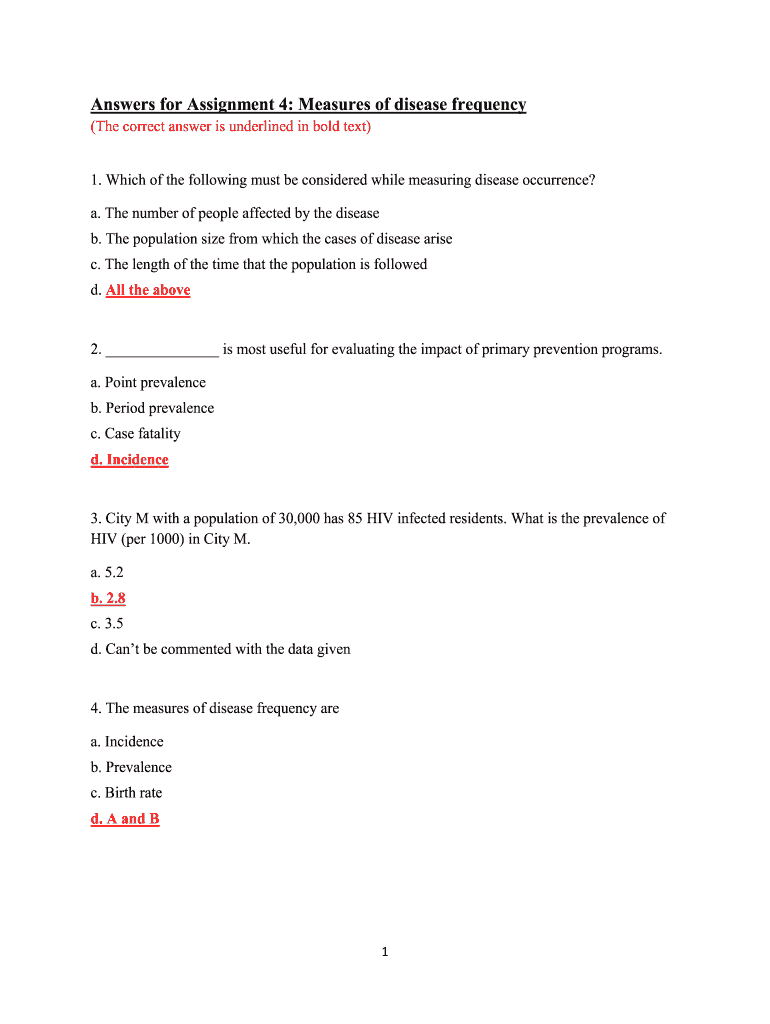
Measures of disease frequency are essential concepts in epidemiology that describe how often diseases occur within specific populations. The two primary measures are incidence and prevalence.
-
Incidence refers to the number of new cases of a disease that occur in a specified population over a defined time period. It reflects the risk of contracting the disease and is crucial for understanding disease dynamics in a population.
-
Prevalence is the total number of cases, both new and existing, of a disease in a population at a given time. It provides insight into the burden of disease within a specific population and is vital for public health planning and resource allocation.
Understanding these measures allows researchers and healthcare professionals to identify trends, prioritize health interventions, and allocate resources effectively.
How to Use Measures of Disease Frequency in Epidemiology
In epidemiology, utilizing measures of disease frequency involves systematic approaches to collecting and analyzing data. The following processes can help ensure effective use of these measures:
-
Data Collection: Gather data from reliable sources, including medical records, registries, and surveys. It is important to standardize the collection methods to ensure consistency across the population.
-
Calculate Incidence and Prevalence:
- Incidence Calculation:
- Utilize the formula: Incidence = (Number of new cases / Population at risk) x 100,000 (if using a per 100,000 population scaling).
- Prevalence Calculation:
- Use the formula: Prevalence = (Total number of cases / Total population) x 100 (for a percentage).
- Incidence Calculation:
-
Implement Statistical Analysis: Apply appropriate statistical methods to interpret data meaningfully, which may include confidence intervals and hypothesis testing to assess the significance of the findings.
-
Contextual Integration: Relate findings to demographic factors (age, sex, race) and geographical variables to understand disparities and tailor health interventions.
-
Monitor and Adapt: Continuously monitor disease trends and revise public health strategies accordingly based on incidence and prevalence data.
Using these steps ensures that researchers can accurately assess disease frequency and its implications for public health.
Key Elements of Incidence and Prevalence Studies
When conducting studies on incidence and prevalence, several key elements must be considered to ensure quality and validity:
-
Population Definition: Clearly define the population of interest, including inclusion and exclusion criteria to ensure the study sample accurately represents the group being studied.
-
Study Design: Utilize appropriate study designs:
- Cohort Studies: For measuring incidence, following groups over time to observe new cases.
- Cross-Sectional Studies: Ideal for measuring prevalence, examining data at one point in time.
-
Duration of Study: Specify the time frame for measuring incidence. The study length should reflect the disease’s potential to develop.
-
Data Validation: Implement measures for data reliability and validity such as ensuring accurate diagnosis, following standardized case definitions, and using trained personnel for data collection.
-
Statistical Power: Assess the sample size to ensure sufficient power to detect differences or trends. This involves calculating the appropriate sample size based on expected incidence or prevalence rates.
Incorporating these elements can strengthen research outcomes and contribute valuable insight into public health strategies.
Real-World Examples of Disease Frequency Measures
Understanding the practical application of incidence and prevalence can clarify their importance in public health. Consider the following examples:
-
Incidence:
- In a study of a new infectious disease outbreak, researchers tracked the number of new cases per week in a community over three months. By calculating the weekly incidence rate, public health officials were able to implement immediate interventions, such as vaccination campaigns, to prevent further spread.
-
Prevalence:
- A survey conducted to determine the prevalence of diabetes in adults revealed a significant percentage of the population was affected. This data prompted local health authorities to enhance diagnostic resources and health education programs aimed at diabetes prevention and management.
These examples illustrate how measuring disease frequency can inform immediate action and long-term public health planning.
Challenges in Measuring Disease Frequency
While measuring disease frequency is crucial for public health, researchers may encounter several challenges:
-
Underreporting and Misclassification: Inaccurate data due to underreporting of cases or misclassification can lead to distorted measures of incidence or prevalence. It is vital to establish rigorous data collection protocols.
-
Population Dynamics: Changes in population size due to migration or demographic shifts can impact incidence and prevalence estimates. It is essential to adjust calculations to reflect any changes accurately.
-
Temporal Variability: The occurrence of diseases can fluctuate seasonally or due to environmental factors, which may complicate the measurement over time.
-
Access to Care: Disparities in healthcare access can lead to uneven reporting and treatment of disease, skewing prevalence rates in specific populations.
By acknowledging and addressing these challenges, researchers can enhance their studies' accuracy and reliability.
Importance of Measures of Disease Frequency in Public Health
Measures of disease frequency play a pivotal role in public health for several reasons:
-
Resource Allocation: Accurate measures help allocate resources effectively, targeting areas with the highest needs based on disease occurrence patterns.
-
Epidemiological Surveillance: Ongoing monitoring of incidence and prevalence estimates allows public health officials to detect outbreaks and trends, prompting timely interventions.
-
Health Policy Development: Evidence-based measures inform health policies and programs aimed at disease prevention, management, and control.
-
Community Awareness: Communicating prevalence and incidence data raises awareness in communities, encouraging healthy behaviors and preventative care.
Understanding the importance of these measures helps stakeholders develop strategies that optimize health outcomes for populations.