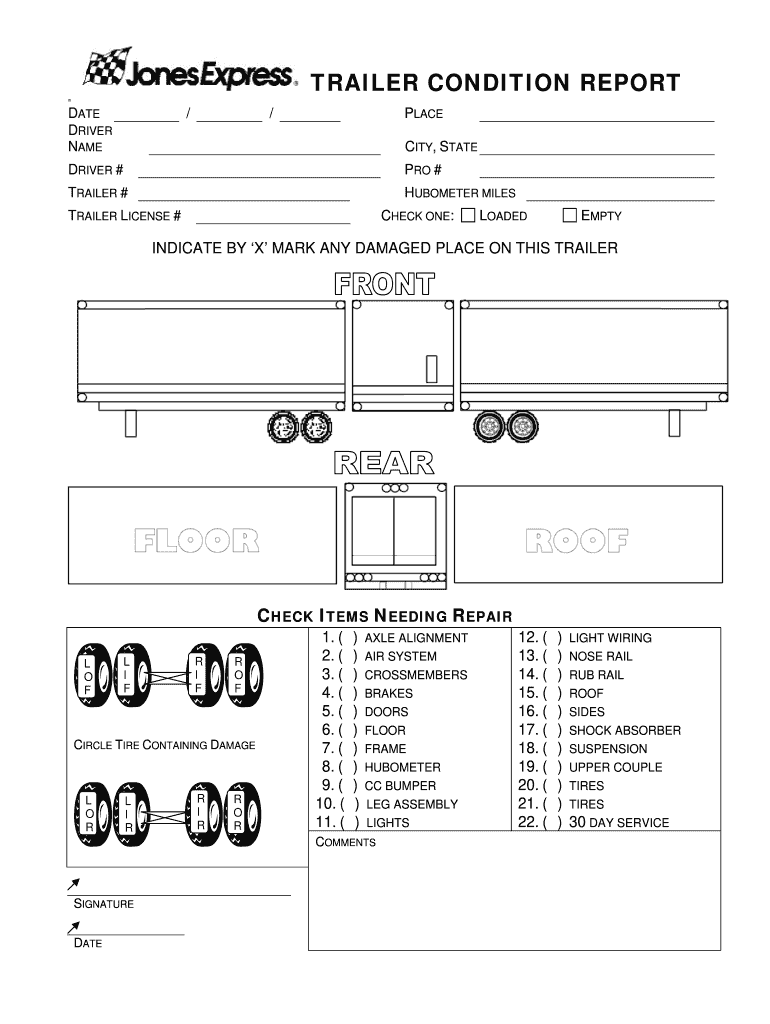







Understanding the Trailer Condition Report
The trailer condition report is a crucial document used to assess the status of a trailer, ensuring its safety and operational integrity. This report typically includes essential details such as the date of inspection, driver information, trailer identification number, and a series of condition checks that highlight any damages or repairs needed. It serves as a comprehensive tool for maintaining compliance with transportation regulations and enhancing the safety of trailer operations in the United States.
Key Elements of the Trailer Condition Report
A thorough trailer condition report includes several critical elements that provide a clear and complete overview of the trailer's status.
-
Identification Information: Includes the trailer number, owner’s details, and driver’s information. This section ensures that all relevant parties are properly identified.
-
Inspection Date: The specific date on which the trailer condition was assessed. This helps in tracking the maintenance history and scheduling future inspections.
-
Condition Checks: A detailed checklist that covers various components of the trailer, including tires, lights, brakes, and overall structural integrity. Each aspect should be marked as either acceptable or in need of repair.
-
Damage Reporting: A section for documenting any damages found during the inspection, including photos or drawings. Clear documentation here aids in the claims process for insurance or repair work.
-
Signature Line: For verification by the inspector. This adds an element of accountability and confirms that a qualified individual has completed the report.
How to Use the Trailer Condition Report
The trailer condition report serves multiple purposes and is used throughout the trailer lifecycle. Here’s how to make the most of it:
-
Pre-Inspection Preparation: Ensure that all necessary tools and the report itself are prepared in advance. This may include a physical checklist or a digital version accessible through platforms like DocHub.
-
Conducting the Inspection: Systematically assess each component listed in the condition checks. Use a trailer inspection checklist to ensure nothing is overlooked.
-
Documenting Findings: Record the results directly on the trailer condition report. Be thorough in noting any issues found, and consider taking photographs to accompany the report.
-
Reviewing the Report: After completion, review the report with your team or supervisor. Discuss any critical issues that require immediate attention, ensuring clear communication.
-
Follow-Up Actions: Use the report as a basis for determining the necessary repairs or maintenance. This will help in planning further inspections and maintaining the trailer’s operational readiness.
Steps to Complete the Trailer Condition Report
Completing a trailer condition report requires attention to detail and a structured approach. Here’s a step-by-step guide to effectively filling out the report:
-
Gather Initial Information: Start by documenting the trailer identification number, driver’s name, and date of the inspection.
-
Perform a Visual Inspection: Assess the exterior and interior components of the trailer. Note the condition of items like wheels, lighting, and brakes, using the inspection checklist as a guide.
-
Tick Off Condition Checks: As you assess each part, mark it appropriately on the report. Indicate if the condition is satisfactory or if repairs are needed.
-
Detail Damages: If any issues are discovered, document them in detail. Include notes on the nature of the damage and any immediate actions taken.
-
Finalize the Report: Once the inspection is complete, review the report for accuracy. Have it signed by the inspecting individual to validate the findings.
Importance of the Trailer Condition Report
Implementing a trailer condition report methodically provides crucial benefits:
-
Safety Assurance: Ensures that all trailers are roadworthy, thereby reducing the risk of accidents due to equipment failure.
-
Regulatory Compliance: Helps fulfill federal and state inspection requirements, particularly important for companies transporting goods across state lines.
-
Maintenance Planning: Aids in scheduling regular maintenance and repairs, minimizing downtime and extending the trailer's operational life.
-
Documentation for Insurance: Provides a reliable record in the event of damage claims, supporting any necessary insurance negotiations.
Common Users of the Trailer Condition Report
Various stakeholders typically utilize the trailer condition report, including:
-
Fleet Managers: Responsible for managing and maintaining a fleet of trailers, ensuring compliance, and optimal performance.
-
Transport Companies: Implementing the report to streamline inspections and document safety measures.
-
Compliance Officers: Ensuring adherence to federal and state regulations regarding trailer safety and maintenance.
-
Insurance Adjusters: Using reports in the event of an inspection or claim to validate the condition at the time of review.
The trailer condition report is integral to maintaining the safety and functionality of trailers within the United States, ensuring compliance with industry standards and reducing risks associated with trailer operations.