Understanding a Dispossessory Warrant
A dispossessory warrant is a legal document initiated in Georgia's Magistrate Court to begin the eviction process against a tenant. This warrant is typically filed by a landlord claiming that a tenant is unlawfully occupying rental property. The defendant—the tenant—receives this document and must respond appropriately to avoid eviction. It's crucial to understand what constitutes a dispossessory warrant and the implications it carries.
- A dispossessory warrant can result from various issues like non-payment of rent, lease violations, or an expired lease.
- The document often outlines the specific reasons for eviction and contains essential information such as the parties involved and the property in question.
- Failure to respond to a dispossessory warrant may lead to a default judgment, resulting in immediate eviction and potential financial liability.
Steps to Answer a Dispossessory Warrant Online
Responding to a dispossessory warrant online involves several critical steps. Properly addressing the warrant enhances the chances of a favorable outcome.
- Locate Required Forms: Access the specific dispossessory answer forms online, ensuring they are correctly formatted for your jurisdiction, such as Dekalb County.
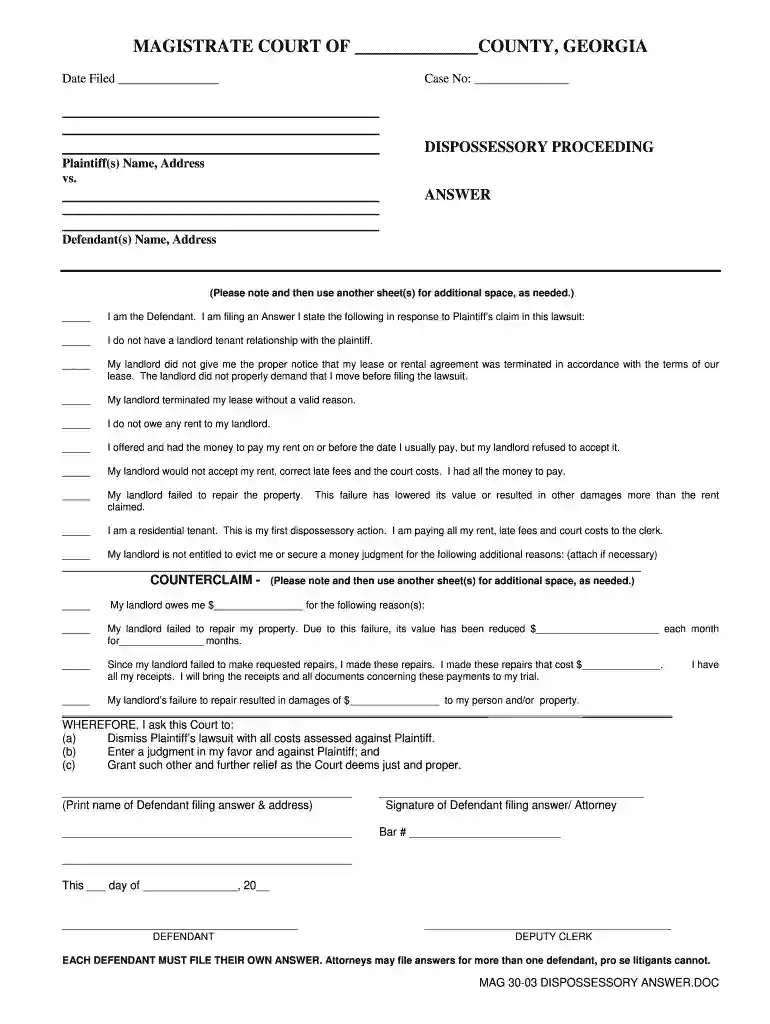
- Complete the Answer Forms: Fill out the forms with accurate information, addressing all claims made in the dispossessory warrant. This includes asserting defenses or counterclaims against the eviction.
- Provide Supporting Evidence: If applicable, attach documents supporting your position, such as proof of payment or correspondence with the landlord.
- File the Forms Online: Submit the completed forms through the designated online portal for your county's magistrate court. Ensure all information is correct to avoid delays.
- Monitor the Status: Keep track of your submission status to confirm that the court has processed your response. Follow up if you do not receive confirmation within a reasonable timeframe.
Key Components of Your Answer
When preparing your response to a dispossessory warrant, include the following essential components to strengthen your case.
- Denial of Claims: Clearly state which allegations you deny. For example, if you do not owe rent, indicate this explicitly.
- Counterclaims: If applicable, include any counterclaims, such as damage claims for insufficient repairs or harassment by the landlord.
- Legal Basis for Your Position: Articulate any legal reasons for your response, referencing relevant laws that protect your rights as a tenant.
- Request for Dismissal: Formally ask the court to dismiss the warrant based on your defenses or counterclaims.
Important Considerations in the Dispossessory Process
Understanding the dispossessory process can help navigate potential pitfalls during your response.
- Timelines are Critical: Adhere to the deadlines set by the court to respond. Typically, you have seven days from receiving the warrant to file your answer.
- Documentation is Vital: Keep copies of all documentation submitted. This includes the original dispossessory warrant and any correspondences with the landlord.
- Court Hearing: Be prepared for a potential court hearing. If the case proceeds, present your case clearly and succinctly in court, providing evidence to support your position.
Differences in State-Specific Rules
Legal procedures for responding to dispossessory warrants can vary significantly from state to state. When working within Georgia, particularly Dekalb County, be aware of localized processes.
- Check for any unique filing requirements or specific forms that may need to be used in your jurisdiction.
- Some areas may have additional local rules regarding eviction proceedings, including mediation efforts before court hearings.
Legal Consequences of Failing to Respond
Ignoring a dispossessory warrant can lead to severe legal consequences, emphasizing the importance of timely and adequate responses.
- Default Judgments: If you fail to respond, the court may issue a default judgment in favor of the landlord, authorizing immediate eviction without your defense being heard.
- Financial Liabilities: A judgment may also result in financial liabilities, including outstanding rent or damages, potentially leading to wage garnishment or liens against your property.
Frequently Asked Questions
Addressing common inquiries can assist tenants in understanding their rights and responsibilities regarding dispossessory warrants.
- What constitutes a valid defense? Valid defenses may include improper notice, lack of a landlord-tenant relationship, or an assertion that rent was paid.
- Can I file my answer in-person? While online filing is common, many jurisdictions also allow in-person submissions at the courthouse.
- What happens next? After your answer is filed, the court will schedule a hearing, and both parties will present their cases.
Resources for Further Assistance
If you require additional help or guidance regarding your response to a dispossessory warrant, consider accessing these resources.
- Legal Aid Services: Non-profit organizations often provide legal assistance to tenants facing eviction, offering free or low-cost legal advice.
- Local Tenant Associations: These organizations can provide support, resources, and information about your rights as a tenant in Georgia.
- Online Legal Resources: Websites focusing on tenant rights and eviction laws can offer insights and tips for crafting effective responses.
Understanding how to answer a dispossessory warrant online effectively can empower you to navigate the complexities of rental disputes and protect your rights as a tenant.