01. Edit your osap history of canadian residency form online
Type text, add images, blackout confidential details, add comments, highlights and more.
02. Sign it in a few clicks
Draw your signature, type it, upload its image, or use your mobile device as a signature pad.
03. Share your form with others
Send history of canadian residency for student and spouse via email, link, or fax. You can also download it, export it or print it out.
How to use or fill out History of Canadian Residency for Student and Spouse - the Ontario bb with our platform
Ease of Setup
DocHub User Ratings on G2
Ease of Use
DocHub User Ratings on G2
Click ‘Get Form’ to open it in the editor.
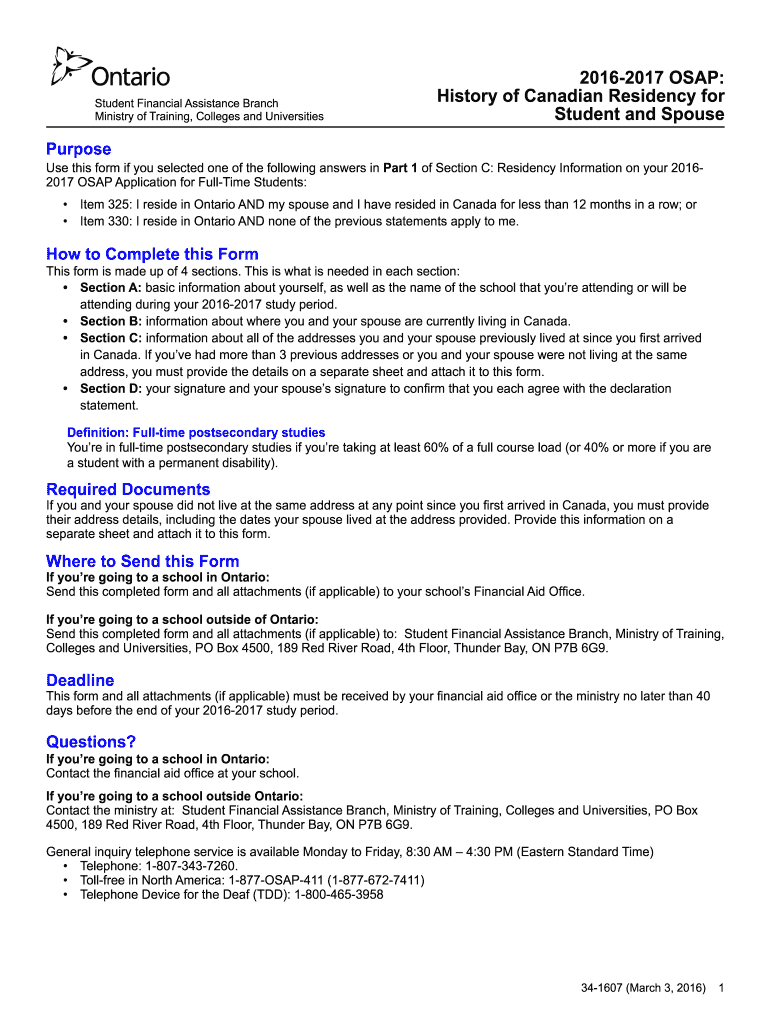
In Section A, enter your basic information including your last name, first name, and the name of the school you are attending. Ensure that you also provide your Social Insurance Number and Ontario Education Number if assigned.
Move to Section B and fill in your current address details. Include street number, city, province, and postal code. Indicate when you moved to this address and whether you took full-time studies while living there.
In Section C, list all previous addresses since arriving in Canada. Start with the most recent address and provide dates of residence. If there are more than three addresses or if your spouse lived separately, attach a separate sheet with those details.
Finally, in Section D, both you and your spouse must sign and date the declaration statement confirming that all information is accurate.
Start filling out your form online for free today!
Fill out History of Canadian Residency for Student and Spouse - the Ontario bb online It's free
History of Canadian residency for Student and Spouse 20252025-26 OSAP: History of Canadian residency for Student and spouseOSAP residency requirementsOSAP loginResidency history form
Security and compliance
At DocHub, your data security is our priority. We follow HIPAA, SOC2, GDPR, and other standards, so you can work on your documents with confidence.
Creating a national breastfeeding and lactation policy for
by L Rogowsky 2024 Cited by 5 Our objectives were to examine existing breastfeeding and lactation policies, query experiences and opinions of surgical trainees and program directors.Read more
by SL Eichenberger 2012 Cited by 29 Part IV analyzes the more equitable treatment of plural wives under the immigration laws of Canada and the United Kingdom. Finally, Part V.Read more
Cookie consent notice
This site uses cookies to enhance site navigation and personalize your experience.
By using this site you agree to our use of cookies as described in our Privacy Notice.
You can modify your selections by visiting our Cookie and Advertising Notice.