
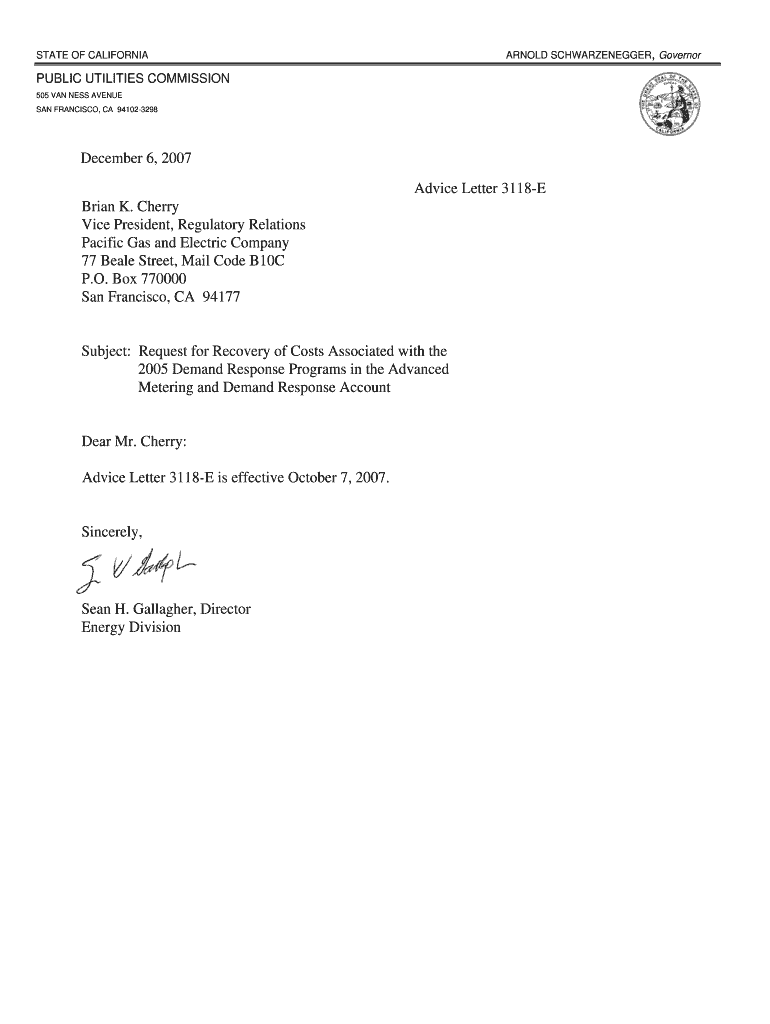







Definition and Meaning of Advice Letter 3118-E
Advice Letter 3118-E is a formal document submitted by Pacific Gas and Electric Company (PG&E) to the California Public Utilities Commission. It requests approval for the recovery of costs related to the 2005 Demand Response Programs. This letter serves to clarify accounting procedures concerning the Advanced Metering and Demand Response Account (AMDRA) and outlines cost calculations and accrued interests. Additionally, it includes instructions on how to file protests against the submission. Advice letters like 3118-E play a critical role in ensuring transparency and regulatory compliance within the energy sector, providing a structured approach for companies to request changes or approvals from regulatory bodies.
Obtaining the Advice Letter 3118-E
To acquire the Advice Letter 3118-E, interested parties can typically access it through the California Public Utilities Commission's official website or PG&E's website, where these documents are made publicly available. They may be provided in PDF format for easy download and reference. For individuals requiring physical copies, contacting PG&E directly or visiting their offices might be necessary. It's important to ensure access to the most recent version of this document, as regulatory and procedural updates might affect earlier iterations.
Steps to Complete the Advice Letter 3118-E
-
Review Existing Documentation: Begin by gathering all relevant documentation, specifically those related to the 2005 Demand Response Programs, to ensure accurate and comprehensive completion of the letter.
-
Understand Cost Calculations: Examine the economic aspects, particularly how costs and interests are calculated and reported. This section must align with the previous decisions and accounting procedures highlighted in the letter.
-
Detail Accounting Procedures: Clearly outline the accounting practices concerning the AMDRA, ensuring clear alignment with state and regulatory standards.
-
Prepare for Protests: Include detailed instructions and mechanisms for stakeholders to file protests if necessary. This aspect reassures stakeholders that their feedback is considered in the decision-making process.
Key Elements of the Advice Letter 3118-E
- Request for Cost Recovery: The core element, highlighting PG&E’s request for cost recovery related to specific programs.
- Clarification of Procedures: Illustrates the necessary accounting procedures and compliance with regulatory decisions.
- Interest Calculations: Details how interests are calculated on recoverable amounts.
- Instructions for Protests: Offers a framework for objections or feedback from stakeholders regarding the filing.
Legal Use of the Advice Letter 3118-E
The Advice Letter 3118-E is used legally within the bounds set by the California Public Utilities Commission. This letter ensures PG&E’s actions regarding cost recovery and accounting meet the required legal framework and are open to regulatory oversight. Legal use implies furnishing truthful, accurate, and comprehensive information that complies with existing laws, especially those governing public utilities and energy management.
Who Typically Uses the Advice Letter 3118-E?
Typically, groups utilizing this letter include:
- Utility Companies: Primarily PG&E, seeking approval for cost recovery and compliance with demand response programs.
- Regulatory Bodies: The California Public Utilities Commission, tasked with reviewing and approving submissions.
- Stakeholders and Investors: Interested in understanding financial recoveries and procedural clarity.
- Legal and Financial Auditors: Assuring transparency and regulatory adherence.


Examples of Using the Advice Letter 3118-E
Example scenarios might include:
- Regulatory Compliance Audit: As part of an audit, utility companies might use this to demonstrate adherence to approved accounting procedures for demand response programs.
- Infrastructure Investments: When assessing investments or improvements, stakeholders could reference the letter to understand cost recoveries linked to infrastructure initiatives.
Important Terms Related to Advice Letter 3118-E
- AMDRA: Advanced Metering and Demand Response Account, a key term pertaining to the structured handling of accounts in the context of this letter.
- Demand Response Programs: Programs aimed at changing electricity usage patterns to improve efficiency.
- Cost Recovery: The process where utility companies seek reimbursement for expenses incurred.
- Protest Mechanisms: Procedures outlined for stakeholders to formally voice concerns or disagreements.
Software Compatibility for Viewing
While the advice letter is primarily provided in a standardized PDF format, compatibility with popular software like Adobe Reader ensures ease of access. Furthermore, document management platforms like DocHub provide additional features for annotation, modification, and sharing, making it convenient for stakeholders to interact with the content.
State-Specific Rules for the Advice Letter 3118-E
California's regulatory environment governs the structure and expectations surrounding the Advice Letter 3118-E. The California Public Utilities Commission sets specific guidelines and compliance measures, affecting how entities like PG&E manage demand response cost recovery. This reinforces the need for all entities to remain aware of state-specific legal and procedural requirements concerning energy programs and management.
State-by-State Differences in Demand Response Programs
While the Advice Letter 3118-E is specific to California, it's essential to note that demand response programs may vary significantly state by state. Differences stem from regional energy policies, regulatory bodies, and local energy market conditions. Organizations operating across different states must be vigilant in adjusting their compliance and cost recovery approaches according to local regulations.
By thoroughly understanding and utilizing the guidance and framework provided by Advice Letter 3118-E, energy companies can navigate the regulatory landscape effectively, ensuring operational compliance and financial accountability. Each section of the letter serves as a vital touchpoint within the vast and complex world of public utility regulation, particularly within California.




