






Definition and Meaning of Patient Consent to Wound Care Treatment
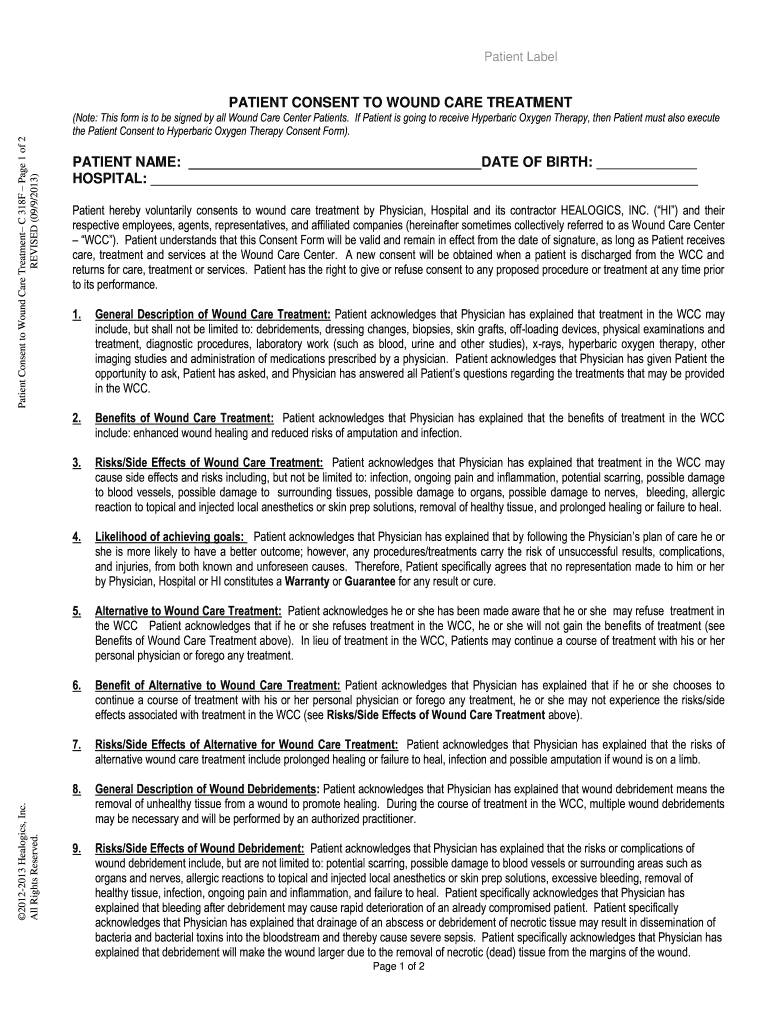
The Patient Consent to Wound Care Treatment is a formal document that indicates a patient's voluntary agreement to receive wound care services. This form outlines the specific treatments, their associated benefits and risks, as well as alternative options available to the patient. It is a critical document to ensure that patients are fully informed about their medical care decisions, thus fostering trust and transparency in the healthcare process. By signing this consent form, patients affirm their understanding of the proposed treatment and accept the medical professional's recommendations regarding wound care.
Key Components of the Consent Form
- Types of Treatments: The form lists various wound care treatments such as debridement, dressing changes, and other specialized procedures, providing a clear understanding of what the patient can expect.
- Benefits and Risks: It details the advantages of undergoing recommended wound care treatments, including potential for faster healing, along with possible risks, such as infection or adverse reactions to treatments.
- Patient Rights: The patient is informed of their right to ask questions about the procedure, refuse treatment, and seek a second opinion, further emphasizing the voluntary nature of the consent.
How to Use the Patient Consent to Wound Care Treatment Form
Utilizing the Patient Consent to Wound Care Treatment form effectively requires understanding its structure and the information it requires from both the medical provider and the patient. The form should be used during the initial consultation before any treatment is administered.
Steps to Properly Use the Form
- Distribute the Form: Provide the form to the patient in a clear and easy-to-understand format, ensuring they have enough time to read it thoroughly.
- Explain the Content: Health care providers should discuss each section of the form with the patient, highlighting the treatment options and answering any questions they may have.
- Seek Confirmation: After discussing the form, confirm that the patient understands the information, and inquire if they have further questions or concerns before signing.
- Obtain Signature: Once the patient is satisfied with the explanations provided, they can sign the form, giving their consent to the proposed wound care treatment.
- Document and Safeguard: Maintain digital or paper copies of the signed form in the patient's medical record to ensure compliance and facilitate future treatment processes.
Steps to Complete the Patient Consent to Wound Care Treatment Form
Completing the Patient Consent to Wound Care Treatment form entails gathering necessary patient information and ensuring all sections are adequately filled out. Here’s how to guide patients through the process:
Detailed Filling Process
- Patient Information: Start by collecting basic details from the patient, including their name, date of birth, and contact information.
- Treatment Description: Clearly outline the specific wound care treatments being proposed. Ensure that the patient understands what each treatment entails.
- Risks and Benefits Section: Include a thorough explanation of possible benefits and any risks associated with the treatments, tailored to the patient's specific health conditions.
- Alternative Treatment Options: Identify other potential options that the patient might consider, allowing them to weigh their choices better.
- Patient Signature and Date: Request the patient’s signature and the date to finalize the consent. Be sure to guide them to ensure they do not sign until all information has been covered.
Key Elements of the Patient Consent to Wound Care Treatment Form
Understanding the key elements of the Patient Consent to Wound Care Treatment form is crucial for both healthcare providers and patients. Each element plays a vital role in ensuring that the patients are well-informed about their treatment options.
Essential Aspects Included
- Informed Consent Clause: This section affirms that the patient acknowledges they have been informed of the nature of the treatment and are consenting without any coercion.
- Confidentiality Agreement: Stipulates that all patient information disclosed during the treatment process will be kept confidential, adhering to HIPAA regulations.
- Financial Responsibility: Clarifies the patient's financial obligations regarding the wound care services, helping to prevent any misunderstanding relating to billing and insurance coverage.
- Emergency Contact Information: Provides space for patients to list individuals who can be contacted in case of emergencies, ensuring a comprehensive approach to patient care.
Important Terms Related to the Patient Consent to Wound Care Treatment Form
Understanding the terminology associated with the Patient Consent to Wound Care Treatment form helps both healthcare professionals and patients navigate the consent process effectively.
Glossary of Relevant Terms
- Informed Consent: A process where a patient is fully informed about treatment options and implications before agreeing to a specific course of action.
- Wound Care: Medical procedures and practices aimed at promoting healing in various types of wounds.
- Debridement: A specific wound care procedure that involves removing dead or infected tissue to help promote healing.
- HIPAA: The Health Insurance Portability and Accountability Act, which protects patient privacy and confidentiality regarding their health information.
- Complications: Potential adverse outcomes related to medical treatments which may arise during or after wound care procedures.
Legal Use of the Patient Consent to Wound Care Treatment Form
The legal implications surrounding the Patient Consent to Wound Care Treatment form are substantial, as it serves as a protective measure for both the patient and the healthcare provider. Understanding these legal aspects is vital to ensuring compliance with health regulations.
Legal Considerations
- Binding Nature: The signed consent form creates a binding agreement whereby the patient accepts the proposed treatment, which can help prevent legal disputes in the future.
- Documentation for Legal Protection: In the event of legal scrutiny or claims of malpractice, the consent form can serve as crucial documentation showing that the patient was informed about the risks and benefits involved in their treatment.
- Regulatory Compliance: Adhering to relevant healthcare laws and ethical standards is essential. The form helps providers demonstrate compliance and protects patient rights in accordance with state and federal regulations.
Who Typically Uses the Patient Consent to Wound Care Treatment Form
The Patient Consent to Wound Care Treatment form is utilized by a range of stakeholders within the healthcare system, reflecting its broad application in wound care management. Understanding who uses this form can inform best practices for its implementation.


Primary Users of the Form
- Healthcare Providers: Doctors, nurses, and wound care specialists utilize this form to document patient consent prior to initiating treatments, thereby ensuring adherence to legal protocols.
- Patients: Individuals receiving wound care services are the primary signatories, as the consent is meant to inform and protect them during their treatment journey.
- Health Care Administrators: Administrators may oversee the logistical management of consent forms, ensuring that the documents are stored properly and retrieved when necessary for compliance purposes.
- Legal Teams: Legal advisors or compliance officers may reference these forms in the context of risk management or when addressing potential disputes.
Importance of Completing the Patient Consent to Wound Care Treatment Form
Filling out the Patient Consent to Wound Care Treatment form is crucial for establishing clear communication between the patient and the healthcare provider and serves multiple critical functions in the treatment process.
Benefits of Proper Completion
- Enhances Patient Autonomy: Completing the form empowers patients by ensuring they are educated about their treatment options and the implications of their choices, thereby fostering informed decision-making.
- Reduces Legal Risks: Obtaining appropriate consent can minimize potential legal issues for healthcare providers, as it demonstrates that patients were well-informed and agreed to the proposed care plan.
- Establishes Trust: The process enhances trust in the healthcare relationship, as patients feel respected and valued when they are included in the decision-making process related to their care.