
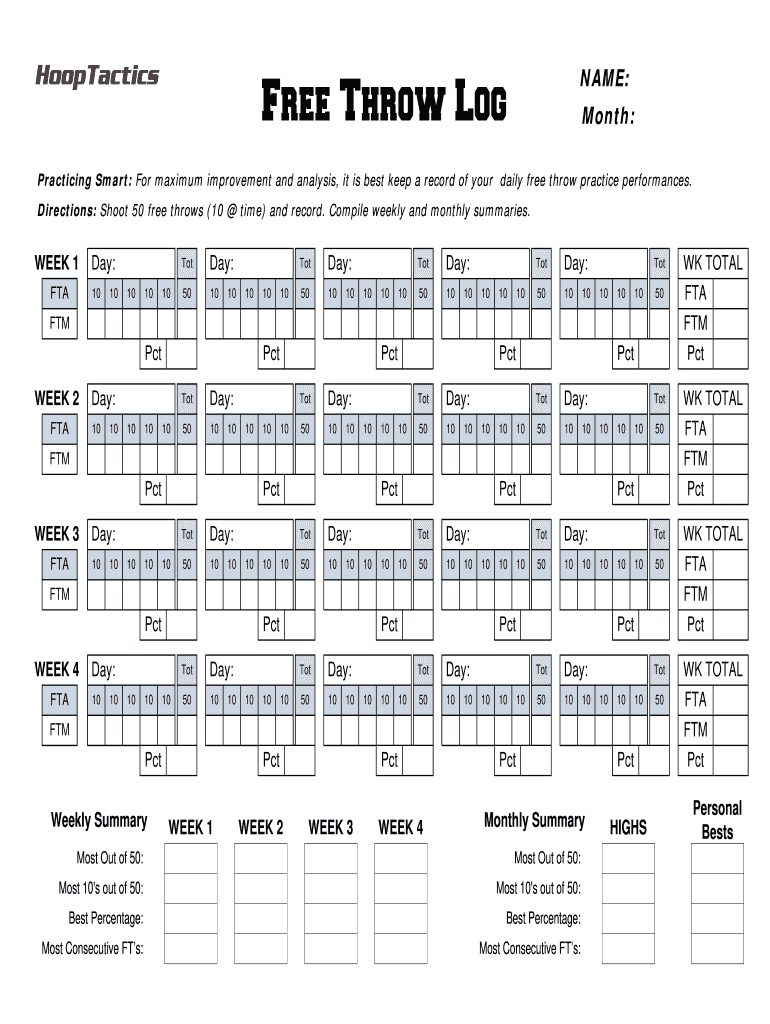







Definition and Meaning of Free Throw Log
A Free Throw Log is a structured recording tool specifically designed to track and analyze performance during free throw shooting sessions. It serves as a practical means for players to monitor their progress, providing an organized way to record data such as the number of attempts and successful shots. By detailing shooting percentages over specified periods, this log aids athletes in identifying trends and areas for improvement in their free throw skills.
Purpose of a Free Throw Log
- Performance Tracking: Athletes can document their attempts to determine where their strengths and weaknesses lie.
- Statistical Analysis: By calculating shooting percentages, players gain insights into their performance across different periods, such as weekly or monthly.
- Motivation: Visually tracking progress can boost motivation, encouraging consistent practice and improvement.
How to Use the Free Throw Log
Using a Free Throw Log effectively involves following a systematic approach to record, analyze, and improve shooting skills.
Steps to Use the Log
- Set Up the Log: Begin with a log template or create one with sections for date, attempts, successful shots, and percentage.
- Record Each Session: After every practice or game, input the total attempts and successful shots.
- Calculate Percentages: Regularly compute your shooting percentage using the formula: (Successful Shots ÷ Total Attempts) × 100.
- Reflect on Performance: After compiling data over a few weeks, analyze trends to identify improvements or decline in performance.
- Adjust Practice: Based on the reflection, modify your practice strategies to target specific areas needing improvement.
Benefits of Regular Use
- Data-Driven Improvement: Continuous recording enables the athlete to make informed decisions about their training regimen.
- Goal Setting: Players can set specific targets to work towards, enhancing their focus during practices.
Key Elements of the Free Throw Log
A well-structured Free Throw Log incorporates essential elements that contribute to comprehensive tracking and analysis of free throw performance.
Essential Components
- Date: Document the date of each practice or game to track performance over time.
- Attempts (FTA): Record the total number of free throw attempts.
- Successful Shots (FTM): Document how many of those attempts were made successfully.
- Shooting Percentage (Pct): Include a calculated percentage to quantify shooting efficiency.
- Comments or Observations: Add notes on any factors that may have influenced shooting performance, such as fatigue or environmental conditions.
Who Typically Uses the Free Throw Log
The Free Throw Log is primarily utilized by individuals involved in basketball at various levels, ranging from amateurs to professionals, as well as supportive coaches and trainers.


Primary Users
- Basketball Players: Athletes at any level looking to optimize their free throw shooting ability.
- Coaches: Coaches utilize this log to analyze players' performance data and formulate training approaches.
- Sports Trainers: Trainers supplement their training programs with the logs to create targeted improvement plans.
- Parents: Parents of young players may use logs to encourage practice and track progress for youth leagues.
Why Should You Use a Free Throw Log
Utilizing a Free Throw Log provides numerous advantages for any basketball player aiming to enhance their free throw shooting proficiency.
Advantages
- Performance Awareness: Keeping a detailed log builds a greater awareness of personal performance trends and helps track consistent practice habits.
- Encourages Accountability: Regular logging fosters a sense of responsibility towards skill development and improvement.
- Enhanced Focus During Practice: Knowing that performance is being recorded motivates players to maintain concentration during free throw attempts.
- Facilitates Better Coaching: For coaches, having access to a player's log can inform personalized training regimens based on data-driven insights.
Maintaining a Free Throw Log is not just an exercise in record-keeping; it serves as a critical self-evaluation tool that contributes to the overall growth of a player's skills and competitive edge in basketball.




