






Definition & Meaning of CRAD 8
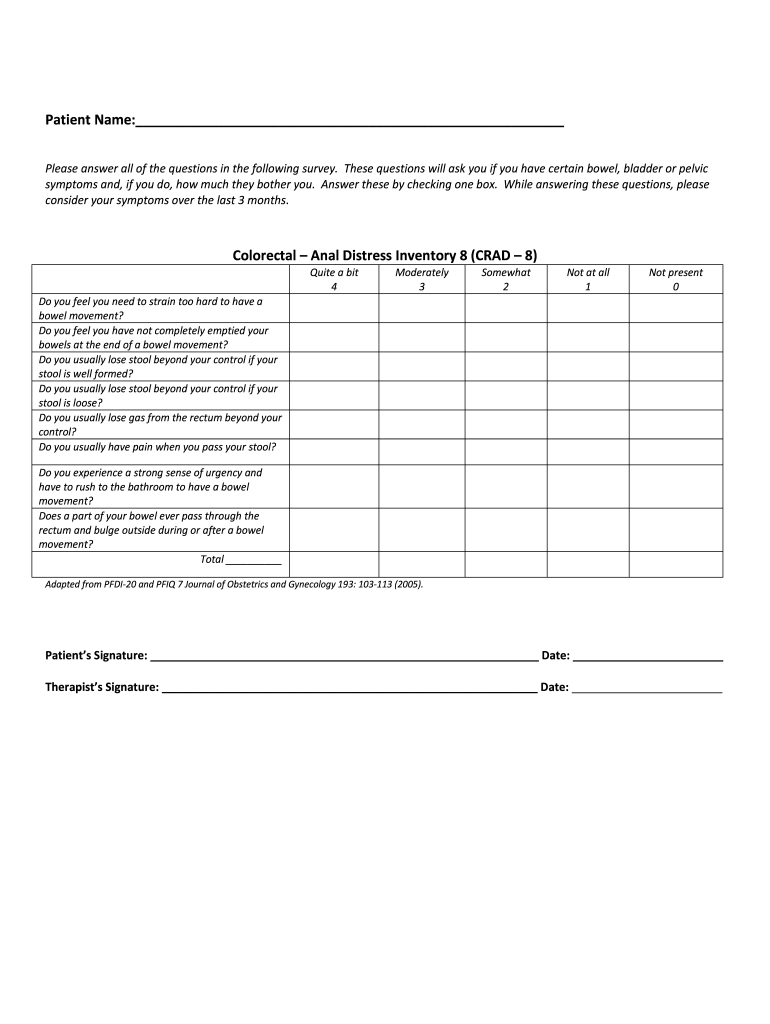
The Colorectal – Anal Distress Inventory 8 (CRAD-8) is a standardized survey tool designed to evaluate distressing bowel, bladder, and pelvic symptoms experienced by patients over the past three months. This instrument primarily targets the specific clinical needs of patients dealing with gastrointestinal and urinary issues. It consists of a series of questions aimed at quantifying the severity of different symptoms, enabling healthcare providers to gain a clear understanding of a patient's condition.
The CRAD-8 serves both diagnostic and monitoring purposes. By utilizing a scoring system, where respondents rate the severity of their symptoms on a scale from zero to four, healthcare practitioners can better assess the impact of these symptoms on a patient's quality of life. The results can guide treatment decisions and facilitate discussions about management strategies between patients and their healthcare providers.
How to Use the CRAD 8
Utilizing the CRAD-8 involves several clear steps to ensure comprehensive data collection. Following these guidelines can lead to accurate assessments:
-
Preparation: Ensure that the respondent is comfortable and understands the purpose of the survey. It may help to explain that the information provided will assist in evaluating their symptoms and planning appropriate care.
-
Administration: The questionnaire can be administered verbally or provided as a written form. If the latter, ensure that all directions are clear.
-
Completion: Instruct the respondent to answer each question to the best of their ability, reflecting on their experiences over the past three months. Each question should be rated to indicate severity.
-
Scoring: Once the survey is completed, total the scores to evaluate the overall level of distress. The scoring mechanism typically ranges from self-reported low distress to high distress.
-
Interpretation of Results: Discuss the findings with the patient, determining the appropriate next steps based on their symptom levels and personal circumstances.
These steps ensure that the CRAD-8 functions effectively as a diagnostic aid, providing crucial insights into patient distress.
Steps to Complete the CRAD 8
Completing the CRAD-8 is straightforward, but it is essential to follow a systematic approach for accuracy and clarity. Here’s how to proceed:
-
Obtain the Questionnaire: Start by sourcing the official CRAD-8 form, which is available from medical providers or healthcare facilities.
-
Read Instructions: Before filling out the form, read all instructions carefully to understand the purpose of each question.
-
Responding to Questions:
- Q1-Q8: Each question addresses different symptoms. Carefully evaluate your experiences and provide responses using the specified scale (0: Not at all, 1: A little, 2: Moderately, 3: Very much, 4: Extremely).
- Consider your symptoms over the specified three-month period to ensure accuracy.
-
Review Responses: After completing the questionnaire, review answers to ensure all questions have been addressed and accurately reflect experiences.
-
Submit the Completed Form: Once reviewed, the completed CRAD-8 should be presented to your healthcare provider for analysis and recommendations.
Following these steps aids in achieving the most accurate assessment of bowel, bladder, and pelvic symptoms.
Important Terms Related to CRAD 8
Understanding specific terminology associated with the CRAD-8 is vital for effective communication among healthcare providers and patients. Key terms include:
- Distress: Refers to the emotional suffering experienced by individuals due to discomfort from their symptoms.
- Bowel Symptoms: Encompasses issues such as constipation, diarrhea, and painful bowel movements.
- Pelvic Symptoms: Pertains to complications related to pelvic floor disorders or conditions.
- Quality of Life: A measure of the patient’s general well-being, considering both physical and emotional health.
Familiarity with these terms ensures that patients and practitioners can communicate effectively about symptoms, treatment options, and care strategies.
Who Typically Uses the CRAD 8
The CRAD-8 is primarily utilized by healthcare professionals, including:
- Colorectal Surgeons: They assess the impact of surgical procedures on bowel function.
- Gastroenterologists: Specialists who manage gastrointestinal health and study the effects of related disorders.
- Primary Care Physicians: General practitioners who monitor and manage overall patient health, often utilizing the CRAD-8 in routine evaluations.
- Mental Health Professionals: They may use the inventory to understand how bowel and bladder issues affect mental well-being.
Patients experiencing symptoms related to bowel, bladder, and pelvic discomfort also commonly engage with the CRAD-8 as part of their assessment and treatment planning. Its use across various specialties underscores its importance in integrated care scenarios.