
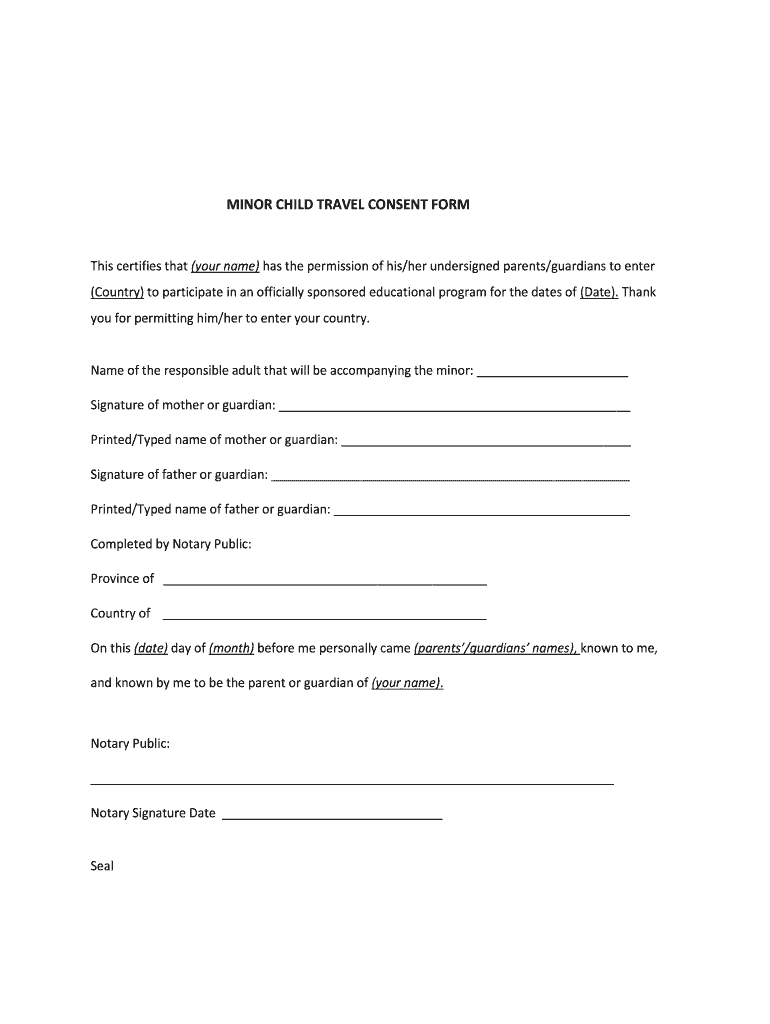







Definition and Meaning of the Minor Child Travel Consent Form
The Minor Child Travel Consent Form serves as a legal document that grants permission for a minor child to travel to a designated location without the accompaniment of their parents or guardians. This form is essential for a variety of travel scenarios, including international trips, educational programs, or domestic journeys. The form can prevent misunderstandings and ensure compliance with travel regulations, especially when minors are involved. Additionally, it's a useful document for law enforcement and airlines that may require proof of parental consent during travel.
Key components often found in the form include:
- Parents' or Guardians' Information: Names, contact details, and signatures of individuals granting permission.
- Minor's Information: Full name, date of birth, and passport details if applicable.
- Travel Details: Destination, purpose of travel, and dates of the trip.
- Accompanying Adult: Information about the adult who will travel with the minor, including their relationship to the child.
The use of this form addresses potential legal challenges and protects the rights of minors while they travel.
Steps to Complete the Minor Child Travel Consent Form
Completing the Minor Child Travel Consent Form requires several steps to ensure that all relevant information is accurately provided. Follow these steps for a streamlined process:
-
Gather Necessary Documents:
- Collect identification for both the parents/guardians and the child.
- Have travel itineraries and any other documentation that supports the trip.
-
Fill in the Personal Information:
- Input the names, addresses, and contact numbers of the consenting parents or guardians.
- Include the minor's details such as full name, date of birth, and any applicable IDs.
-
Specify Travel Information:
- Clearly detail the travel location, dates, and the purpose of the trip.
- If applicable, include flight numbers or other transportation modalities.
-
Provide Accompanying Adult's Information:
- Detail the identity of the adult who will accompany the minor, along with their relationship to the child and contact details.
-
Signature and Date:
- Ensure that both parents or guardians sign the form and include the date of signature.
- Depending on jurisdiction, consider notarization to enhance the document's validity.
-
Distribute Copies:
- Keep copies of the signed form for personal records.
- Provide copies to the accompanying adult and any authorities or organizations as required.
These steps help ensure that all legal requirements are met and provide a clear outline of the travel plans and permissions granted.
Legal Use of the Minor Child Travel Consent Form
The Minor Child Travel Consent Form holds significant legal weight, particularly regarding the travel of minors. Here are essential points to understand about its legal implications:
- Recognition in Courts and by Airlines: Many jurisdictions recognize the form as proof of parental consent. Airlines often require it to ensure they are not liable for potential custody disputes.
- Prevention of Kidnapping Allegations: Having this form can help mitigate allegations of kidnapping or abduction during travel, as it clearly outlines parental consent.
- Validity in Different States: While the form is generally recognized, laws may differ between states. It's crucial to ensure compliance with laws pertinent to both the departing and arriving locations.
- International Considerations: When traveling internationally, the form may require additional provisions, such as being notarized to comply with the regulations of foreign governments.
By being aware of the legal aspects of the Minor Child Travel Consent Form, parents and guardians can make informed decisions to ensure their child's safety and legal compliance while traveling.
Important Terms Related to the Minor Child Travel Consent Form
Understanding key terms associated with the Minor Child Travel Consent Form can aid in the effective use of the document. Here are some relevant terms and their definitions:
- Custodial Parent: The parent who has legal custody of the child and, therefore, the authority to give permission for travel.
- Non-Custodial Parent: The parent who does not have legal custody but may still be required to provide consent for travel.
- Notarization: The process where a notary public certifies the authenticity of the signatures on the consent form, adding a layer of legal security.
- TSA Minor Travel Consent Form: A specific type of consent form recognized by the Transportation Security Administration (TSA) that outlines travel permissions for minors.
- Travel Authorization Letter: A broad term for any letter granting permission for an individual to travel, which may encompass other forms or contexts beyond minors.
Familiarity with these terms helps clarify discussions surrounding travel consent and ensures compliance with legal standards.
Examples of Using the Minor Child Travel Consent Form
Practical examples of utilizing the Minor Child Travel Consent Form illustrate its importance in various travel scenarios:
-
Organized Group Trips: Schools often require a signed consent form when minors participate in field trips or educational excursions. This ensures that parents have authorized the travel and are aware of the details.
-
Traveling with a Relative or Friend: A child traveling with an aunt, uncle, or family friend should have the consent form completed to confirm approval from their parents. This is particularly useful for trips out of state.
-
International Travel: For children traveling to another country, the consent form often needs to be notarized and may require additional documentation, such as passport information or visa details, depending on the destination.
-
Emergency Situations: In instances where a minor must travel due to unforeseen circumstances, such as attending a family event, having a duly completed consent form can facilitate quick travel without complications or delays.
By implementing the Minor Child Travel Consent Form in these scenarios, parents and guardians can significantly reduce potential legal issues and contribute to the child’s safe travel experience.




