




01. Edit your horse bill of sale with buy back clause online
Type text, add images, blackout confidential details, add comments, highlights and more.

Type text, add images, blackout confidential details, add comments, highlights and more.

Draw your signature, type it, upload its image, or use your mobile device as a signature pad.

Send horse sale contract via email, link, or fax. You can also download it, export it or print it out.
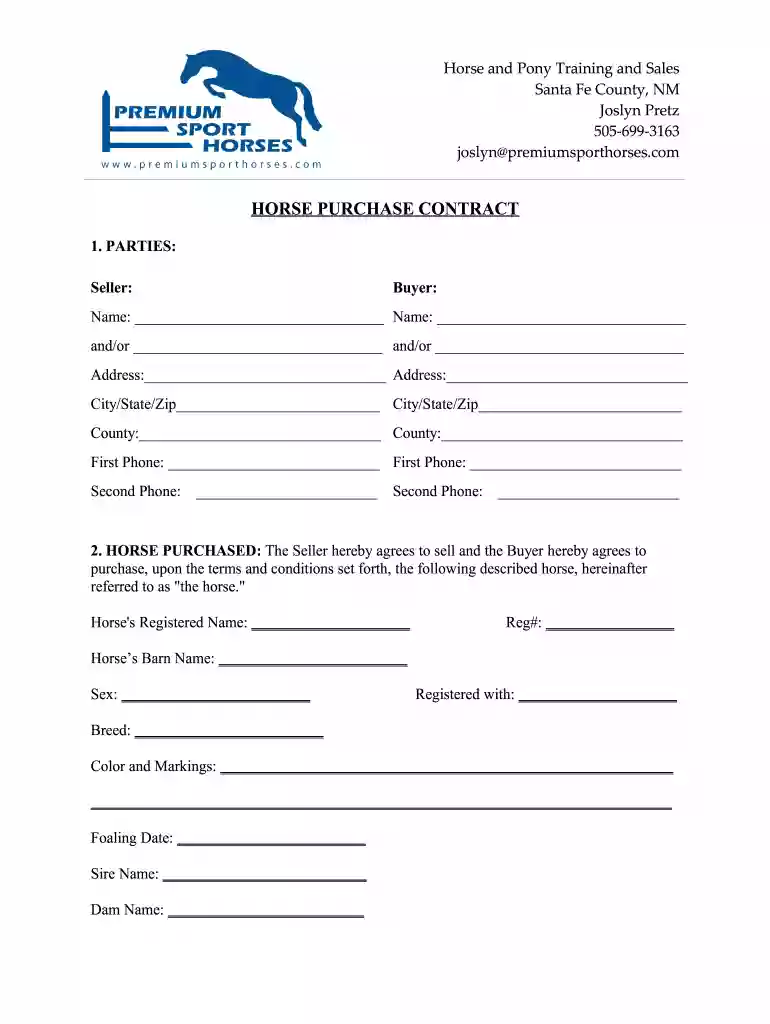
A horse bill of sale contract is a vital legal document that formalizes the sale of a horse between a buyer and a seller. This contract identifies the parties involved and outlines essential details about the horse, ensuring both parties understand their rights and responsibilities.
The horse bill of sale contract contains several essential elements, which include:
Identification of Parties: Clearly state the names and addresses of both the seller and buyer. This section establishes the legal identities of the individuals involved in the transaction.
Description of the Horse: Provide a detailed description of the horse being sold, including:
Purchase Price: Specify the agreed purchase price for the horse. It is important to note payment terms, including any deposit amounts and due dates, if relevant.
Warranties and Representations: The contract may include warranties regarding the horse's health, training, and any specific attributes. This section defines what the seller guarantees about the horse at the time of sale.
One significant aspect of the horse bill of sale contract is the assumption of liability and risk by the buyer. This provision usually states that:
The buyer assumes all risks associated with the ownership of the horse once the transaction is complete. This includes any potential health issues, training challenges, or behavioral concerns that may arise post-sale.
The seller may limit their liability regarding any post-sale disputes, emphasizing the importance of thorough evaluations before purchasing.
The terms regarding payment and acceptance of the horse are crucial for a smooth transaction. Key components may include:
Payment Method: Indicate whether payments will be made via cash, check, bank transfer, or another method. Clearly specify how and when the payment should be completed.
Acceptance of the Horse: This section may define the timeline for the buyer to accept the horse after payment is made, along with any additional steps involved in the transfer of ownership, such as transferring registration papers.
Every contract should comply with applicable local laws. Therefore, the horse bill of sale contract should specify:
Governing Law: Outline which state's laws will govern the contract, providing clarity on any legal recourse taken in the event of a dispute.
Miscellaneous Clauses: Consider including additional clauses that address topics such as:
A horse bill of sale contract can vary significantly based on specific needs and circumstances. Here are some common variations:
Horse Sale Agreement with Deposit: This includes the provision for outlining how a non-refundable deposit secures the horse until the sale is finalized.
Horse Sale Contract with Return Clause: This template specifies the conditions under which a buyer may return the horse to the seller after purchase, including timeframes and necessary conditions.
Equine Bill of Sale: This term may refer to broader cases involving multiple types of equestrian animals or may be tailored for specific horse breeds.
In conclusion, the horse bill of sale contract establishes a clear mutual understanding between both parties involved in the transaction. By detailing the essential components, ensuring legal compliance, and outlining responsibilities and risks, the contract serves as a protective measure for both buyers and sellers in the equine industry.
At DocHub, your data security is our priority. We follow HIPAA, SOC2, GDPR, and other standards, so you can work on your documents with confidence.
Seller warrants that the above racehorse is free and clear of all liens and encumbrances. All stakes engagements are hereby transferred with this agreement.Read more
An agreement was DocHubed by those parties based on Lake Trout management plans that had been presented to the three lake committees but which had not beenRead more


