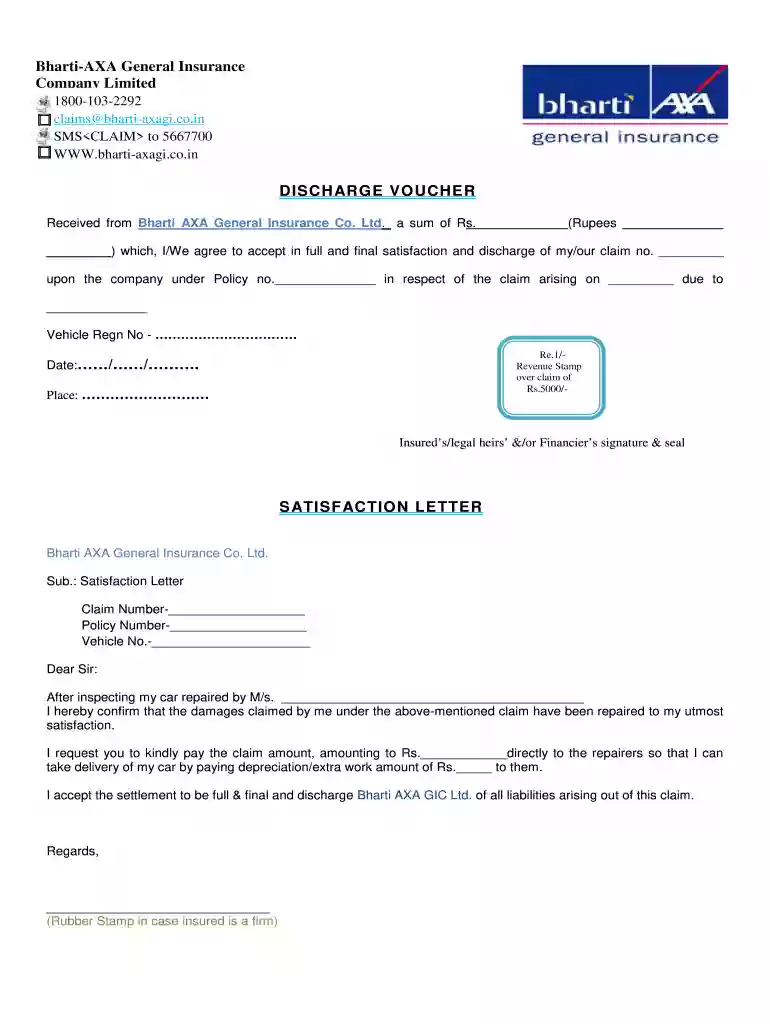
Definition and Meaning of Discharge Voucher Form
A discharge voucher form is a legal document used in various transactions, particularly in insurance claims and agreements. It serves as a formal acknowledgment from the recipient that they have received payment in full satisfaction of a claim. The insured party confirms that any potential liabilities regarding the claim are resolved upon signing this document. The form often includes elements such as the name of the insurer, details of the claim, the amount paid, and the specific nature of the satisfaction reached. It is essential in the claims process as it releases the insurer from further obligations related to the claim, effectively closing the matter.
Importance of the Discharge Voucher Form
Understanding the discharge voucher form's function is critical for both insurers and insured parties. It is a protective measure for insurers, ensuring that once compensation is disbursed, the insured cannot lay claim to further payments regarding the same issue. For the insured, signing this form can facilitate faster processing of claims and ensure peace of mind by officially documenting the settlement.
Steps to Complete the Discharge Voucher Form
Completing a discharge voucher form requires attention to detail to ensure that all necessary information is correctly provided. Here is a structured approach to filling out the form:
- Gather Necessary Information: Collect relevant details such as your policy number, claim number, and any correspondence related to the claim.
- Enter Personal Details: Fill in your name, address, and any other identifying information required by the form.
- Detail the Claim: Clearly specify the nature of your claim and the amount you are receiving—a detailed description helps prevent disputes.
- Confirm Payment Acceptance: Acknowledge that you have received payment in full satisfaction of your claim. This is usually marked by signing the form.
- Additional Signatures: If multiple parties are involved, ensure that all required signatories complete their parts.
- Submit the Form: Depending on the insurer's instructions, submit the completed discharge voucher form either online, by mail, or in person.
Key Considerations
- Ensure all provided information is accurate and matches your insurance records.
- Retain a copy of the completed form for your personal records.
- Be aware of the legal implications of signing the form, as it may affect any future claims relating to this matter.
Important Terms Related to the Discharge Voucher Form
Understanding essential terms associated with the discharge voucher form can aid in completing it correctly and comprehensively. Here are several key terms:
- Insurer: The company providing the insurance coverage and responsible for settling the claims.
- Claim: A formal request made by the insured to the insurer for payment based on the policy terms.
- Settlement: The resolution between the insurer and insured, often involving payment to the insured to cover losses described in the claim.
- Release of Liability: The action of the insured relinquishing any further claim against the insurer regarding the settlement.
- Satisfaction: A confirmation that the terms of the agreement have been fulfilled by the insurer, typically through payment.
Relevance of Each Term
- Insurer is crucial for identifying who you are dealing with.
- Claim provides context for the transaction at hand.
- Settlement represents the resolution, making it essential to understand before completing the form.
- Release of Liability underscores the implications of signing the form.
- Satisfaction reinforces the completion of the transaction and closure of the claim.
How to Use the Discharge Voucher Form
Using the discharge voucher form effectively involves several specific steps that ensure its proper purpose is fulfilled. Follow these guidelines to navigate this process:
- Review Context: Before using the form, understand the context of your claim and the contents of the agreement. Ensure that the payment made satisfies the claim in all respects.
- Complete Section Fields: Accurately fill in each section of the form. This includes both personal details and specifics about the claim, ensuring there are no omissions.
- Sign and Date: After you have verified the information, sign and date the form. This serves as an official record of your acknowledgement.
- Send the Form: Submit the completed discharge voucher form to the relevant party for processing. Depending on the situation, this may involve your insurance company or a legal representative.
Best Practices
- Read all instructions on the form thoroughly before filling it out to avoid common errors.
- Ensure the signature is legible and correctly dated.
- Confirm that you have copies of the form and any attachments for your record.
Legal Use of the Discharge Voucher Form
The discharge voucher form holds significant legal weight in transactions involving claims. Here are key points about its legal implications:
- Legally Binding Document: The form is considered a legal contract once signed, binding the parties involved. It can be referenced in case of disputes about the claim.
- Compliance with Laws: Ensure the form adheres to applicable laws regarding claims and settlements. Different states may have unique requirements that could affect the form's validity.
- Evidence of Settlement: It serves as formal evidence of the resolution of a claim, which can be crucial in any potential litigation or further negotiations.
Potential Legal Issues
- Misunderstanding Obligations: If the insured misunderstands the implications of the form, they may unintentionally waive their rights.
- State Variability: Different state laws may influence the adequacy of the form; be vigilant about regional regulations.
By maintaining a clear understanding of the discharge voucher form and its processes, you can streamline your interactions with insurers while ensuring compliance with relevant legal standards.