
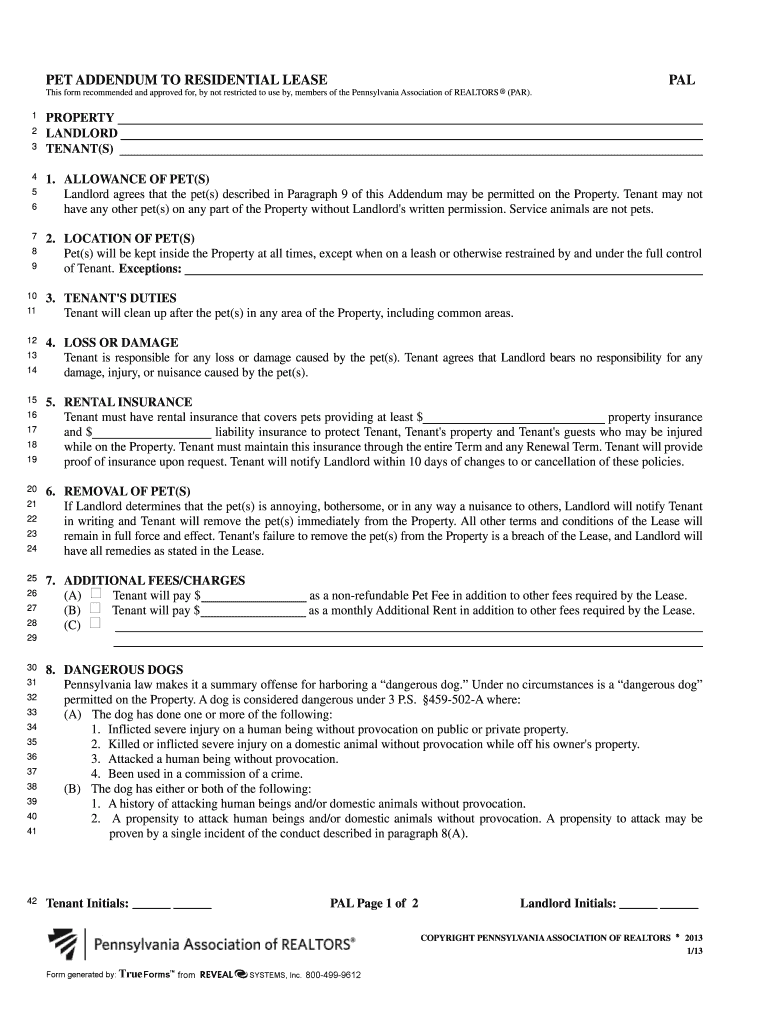







Definition and Purpose of the Pet Addendum to Residential Lease
The Pet Addendum to a Residential Lease is a legal document used in Pennsylvania that outlines the conditions under which tenants may keep pets on the property rented. It serves several purposes, ensuring both tenants and landlords have a clear understanding of their rights, responsibilities, and liabilities regarding pets within a rental unit.
Key Components of the Pet Addendum
- Landlord Approval: Before a tenant can bring a pet onto the premises, explicit approval from the landlord is required, usually obtained through the addendum's signature.
- Tenant Responsibilities: The addendum specifies that tenants are responsible for the care and upkeep of their pets, including waste management and general care.
- Liability for Damages: Should a pet cause damage to the property, the tenant is typically held financially responsible for repairs, as outlined in the agreement.
- Insurance Requirements: Some addendums may require tenants to have renter’s insurance that covers pet-related liabilities.
- Nuisance Clauses: Provisions are included outlining procedures for removing pets if they become disruptive, problematic, or in violation of the lease terms.
How to Use the Pet Addendum to Residential Lease
Understanding how the Pet Addendum functions can enhance compliance and foster a positive renting experience. Here’s how to effectively utilize the form.
Getting Started with the Addendum
- Review Lease Agreement: Begin by reviewing the primary lease agreement to check for any specific pet policies already included.
- Discuss with Landlord: Engage in a dialogue with the landlord about bringing a pet aboard. Discuss details such as breed restrictions or size limitations as outlined in the addendum.
- Complete the Form: Fill in the Pet Addendum completely with accurate pet information, including breed, size, and age. Ensure both parties sign and date the document.
Operating With the Addendum
- Follow Pet Care Guidelines: Adhere to any specific care requirements specified in the addendum, including noise management and waste cleanup.
- Maintain Open Communication: Keep communication lines open with the landlord regarding any issues that may arise related to pet behavior or health.
- Document Everything: Maintain records of your pet's health and behavior, which can help address any disputes that may arise.
Important Terms Related to the Pet Addendum
Familiarizing yourself with key terminology can prevent misunderstandings and misinterpretations of the Pet Addendum.
Common Terms to Understand
- Pet Description: Detailed information about the pet, including breed, age, and weight.
- Pet Fee: Any non-refundable fees or security deposits associated with having a pet.
- Pet Ban: Provision that outlines the types of pets that are prohibited, often including breeds considered dangerous under local law.
- Liability Clause: A section detailing the tenant's liability for damages or injuries caused by the pet.
Additional Terminology
- Service Animals vs. Pets: It’s important to note the distinction since service animals have different legal protections than pets.
- Foul or Nuisance Behavior: Definitions of what constitutes nuisance behavior to clarify tenant obligations to manage pets responsibly.
Steps to Complete the Pet Addendum to Residential Lease
Completing the Pet Addendum requires attention to detail to ensure it meets both tenant and landlord expectations. Here is a step-by-step guide.
Step-by-Step Instructions
- Obtain the Addendum: Acquire a copy of the Pet Addendum from your landlord or a reputable source online.
- Fill in Tenant and Landlord Details: Enter the names, addresses, and contact information for both parties.
- Describe the Pet: Provide all necessary information about the pet, covering breed, sex, age, and any distinguishing features.
- Include Additional Requirements: If applicable, include clauses related to pet training, health certificates, or spaying/neutering.
- Sign and Date: Ensure both parties sign and date the document, making it binding.
State-Specific Rules for the Pet Addendum
Pennsylvania law provides specific regulations concerning pet policies within rental agreements. It is crucial to adhere to these state-specific rules.
Key Regulations to Note
- Dangerous Dog Provisions: The state defines specific breeds and characteristics that classify a dog as dangerous, affecting approval for certain pets.
- Limitations on Fees: Some local jurisdictions may impose limits on how much a landlord can charge for pet-related fees or deposits.
- Tenant's Rights: Tenants have certain rights under the law regarding notification and enforcement of pet policies. For instance, landlords may need to provide written notice before pursuing eviction for pet-related issues.
Examples of Using the Pet Addendum to Residential Lease
Real-world scenarios can help illustrate how the Pet Addendum functions in different situations, clarifying its application for both tenants and landlords.
Scenario-Based Examples
- Scenario 1: A tenant wishes to adopt a dog after signing a lease that initially did not include a pet addendum. The tenant discusses this with the landlord and completes the addendum to officially allow the dog.
- Scenario 2: A landlord discovers a tenant has a cat without prior approval. The landlord checks the lease agreement and takes appropriate steps to enforce the addendum, which may lead to legal actions if the issue remains unresolved.
- Scenario 3: A pet causes damage to a rental unit, resulting in the landlord needing to enact the clauses in the addendum related to tenant liability, clearly outlining the consequences for the pet’s actions.
By understanding, utilizing, and complying with the Pet Addendum to a Residential Lease, both tenants and landlords can navigate the inclusion of pets in rental agreements smoothly and constructively.




