






Definition and Meaning of a Livestock Bill of Sale
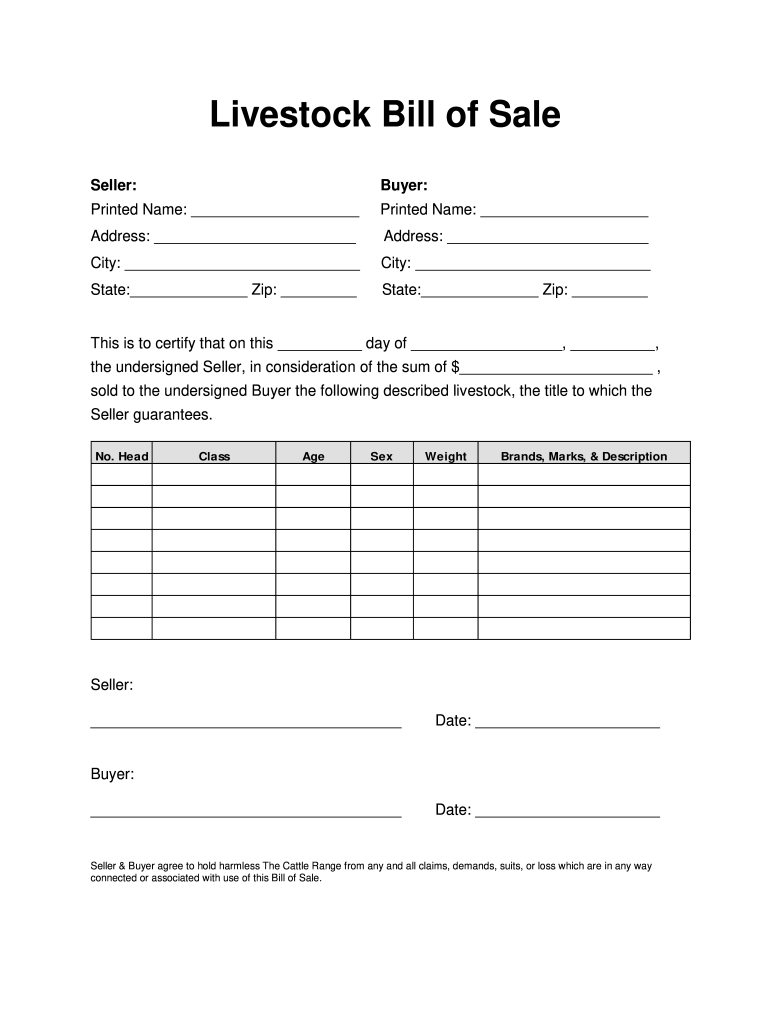
A livestock bill of sale is a legal document that serves as proof of the transfer of ownership of livestock from a seller to a buyer. This document outlines the specific details of the transaction, ensuring clarity and legal standing for both parties involved. Integral to agricultural and trading practices, it provides vital information such as the type, age, gender, weight, and description of the livestock being sold. Additionally, it often includes the names and contact information of both the seller and buyer, ensuring that each party is identifiable.
In many states, a livestock bill of sale is not just a practical tool; it may also be a requirement for legal accountability, particularly concerning the tracking of animal ownership for health and safety regulations. Such documentation can be crucial during inspections or in case of disputes over the transaction.
Key Elements of the Livestock Bill of Sale
The livestock bill of sale must contain specific elements to be valid and effective:
- Parties Involved: Clearly state the names and addresses of both the seller and the buyer.
- Description of Livestock: Include comprehensive details, such as:
- Type of livestock (e.g., cattle, goats, horses)
- Number of animals
- Class, age, and sex
- Weight and any significant markings or characteristics
- Purchase Price: Indicate the agreed sale price for the livestock.
- Date of Sale: Specify the date when the transaction is completed.
- Warranties: The seller may include guarantees regarding the title of the livestock, ensuring there are no liens or encumbrances against the animals being sold.
- Signature Lines: Provide space for both parties to sign the document, which formalizes the agreement.
These components work together to ensure clarity and legal integrity, protecting both the buyer and seller through documented evidence of the transaction.
How to Complete the Livestock Bill of Sale
Filling out a livestock bill of sale involves several key steps:
- Gather Information: Collect all necessary details about the livestock and the parties involved.
- Draft the Document: Use a template or draft from scratch, ensuring all required sections are included. Online platforms can simplify this process by offering customizable templates.
- Input Specific Details: Fill in the names, addresses, type and number of livestock, purchase price, and warranties.
- Review for Accuracy: Both parties should read through the document to confirm that all information is correct and meets their understanding of the sale.
- Signing: Have both the seller and buyer sign the document. It is advisable to have a witness or notary to validate the signatures, depending on state requirements.
By adhering to these steps, both parties can ensure a smooth and legally binding transaction.
Legal Use of the Livestock Bill of Sale
The livestock bill of sale not only facilitates the transfer of ownership but also serves as an essential legal document. It can be used in various legal contexts:
- Ownership Proof: In case of disputes regarding ownership, the bill of sale can serve as evidence that the buyer legally purchased the livestock.
- Regulatory Compliance: Many states require a bill of sale for livestock transfers for tracking ownership for health inspections and disease management. This is important to prevent the spread of disease among herds, as mandated by animal health regulations.
- Tax Records: The bill can also help in documenting the sale for tax purposes, where farmers may need to prove income from livestock sales when filing taxes.
Understanding the legal implications and uses of the livestock bill of sale ensures that both buyers and sellers are protected and compliant with relevant regulations.
Important Terms Related to Livestock Bill of Sale
Understanding the terminology associated with a livestock bill of sale is crucial for both buyers and sellers. Some important terms include:
- Livestock: Animals raised for commercial purposes, such as cattle, pigs, goats, horses, and sheep.
- Title: Legal ownership of the livestock, which is transferred through the bill of sale.
- Warranty: Assurances provided by the seller regarding the condition and ownership of the livestock, such as health status or absence of liens.
- Indemnification: A clause that may state that the seller holds no liabilities for claims related to the livestock after the sale is complete.
These terminology points provide clarity and reduce misunderstandings during the transaction between the parties involved.