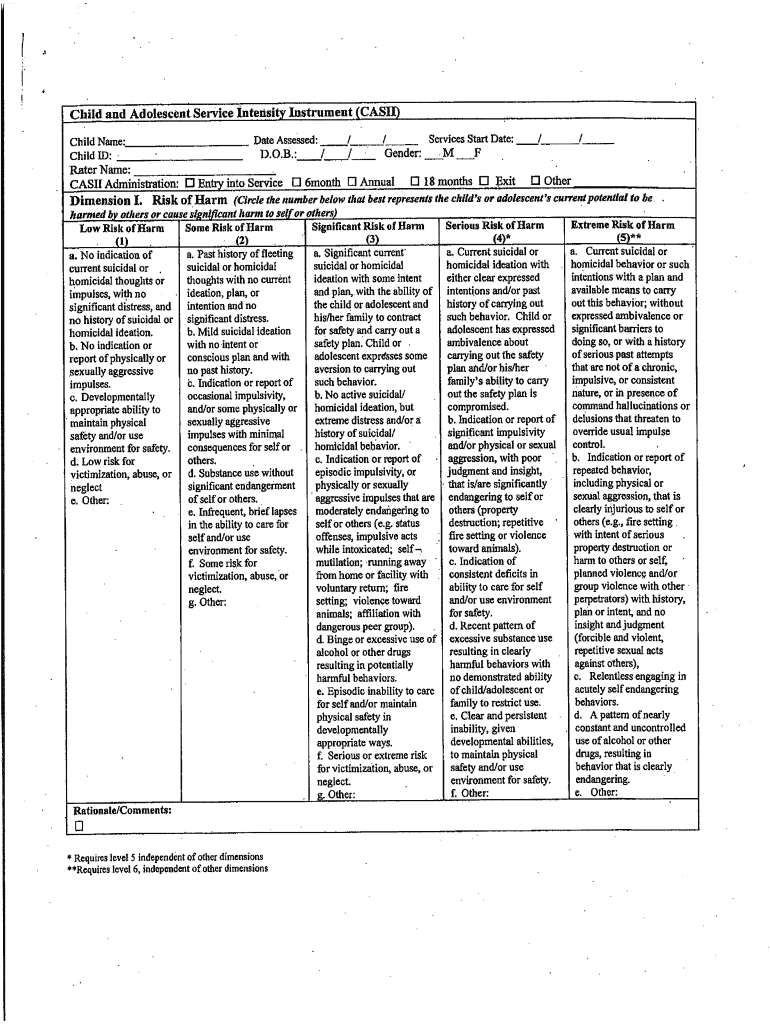







Definition and Meaning of the Casii Assessment
The casii assessment is a structured tool used within behavioral healthcare to evaluate the needs of individuals receiving mental health services. It stands for the Child and Adolescent Needs and Strengths (CANS) and is designed to address a variety of factors that influence a child's social, emotional, and behavioral development. The assessment helps healthcare providers determine the appropriate level of care required for each child by measuring their strengths and needs across multiple domains such as family, community, and school.
The casii assessment is based on a standardized framework that allows for scoring across several levels of care. It typically ranges from no serious needs to high levels of care and requires trained professionals to administer it accurately. This ensures that evaluations are consistent and reliable, allowing for comprehensive planning in the development of treatment plans.
How to Use the Casii Assessment Effectively
Utilizing the casii assessment effectively involves a structured approach to collecting, analyzing, and interpreting information regarding a child's needs. Here are the main steps to follow:
-
Preparation: Gather necessary information about the child prior to the assessment. This can include existing medical, educational, and social service records.
-
Administration: The assessment can be administered in various settings such as clinics, schools, or homes, depending on where the child is best observed. Trained evaluators should conduct this assessment to ensure accuracy.
-
Scoring: After the assessment, scores are tallied based on responses that reflect the child's strengths and challenges. Each category has a scoring key that helps in understanding the level of need.
-
Interpreting Results: Use the score to guide discussions with caregivers and other stakeholders. The results will help to identify the required level of care and the types of services that may be necessary.
-
Updating Care Plans: Once evaluations are complete, incorporate the findings into treatment or intervention plans, adjusting these plans as new information arises or as the child’s needs change.
Steps to Complete the Casii Assessment
Completing the casii assessment requires a methodical approach to ensure comprehensive coverage of relevant areas. Here are the key steps involved:
-
Initial Consultation: Meet with the child and their family to discuss the assessment process and gather preliminary information.
-
Inform Consent: Obtain informed consent from parents or guardians, explaining the purpose of the assessment and how the information will be used.
-
Administer the Assessment Tool:
- Use the standardized casii assessment form, which includes various items across multiple domains.
- Allow enough time to discuss responses and ensure that all questions are understood.
-
Score the Assessment: After filling out the form, calculate scores based on the evaluator’s guidelines. Each section will have scoring criteria that need careful consideration.
-
Review and Discuss Findings: Schedule a follow-up meeting to present and discuss the findings of the assessment with the family and involved professionals.
-
Plan Interventions: Collaboratively develop a plan of care based on the assessment results, incorporating feedback from the family and other stakeholders in the planning process.
Common Uses of the Casii Assessment
The casii assessment is primarily used in mental health services for children and adolescents, serving several important functions:
- Treatment Planning: Helps practitioners to develop care plans tailored specifically to the needs of the child.
- Service Coordination: Facilitates discussions among different service providers (e.g., therapists, educators) involved in the child’s care, ensuring alignment and communication.
- Outcome Tracking: Provides baseline data that can be used to assess progress over time, enabling adjustments to treatment as needed.
- Funding Justification: Assists in justifying the level of care required for funding purposes, as it provides objective data regarding the child’s needs.
Important Terms Related to the Casii Assessment
Understanding specific terminology related to the casii assessment can enhance comprehension and application in practice. Key terms include:
- Strengths and Needs: Core components of the assessment that reflect the child’s positive attributes as well as challenges needing support.
- Level of Care: Categories that describe the intensity and type of services a child may need based on assessment results.
- Stakeholders: Individuals involved in the care process, including family members, therapists, and educators who play a role in the child’s treatment.
- Scoring Rubric: The standardized guide used to assign values to the child’s responses, which informs the overall assessment results.
State-Specific Rules for the Casii Assessment
Rules and guidelines regarding the casii assessment may vary by state, influencing its application and compliance. Common state-specific considerations include:
- Legal Requirements: Each state may have specific laws governing the administration and usage of assessments in mental health practice.
- Funding and Reimbursement Policies: Medicaid and private insurers may have differing policies on how assessments are used to determine service reimbursement.
- Reporting Obligations: States may require certain documentation after assessments are completed, particularly if they impact care delivery for children in state custody or receiving public services.
By acknowledging these factors, practitioners can ensure compliance with local laws and optimize the effectiveness of the casii assessment in their practice.