
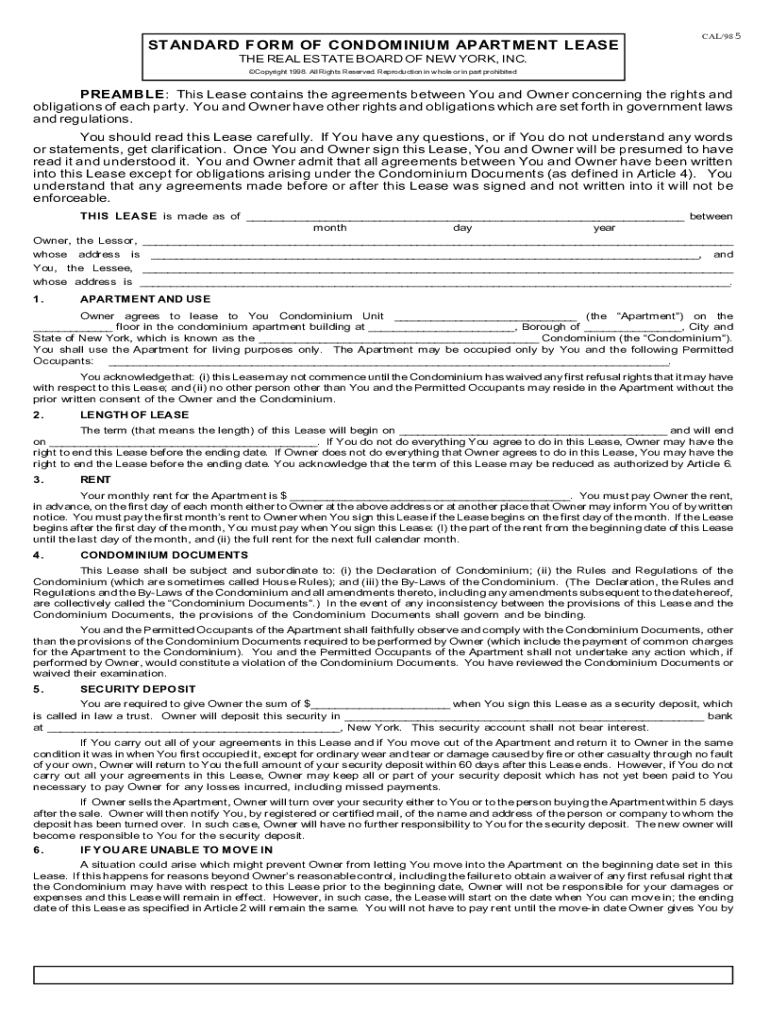







Definition and Purpose of the Standard Form Condominium Apartment Lease Rebny
The Standard Form Condominium Apartment Lease, developed by the Real Estate Board of New York (REBNY), serves as a vital legal document between landlords and tenants in New York City. This lease outlines the specific terms and conditions governing the rental of condominium apartments, offering clarity and protection for both parties involved in the rental transaction. It is designed to address unique aspects of leasing condominium properties, distinguishing it from traditional apartment leases.
Key components of this lease include:
- Rent Amount: Specifies the monthly rental fee, payment due dates, and acceptable payment methods.
- Lease Term: Establishes the duration of the lease, including start and end dates.
- Security Deposit: Defines the amount of the security deposit required and stipulates the conditions under which it may be withheld at the end of the lease.
- Utilities and Maintenance Responsibilities: Clarifies which party is responsible for various utilities and maintenance duties, a critical area in condominium settings where multiple units share amenities.
This form’s structured nature promotes transparency and helps prevent disputes by providing clear terms agreed upon by both the landlord and tenant.
How to Use the Standard Form Condominium Apartment Lease Rebny
Using the Standard Form Condominium Apartment Lease effectively involves several key steps. Initially, both the landlord and tenant should familiarize themselves with the document and its terms. Here’s how to navigate the usage of this lease:
- Review the Terms: Both parties should carefully read through the lease, noting any clauses that may require negotiation or clarification.
- Customization: While the form offers a standard template, specific terms may be altered to reflect agreed-upon conditions, such as rental price adjustments or special provisions related to property use.
- Legal Review: Consulting a legal professional to ensure compliance with local laws and regulations is advisable. This step can help prevent potential legal issues as these leases must align with New York real estate law.
- Signing: After all parties agree to the terms, the lease should be signed. Each party should retain a copy of the signed document for their records.
By following these steps, landlords and tenants can utilize the lease to foster a positive and transparent rental experience.
Steps to Complete the Standard Form Condominium Apartment Lease Rebny
Completing the Standard Form Condominium Apartment Lease involves several systematic steps to ensure accuracy and compliance. Below is a detailed guide for landlords and tenants:
-
Fill in Basic Information:
- Identify each party’s full names and contact information.
- Provide the complete address of the condominium apartment being leased.
-
Enter Lease Details:
- Indicate the lease start and end dates.
- Specify the rental amount and frequency of payment (e.g., monthly).
-
Document Security Deposit Terms:
- Clearly state the security deposit amount.
- Include conditions for its return at the end of the lease term.
-
Agree on Maintenance Responsibilities:
- Outline who is responsible for various maintenance tasks.
- Include provisions related to common areas and associated responsibilities.
-
Additional Clauses:
- Add any additional clauses necessary for your agreement, such as pet policies or subleasing conditions.
-
Review and Sign:
- Both parties should review the completed lease for accuracy.
- Sign the document in the presence of a witness if required.
By meticulously following these steps, both landlords and tenants can complete the Standard Form Condominium Apartment Lease thoroughly.
Important Terms Related to the Standard Form Condominium Apartment Lease Rebny
Understanding the terminology associated with the Standard Form Condominium Apartment Lease is crucial for both landlords and tenants. Here are some key terms:
- Lease Term: The time period during which the lease is valid, specific to start and end dates.
- Security Deposit: A sum collected by the landlord, typically refundable at the end of the lease period, subject to deductions for damages or unpaid rent.
- Common Areas: Shared spaces within the condominium, such as gyms, pools, or lobbies, that may come with specific usage rules.
- Landlord's Responsibilities: Obligations on the landlord's part regarding property maintenance and legal compliance with housing regulations.
- Tenant's Rights: The legal protections afforded to tenants, including the right to a safe and habitable living environment and the processes for addressing grievances.
A solid grasp of these terms helps both parties navigate their agreements more effectively.
Key Elements of the Standard Form Condominium Apartment Lease Rebny
The Standard Form Condominium Apartment Lease includes several key elements essential for effective landlord-tenant agreements:
- Identification of Parties: Clear identification of the landlord and tenant involved in the lease.
- Property Description: Detailed description of the leased condominium, including unit number and address.
- Payment Terms: Explicit statements on rent, methods of payment, and due dates.
- Duration: Clearly defined lease term indicating the beginning and ending of tenancy.
- Maintenance and Repairs: Allocation of responsibilities for maintaining the unit and common areas, which is particularly critical in condominium settings.
- Termination Conditions: Outlining how each party can terminate the lease, including notice requirements and conditions for early termination.
These elements provide a framework for both parties to understand their obligations and rights, ultimately leading to a more constructive rental experience.
Legal Considerations and Use of the Standard Form Condominium Apartment Lease Rebny
The legal framework surrounding the Standard Form Condominium Apartment Lease is influenced by local tenant-landlord laws and regulations within New York City. Essential legal considerations include:
- Housing Regulations: Compliance with city-specific regulations concerning tenant rights, rent stabilization, and eviction processes.
- Fair Housing Laws: Adherence to federal and state fair housing laws, which prohibit discrimination based on race, religion, sex, and other protected classes.
- Disclosure Requirements: Obligations of landlords to disclose certain information, such as known property defects or the building's compliance with safety regulations.
- Enforceability of Lease Terms: Understanding which terms within the lease can be legally enforced and the rights of parties if disputes arise.
Recognizing these legal frameworks is vital for mitigating risks and ensuring compliance throughout the rental period.
Example Scenarios Using the Standard Form Condominium Apartment Lease Rebny
To illustrate the practical application of the Standard Form Condominium Apartment Lease, consider these scenarios:
-
Scenario One: New Tenant Move-In: A landlord using the lease to outline an agreement with a new tenant who has specific requirements for lease length and renovations. The lease allows negotiation on terms, leading to a mutually agreeable modified lease.
-
Scenario Two: Security Deposit Dispute: A tenant disputes the withholding of their security deposit at lease termination. With the clearly outlined terms in the lease, the tenant can refer to the specific conditions under which the deposit may be withheld, streamlining the resolution process.
-
Scenario Three: Maintenance Responsibilities: A lease specifies the landlord's obligations to maintain common areas. When an issue arises regarding the elevator's maintenance, this provision allows the tenant to hold the landlord accountable based on the lease.
These scenarios demonstrate how the Standard Form Condominium Apartment Lease can aid in clear communication and contractual enforcement between landlords and tenants.




