


Movements and Distribution of Radio-Tagged Northen Pike in Minto Flats 2025

Get Form
Movements and Distribution of Radio-Tagged Northen Pike in Minto Flats Preview on Page 1

Here's how it works

01. Edit your form online
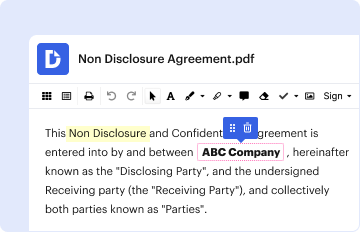
Type text, add images, blackout confidential details, add comments, highlights and more.
02. Sign it in a few clicks
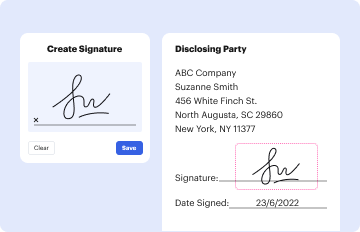
Draw your signature, type it, upload its image, or use your mobile device as a signature pad.
03. Share your form with others
Send it via email, link, or fax. You can also download it, export it or print it out.

How to use or fill out Movements and Distribution of Radio-Tagged Northern Pike in Minto Flats with DocHub

Form edit decoration
9.5
Ease of Setup
DocHub User Ratings on G2
9.0
Ease of Use
DocHub User Ratings on G2
  1. Click ‘Get Form’ to open the document in our editor.
  2. Begin by reviewing the abstract section, which provides a summary of the study's objectives and findings. This will help you understand the context as you fill out the form.
  3. Navigate to the introduction section. Here, you can input any relevant observations or data regarding northern pike movements that align with your research or interests.
  4. Proceed to the methods section. Fill in specific methodologies used for tracking radio-tagged fish, ensuring accuracy in your entries based on your own data collection techniques.
  5. In the results section, document any findings related to fish movements and distributions. Use our platform’s annotation tools to highlight key figures or appendices that support your data.
  6. Finally, review your entries for clarity and completeness before saving or sharing your completed form directly from our editor.

Start using our platform today for free to streamline your document editing and form completion!

be ready to get more

Complete this form in 5 minutes or less

Get form

Got questions?

We have answers to the most popular questions from our customers. If you can't find an answer to your question, please contact us.
Contact us

Electronic document approval requires a software solution that works in compliance with data security and eSignature standards. DocHub is a great tool for that, as it meets all the aforementioned requirements. Whatever method you prefer to sign your Movements and Distribution of Radio-Tagged Northen Pike in Minto Flats in DocHub, your electronic signature will be legally binding and court-admissible.

It is a no-brainer on a computer or via a mobile device to complete a Movements and Distribution of Radio-Tagged Northen Pike in Minto Flats with DocHub. All you need to do is open any installed browser on your smartphone and go to the DocHub website. Once authenticated, add your document and open it in editing mode. Use our toolbar to make your edits and save changes. Optionally, keep your file in your files or send it to a recipient immediately.

Though spawning seasons vary depending on location, northern pike in the Great Lakes region tend to spawn in April or May after winter ice leaves. Spawning generally occurs during daylight hours. Spawning females seek vegetation and randomly broadcast up to 75,000 eggs which are fertilized by several individual males.
The privileged Pike that live in waters with lots of food have faster growth rates and the Pike at age 4 could be closer to 24 inches, while the 8-year-old can be upwards of 35 inches. In Minnesota today, any Pike that docHubes age ten is a true old timer and could docHub 40 inches or about 20 pounds.
Northern pike are not currently found in California. Northern pike were found in Frenchman Reservoir in Plumas County, California in 1988, and were eradicated from the reservoir in 1991 and tributary streams in the Sierra Valley in 1992. Northern pike were discovered in Lake Davis, Plumas County in 1994.
be ready to get more

Complete this form in 5 minutes or less

Get form

People also ask

Alaskas northern pike, long thought to be confined to freshwater, are now crossing saltwater to invade new areas in Southcentral Alaska. Scientists previously believed that marine barriers, like the Cook Inlet, prevented their spread.

Related links