Definition and Meaning of the Locus Form
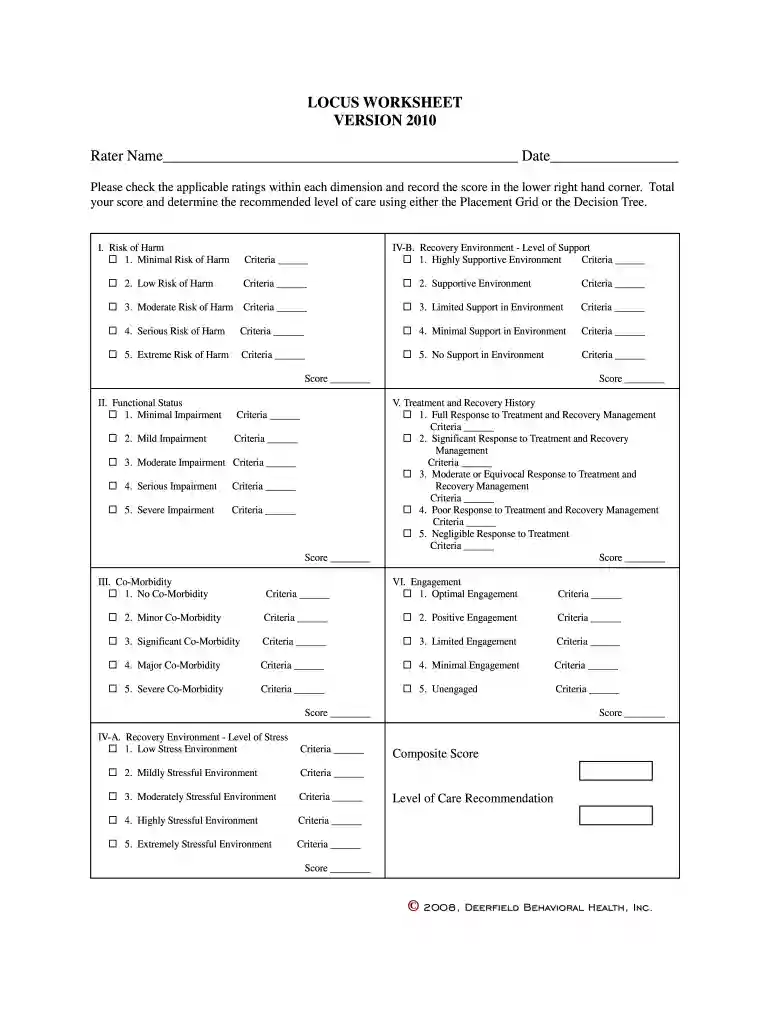
The locus form, or Level of Care Utilization System (LOCUS), is a standardized documentation tool used primarily in the behavioral healthcare field. It assesses an individual's needs for mental health services by evaluating dimensions such as risk of harm, functional status, treatment history, and environmental factors. This form is vital for determining the appropriate level of care for individuals, ensuring they receive the support necessary for their specific circumstances.
The key components of the locus form include:
- Risk of Harm: Evaluates potential dangers to the individual or others, assessing suicidal or violent tendencies.
- Functional Status: Examines the individual's daily functioning capabilities, including social interactions and employment.
- Co-Morbidity: Considers the presence of additional mental health disorders or substance use issues that may complicate treatment.
- Treatment History: Gathers information about past interventions, including previous placements and responses to treatment.
- Engagement Levels: Assesses the individual’s involvement in their treatment plan and willingness to collaborate with providers.
Accurate completion of the locus form is crucial for developing a targeted care plan that meets the individual’s mental health needs effectively.
Steps to Complete the Locus Form
Completing the locus form involves several systematic steps to ensure accuracy and comprehensiveness in evaluating an individual's needs.
-
Gather Necessary Information:
- Collect personal data, including demographics and medical history.
- Review any previous assessments or treatment reports relevant to the individual.
-
Assess Each Dimension:
- Evaluate the risk of harm by discussing safety concerns with the individual or their family.
- Measure functional status through interviews or observation of the individual’s daily activities.
- Document any co-occurring disorders by reviewing medical and psychiatric history.
- Analyze treatment history by examining past interventions and their effectiveness.
-
Assign Scores:
- Utilize the scoring criteria outlined in the locus scoring sheet to evaluate each dimension.
- Make sure scores reflect the most current assessment data and insights from multiple sources.
-
Calculate Composite Score:
- Aggregate scores for an overall locus score, which indicates the required level of care.
- Compare scores against established benchmarks to determine necessary interventions.
-
Document Findings:
- Provide comprehensive notes on the evaluation process, including insights drawn from interviews and observations.
- Ensure that all documentation is clear, precise, and easily interpretable by other healthcare professionals.
-
Review and Finalize:
- Double-check the form for completeness and accuracy before submission.
- Discuss the findings with the individual and relevant team members to ensure everyone is on the same page regarding care plans.
Following these steps can enhance the reliability of the assessment and facilitate effective service delivery for individuals in need of mental health care.
Who Typically Uses the Locus Form?
The locus form is predominantly utilized by:
- Mental Health Professionals: Psychiatrists, psychologists, social workers, and counselors use the form to evaluate clients' needs and determine appropriate treatment options.
- Substance Abuse Counselors: Those addressing substance use disorders integrate the form to assess co-occurring disorders and necessary interventions.
- Healthcare Administrators: Administrators use the locus scores to allocate resources and make decisions regarding service provision within healthcare systems.
- Insurance Providers: Insurers may require locus assessments to approve coverage for specific treatments based on assessed needs.
Understanding the diverse users of the locus form can facilitate better communication and collaboration among professionals involved in an individual’s care, ensuring a cohesive treatment approach.

Important Terms Related to the Locus Form
Familiarity with key terms associated with the locus form can aid in its effective application and comprehension within healthcare settings. Some important terms include:
- Risk of Harm: A systematic evaluation of potential risks that an individual may pose to themselves or others.
- Functional Status: The ability of an individual to perform daily activities effectively, reflecting their overall well-being.
- Comorbid Conditions: The existence of multiple disorders or diagnoses concurrently, which can complicate treatment.
- Care Level Determination: The process of assessing and categorizing the intensity of care required for an individual based on their locus assessment.
- Treatment Interventions: Strategies and approaches implemented to address the individual’s mental health or substance use challenges.
Having a solid understanding of these terms is essential for accurate assessments and effective communication among mental health professionals.
Digital vs. Paper Version of the Locus Form
The locus form is available in both digital and paper formats, catering to varying preferences and operational needs. Each version offers distinct advantages and considerations.
Digital Version
- Accessibility: Can be easily accessed and completed on various devices, enhancing convenience for users.
- Integration: Often integrates with electronic health record (EHR) systems, allowing for streamlined data sharing and updates.
- Real-Time Collaboration: Enables multiple professionals to collaborate in real time, ensuring consistency in evaluations and care plans.
- Storage and Retrieval: Facilitates secure storage and easy retrieval of completed assessments.
Paper Version
- Tactile Experience: Some users may prefer the physical interaction of pen and paper when completing assessments.
- No Digital Barriers: Avoids technical problems such as software glitches, internet connectivity issues, or hardware limitations.
- Documentation: Can be useful in settings where digital records are not viable, providing a traditional method for recording assessments.
Both versions have merits and can be utilized based on user preference, technological capabilities, and specific healthcare settings. Understanding these aspects helps professionals choose the provided format that best meets their operational needs.