



01. Edit your edison utility bill template online
Type text, add images, blackout confidential details, add comments, highlights and more.

Type text, add images, blackout confidential details, add comments, highlights and more.
Draw your signature, type it, upload its image, or use your mobile device as a signature pad.
Send 18009907788 via email, link, or fax. You can also download it, export it or print it out.
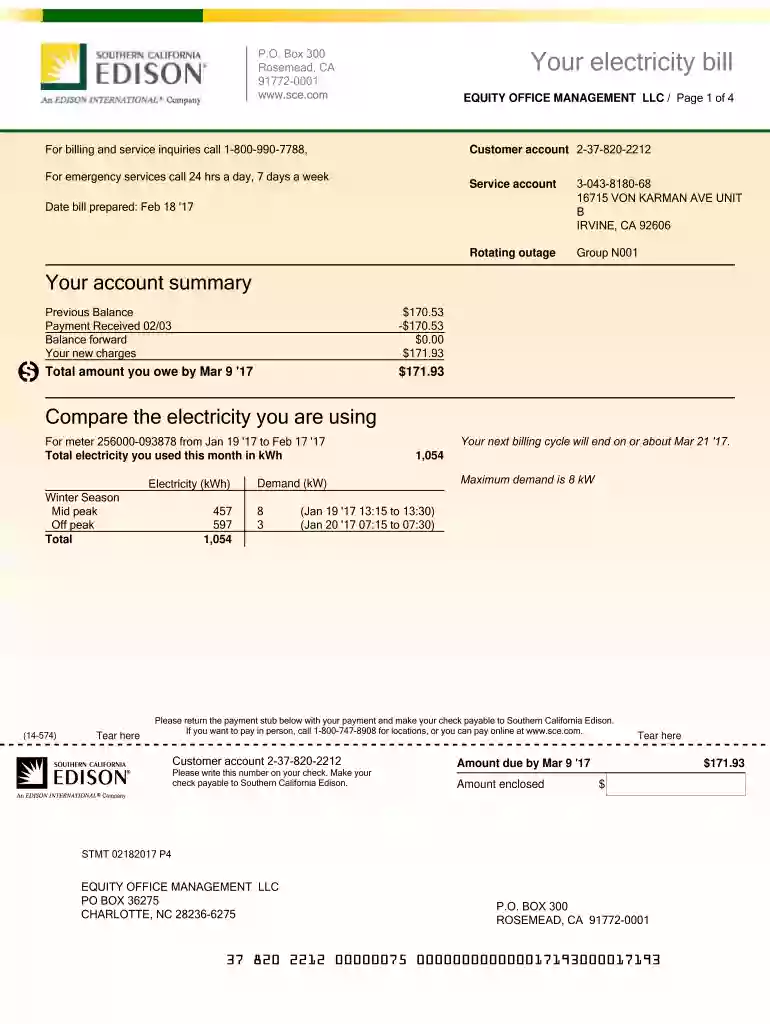
The "18009907788" form, often referred to as an Edison utility bill template, is vital for individuals and businesses managing their energy costs effectively. It encompasses critical information about electricity consumption, billing periods, and payment options, which are essential for ensuring timely payments and managing budgets.
Billing Period: Clearly indicated, the billing period denotes the dates during which energy usage was recorded. For example, a typical statement might show usage from March 1 to March 31, allowing customers to track their consumption over a specific timeframe.
Total Amount Due: This figure reflects all charges, including usage, taxes, and any applicable fees. The total should be paid by the specified due date to avoid interruptions in service.
Payment Options: Various methods may be available for settling the bill, such as online payments, mailing checks, or using automated phone systems. Understanding these options helps customers choose the most convenient method for their needs.
Review Consumption: Examine your electricity usage detailed on the bill to understand trends and identify peak usage times, which can help in managing future bills.
Check for Potential Errors: Scrutinize your bill for any discrepancies, such as unusual spikes in usage, incorrect rates, or additional fees that may not apply. Customers are encouraged to contact Edison if they identify any issues.
Set Up Payment Reminders: Utilize calendar reminders or automatic payments to ensure bills are paid on time, preventing late fees or service disconnection.
The template serves as a formal document for showing energy consumption and payment history. It may be required for various legal purposes, such as:
Rental Applications: Landlords often require utility bills as proof of residency and payment history.
Credit Applications: Utility bills can serve as evidence of financial responsibility when applying for loans or credit.
Budgeting and Financial Planning: By keeping utility bills organized and reviewing them regularly, residents can create a budget that accurately reflects their energy costs, helping to avoid financial strain.
Dispute Resolution: In cases where utility service is contested, either by changes in service or billing errors, the utility bill provides a foundation for resolving disputes.
Disconnection Notice: An official alert indicating overdue payments, potentially leading to discontinuation of service if not addressed promptly.
Net Metering: A billing mechanism for customers who generate their own electricity (e.g., photovoltaic systems) allowing them to offset their energy use against energy production.
Customers must be aware of specific deadlines associated with their utility bills:
Billing Cycle: Generally monthly, this informs customers when they can expect their next bill.
Due Dates: Usually set for 15 to 30 days post-billing, missing these dates could result in late fees or service interruptions.
To maximize the benefits of managing utility bills effectively:
Set Energy Goals: Based on historical usage, determine targets for reducing energy consumption, which can lead to significant savings.
Explore Assistance Programs: Many utility companies offer assistance programs for low-income households, potentially providing benefits like payment extensions or discounts.
Understanding and effectively managing the "18009907788" form not only aids in keeping track of utility expenses but also empowers consumers with information to make informed decisions regarding their energy usage and payment options.
At DocHub, your data security is our priority. We follow HIPAA, SOC2, GDPR, and other standards, so you can work on your documents with confidence.


