






Definition and Meaning of Rental Lease Agreement Form
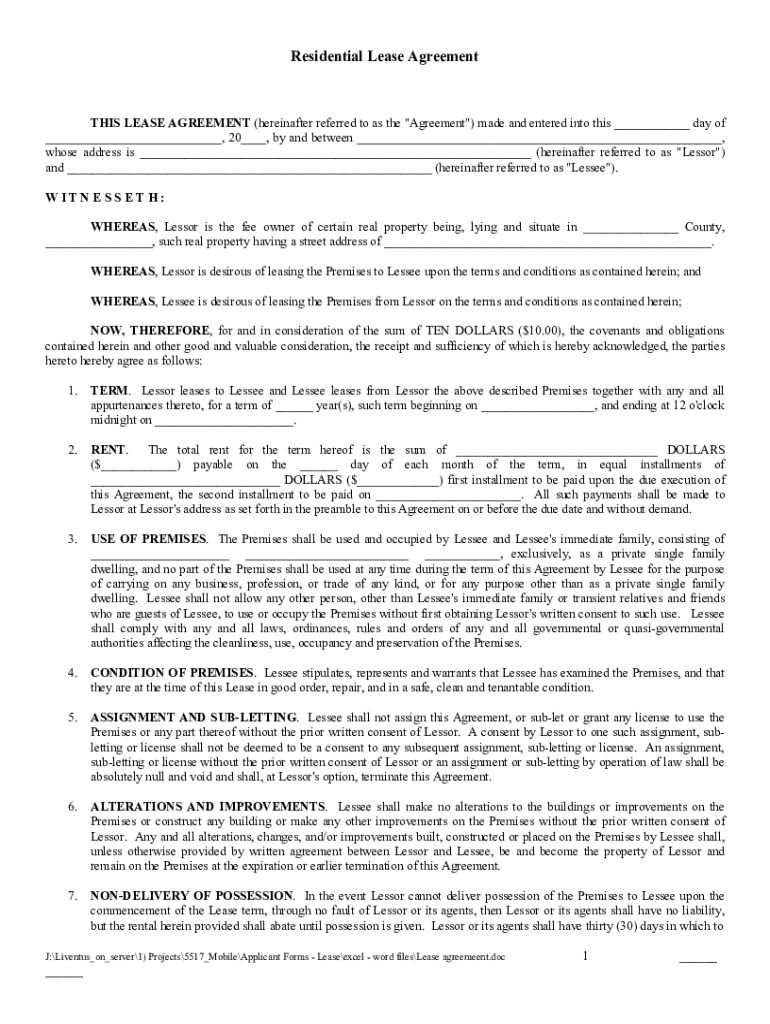
A rental lease agreement form is a legally binding document outlining the terms and conditions under which a property owner (the lessor) rents property to a tenant (the lessee). It serves as a written contract that establishes clear expectations for both parties regarding their rights and responsibilities during the rental period. The lease agreement typically details essential elements such as the duration of the lease, payment amounts, maintenance obligations, and rules governing the use of the property.
Key components of a rental lease agreement may include:
- Lease Term: Specifies the duration of the tenancy, often defined in months or years.
- Rent Amount: Clearly states the agreed-upon rent, payment schedule, and acceptable payment methods.
- Security Deposit: Outlines the amount required as a security deposit, along with conditions for its return.
- Permitted Uses: May restrict the property’s use to residential purposes and specify if subletting is allowed.
- Maintenance Responsibilities: Defines which party is responsible for property upkeep, repairs, and costs associated with them.
- Termination Conditions: Details the process for ending the lease, including notice periods and penalties for early termination.
Understanding these terms is crucial for both landlords and tenants, as it helps prevent misunderstandings and ensures that all parties adhere to the established agreements.
Key Elements of the Rental Lease Agreement Form
To create a comprehensive rental lease agreement, several key elements must be included to ensure clarity and legal protection for both the landlord and tenant. These elements provide a structured framework for the rental relationship.
- Parties Involved: Clearly identify the lessor and lessee, including their legal names and contact information.
- Property Description: Provide a detailed description of the rental property, including the address, unit number, and any additional amenities or facilities included.
- Term of Lease:
- Start Date: Clearly state when the lease begins.
- End Date: Specify the lease’s termination date or whether it is a month-to-month arrangement.
- Rent Payment Information:
- Amount: State the monthly rent due.
- Due Date: Specify when the rent is due each month.
- Late Fees: Describe any penalties for late rent payments.
- Security Deposit Details: Outline the amount required, the conditions for its retention, and the procedure for its return.
- Maintenance and Repairs: Specify the responsibilities for maintenance and repairs, distinguishing between landlord and tenant obligations.
- Rules and Regulations: Include any rules concerning property use, such as noise restrictions or pet policies.
- Termination Provisions: Detail the conditions under which the lease may be terminated prematurely, including notice requirements and potential penalties.
Including these key elements helps ensure that both parties have a mutual understanding of their roles and responsibilities, thereby reducing the likelihood of disputes.
Steps to Complete the Rental Lease Agreement Form
Completing a rental lease agreement form involves several important steps that ensure clarity and compliance with legal standards. This process should be undertaken with careful consideration to protect the rights and interests of both the landlord and tenant.
- Gather Necessary Information: Collect essential details, including the names of both parties, the property's address, and the agreed rental terms.
- Choose the Right Form: Either download a template online or obtain a form from a real estate professional that complies with local laws.
- Fill in Property Details:
- Include the full address and any specific features or amenities of the rental unit.
- Specify whether the rental is furnished or unfurnished.
- Define the Lease Terms:
- Clearly state the duration of the lease.
- Indicate the amount of rent and payment frequency.
- Outline Responsibilities: Specify who is responsible for repairs and maintenance, as well as any conditions for subletting.
- Sign and Date: Ensure both parties sign and date the agreement to make it legally binding.
- Distribute Copies: Provide signed copies to all parties involved, ensuring everyone retains an original document for future reference.
Properly completing the rental lease agreement form removes ambiguity and allows both parties to understand their obligations, contributing to a positive renting experience.
Importance of Using a Rental Lease Agreement Form
Utilizing a rental lease agreement form is essential for establishing a clear, legally enforceable framework for the landlord-tenant relationship. This document provides multiple benefits that enhance compliance, protection, and clarity for both parties.
- Legal Protection: A written agreement serves as evidence of the terms agreed upon, making it easier to resolve disputes should they arise. It protects both the landlord’s property rights and the tenant’s living conditions.
- Clear Expectations: The form outlines responsibilities, conditions of use, and rent payment schedules, which helps prevent misunderstandings. Tenants know exactly what they can and cannot do in the property.
- Recourse for Violations: Should either party fail to adhere to the agreed terms, the rental lease agreement provides a basis for legal action. Landlords can initiate eviction processes, while tenants can seek reparations for violations.
- Structure for Maintenance and Repairs: By designating responsibilities for property upkeep, the agreement promotes accountability and fosters a cooperative relationship between landlord and tenant.
- Regulatory Compliance: Many states have legal requirements surrounding rental agreements. A standardized lease form helps ensure compliance with local rental laws and regulations, which may vary significantly.
These benefits highlight the necessity of having a well-drafted rental lease agreement, making it a fundamental component of successful property rental.
Who Typically Uses the Rental Lease Agreement Form
Several parties can benefit from using a rental lease agreement form, spanning various situations in residential and commercial leasing. Recognizing who typically uses this form can provide insight into its applications and importance in different contexts.
- Residential Landlords: Individuals or companies renting residential properties to tenants often utilize this form to establish lease terms and conditions. This protects their investment and clarifies tenant obligations.
- Property Management Companies: These firms manage rental properties on behalf of owners, using lease agreements to standardize the rental process, ensuring compliance with policies and local laws.
- Tenants: Individuals seeking rental housing use this form to understand their rights and responsibilities, ensuring that they are protected throughout their tenancy.
- Commercial Property Owners: Those leasing commercial spaces, such as offices or retail stores, also employ specialized lease agreements tailored to commercial use, incorporating unique terms related to business operations.
- Investors in Real Estate: Investors who purchase rental properties aim to generate income. A solid lease agreement helps establish clear rental terms to ensure a seamless renting process.
Overall, anyone involved in a rental arrangement—whether as a landlord, tenant, or property manager—can make use of a rental lease agreement form to facilitate a structured relationship, promote accountability, and safeguard interests.