







Understanding Spiritual Gifts Assessment Printable
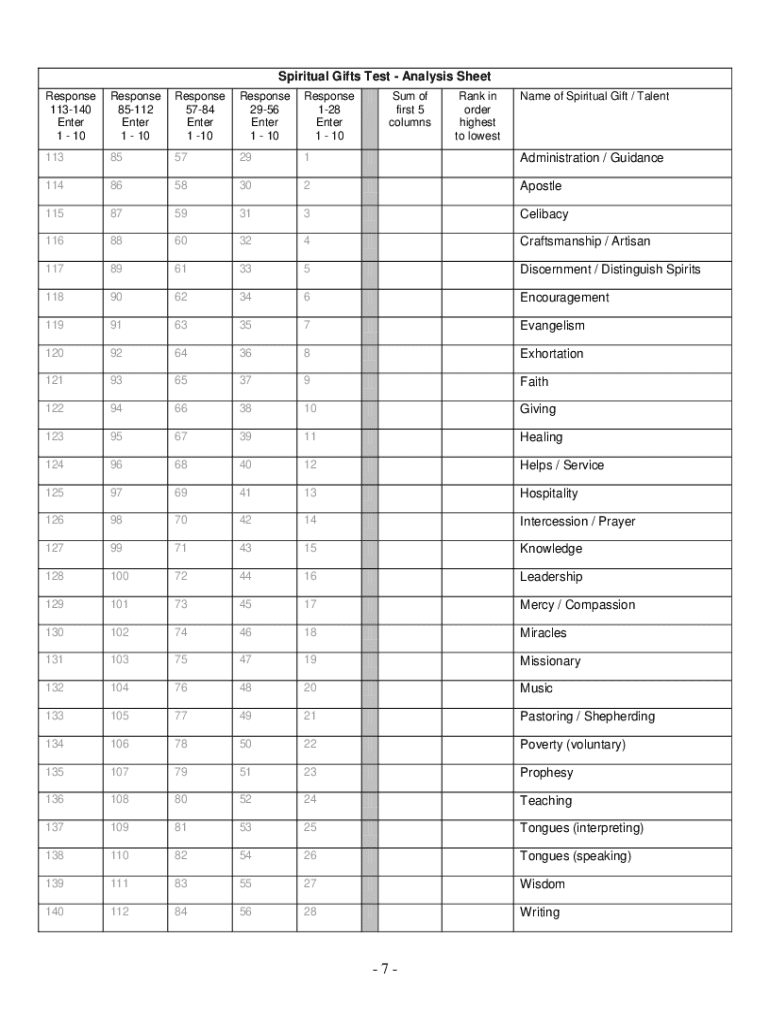
A spiritual gifts assessment printable is a valuable tool for individuals looking to identify their unique spiritual gifts, often used by Christians within various faith communities. This comprehensive evaluation typically contains a series of statements or questions, often requiring participants to reflect on their personal experiences, insights, and tendencies. Participants generally respond on a scale, helping to gauge the extent to which each statement resonates with them.
Purpose of the Spiritual Gifts Assessment
The primary purpose of this assessment is to assist individuals in discovering their spiritual gifts. Believers can utilize this knowledge to fulfill their roles within the church or community, enhancing both personal growth and collective service efforts. The assessments often aim to highlight gifts such as teaching, administration, service, and encouragement, providing a clearer understanding of how these gifts can be applied in real-world contexts.
Structure of the Assessment
Most spiritual gifts assessments consist of a series of statements that participants rate based on how applicable they find each one to themselves. Commonly, spiritual gifts assessments may vary in length, including options such as:
- Short Assessment (72 questions): Quick and easy to complete, suitable for initial exploration.
- Extended Assessment (140 questions): Provides more extensive insights into diverse areas of gifting.
The results typically yield a scoring system, categorizing strengths and suggesting areas for development, which can serve as a foundation for further study or engagement in ministry activities.
Analyzing Results and Next Steps
Once the assessment is completed, analyzing results becomes crucial. Many forms include a guide to interpreting scores, along with biblical references related to various spiritual gifts, thereby offering context. The following are often included:
- Definitions of Spiritual Gifts: Clear explanations of various gifts, aiding participants in understanding their significance.
- Biblical Foundations: Scriptural references that support the recognition of each gift, aligning assessment findings with the faith context.
Following analysis, individuals are encouraged to consider practical ways to apply their gifts within their communities, such as participating in volunteering opportunities, leading small groups, or joining church committees.
Types of Printable Spiritual Gifts Assessments
Several printable versions of spiritual gifts assessments are available, tailored to different audiences. Examples include:
- Catholic Spiritual Gifts Inventory: Aimed at Catholic congregations, offering insights grounded in Catholic teaching.
- Pentecostal Spiritual Gifts Test: Focusing on gifts pertinent to Pentecostal beliefs, such as prophecy or healing.
- Free Printable Tests: Easily accessible versions designed for personal use or group settings, ensuring that anyone interested can explore their spiritual gifts without financial constraints.
Collaboration with Others
Many congregations encourage group participation in completing spiritual gifts assessments, promoting discussion about the results. This collaborative environment not only fosters deeper understanding but also encourages community engagement. Leaders can create workshops where participants can share insights and brainstorm ways to support one another in using their gifts effectively.
Security and Accessibility of Assessment Tools
For those seeking to utilize printable versions of spiritual gifts assessments, platforms like DocHub can facilitate easy access and secure handling of personal information. These printable forms can be edited and shared within various environments, ensuring that individuals can complete their assessments in a comfortable, private setting while maintaining the confidentiality of their insights.
Conclusion
A spiritual gifts assessment printable provides an essential resource for individuals aiming to understand and utilize their unique spiritual gifts within their communities. By engaging with these assessments, participants are empowered to discern their roles within the church, contributing meaningfully to collective mission and service initiatives.




