






Understanding Statutory Declarations in South Australia
A statutory declaration is a formal statement made by an individual to affirm that the contents within the declaration are true. This legal document is commonly used in various situations where verification of facts is required. In South Australia, a statutory declaration must follow specific guidelines, including the necessity of being signed before an authorized witness.
Key Components of a Statutory Declaration
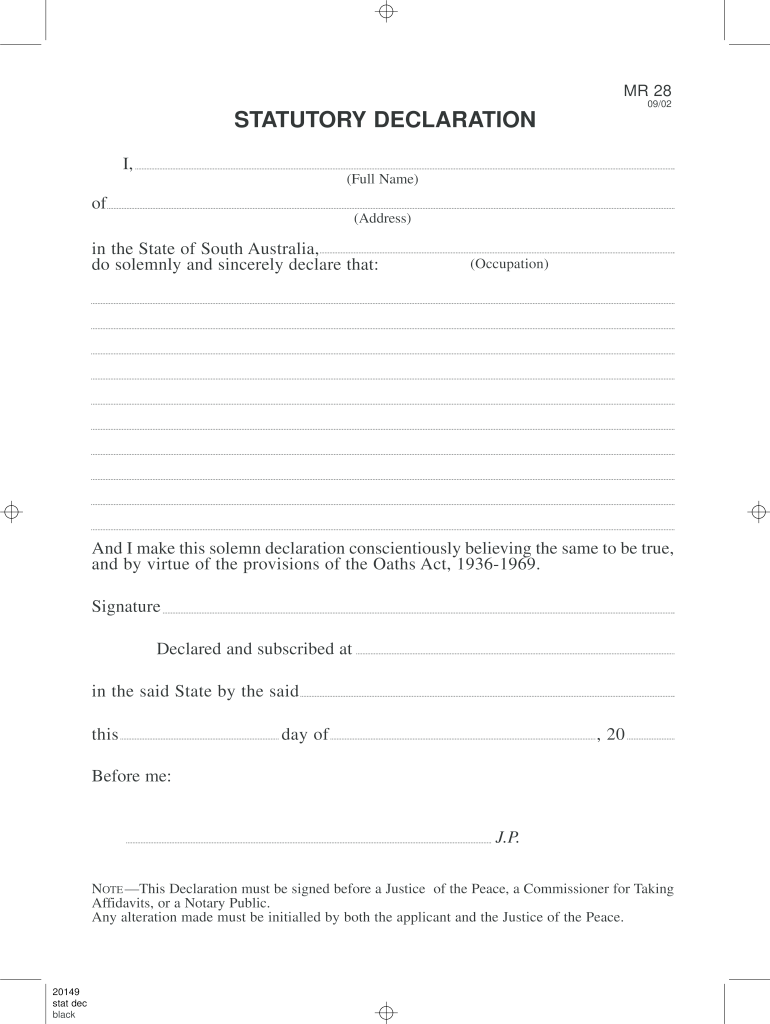
- Declarant Details: The individual making the declaration must provide their full name, address, and occupation.
- Statement of Truth: The declaration must contain a clear statement affirming the truth of the contents.
- Witnessing Requirement: The document must be signed in the presence of a qualified witness, such as a Justice of the Peace, legal practitioner, or police officer.
Usage Context for Statutory Declarations
Statutory declarations are utilized in instances where formal proof of identity, residency, or other factual statements is required, such as:
- Confirming one’s identity for government services or legal proceedings.
- Supporting applications for various licenses, permits, or public benefits.
- Providing evidence in civil court or administrative matters.
This flexibility makes the statutory declaration a crucial tool in affirming truths within legal and formal contexts.
Steps to Complete a Statutory Declaration in South Australia
-
Obtain the Form: Find the statutory declaration form suitable for your situation, such as the statutory declaration SA Word format or PDF version. These forms can typically be acquired online or from legal service offices.
-
Fill Out the Form: Provide all necessary details, ensuring accuracy in every field, particularly in personal information and the details of the declaration.
-
Select a Witness: Choose an eligible witness who can attest to your signing of the declaration. Ensure the witness understands their role and can fulfill it.
-
Sign in Presence of Witness: Sign the completed declaration in front of your chosen witness, who will also sign and date the document, affirming they observed your signature.
-
Distribute the Declaration: Depending on its purpose, submit the statutory declaration as required, whether to a government body, legal entity, or third party.
Common Scenarios Requiring a Statutory Declaration
- Replacing Lost Documents: Individuals may be required to declare the loss of important documents, such as passports or identification.
- Applications for Aid: Statutory declarations are often necessary for applications related to sick leave or public assistance, verifying statements made.
Legal Requirements and Validity of Statutory Declarations
In South Australia, statutory declarations are governed under the Oaths Act, which outlines the legal standards for validity. To ensure compliance:
- The person making the declaration must have the mental capacity to do so.
- The declaration must not include false information, as this can lead to legal repercussions, including potential charges for perjury.
Importance of Accuracy
Accuracy in preparing and signing the declaration is essential, as any misrepresentation can invalidate the document and may result in legal consequences.
- Ensure every piece of information is precise and true.
- Double-check the details with another source if uncertain.
Variants and Alternatives to Statutory Declarations
While statutory declarations serve a wide array of purposes, there are other forms that may be used in similar contexts:
- Affidavits: Sworn statements made under oath, usually used in court settings.
- Declarations: Less formal than statutory declarations, these may not require a witness but may lack legal standing.
How to Choose the Right Document
Selecting between these documents depends on the legal requirements of your specific situation. Assess the following factors:
- Purpose: Identify whether the document will be used legally or administratively.
- Requirements: Check if a witness is necessary and if there are specific details required.
Accessibility of Statutory Declaration Forms
Statutory declaration forms in South Australia can be obtained through various means, including:
- Online platforms that provide downloadable formats like the statutory declaration SA Word document.
- Legal service offices or community legal centers, where assistance can be sought in completing the forms.
Online Access to Forms
- Many individuals prefer the convenience of accessing forms online, allowing for immediate downloads and ease of use.
- Ensure you are using the most current version of the form to avoid any issues with submission.
Conclusion on Usage of Statutory Declarations
Understanding the requirements and proper completion of a statutory declaration is crucial to navigating various legal and administrative processes. Ensuring accuracy and compliance with legal standards not only affirms the validity of the document but also protects the declarant from any potential legal ramifications.