
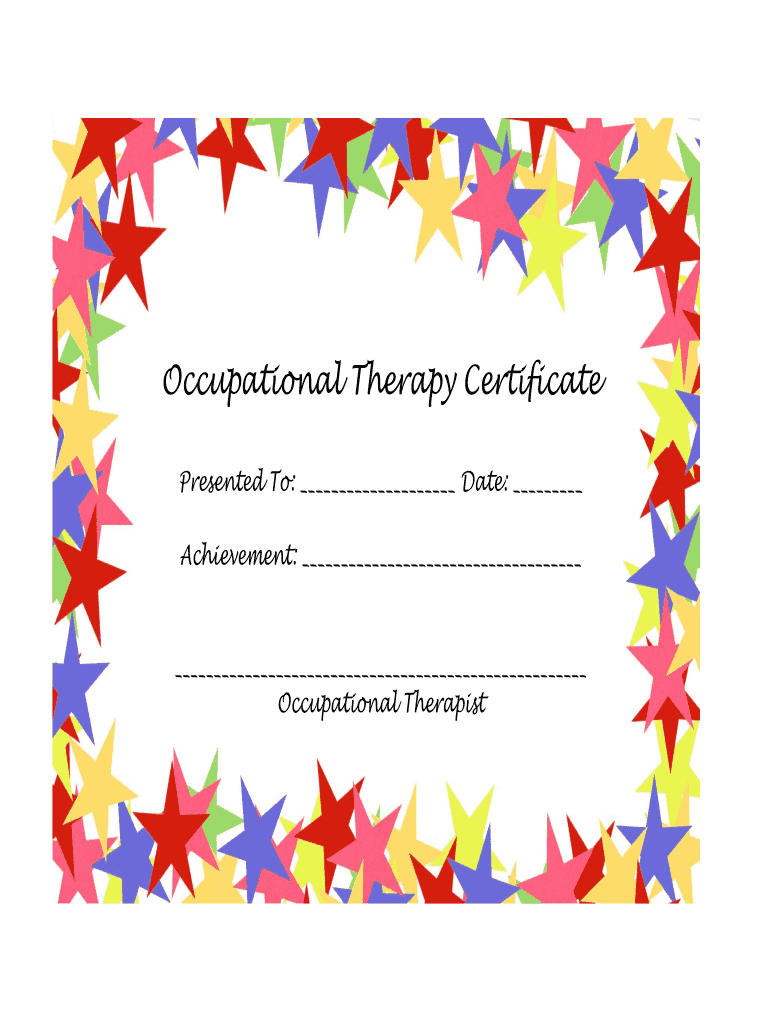







Definition and Meaning of the Occupational Therapy Certificate
The Occupational Therapy Certificate typically signifies the attainment of skills and knowledge necessary for professionals working in the field of occupational therapy. This certificate may be awarded upon completion of specific educational programs or as part of a professional development pathway. It serves as a recognition that an individual has met certain competencies in the practice of occupational therapy.
- Purpose: This certificate is essential for those seeking to demonstrate their qualifications and readiness to engage in therapeutic practices that help individuals regain or enhance their ability to perform daily activities.
- Relevance: It is particularly important for individuals working with populations such as children, the elderly, or patients recovering from injuries, as these practitioners are responsible for developing tailored interventions that improve functional independence.
How to Use the Occupational Therapy Certificate
Utilizing the Occupational Therapy Certificate involves understanding both its applications and implications in various professional settings.
- Employment Opportunities: Holders of this certificate can apply for positions in hospitals, rehabilitation centers, schools, and private practices. This credential can enhance a candidate's profile and improve job prospects in a competitive job market.
- Professional Context: The certificate is often required for registration and licensure in many states. Employers frequently seek evidence of certification during the hiring process to ensure compliance with legal and professional standards.
Real-World Applications
- A recent graduate of an occupational therapy program may leverage their certificate when applying for clinical positions, providing proof of their education and training.
- Organizations may require staff to hold specific certifications to maintain funding or accreditation, emphasizing the certificate's importance in organizational settings.
How to Obtain the Occupational Therapy Certificate
Acquiring the Occupational Therapy Certificate generally involves completing an accredited occupational therapy program followed by an examination.
- Educational Requirements: Candidates typically need a master's degree in occupational therapy from an accredited institution. Coursework often includes anatomy, psychology, and clinical practice.
- Clinical Fieldwork: Most programs require hands-on training, where students work under the supervision of licensed practitioners to gain practical experience.
- Certification Examination: After completing academic requirements, candidates must pass a national certification exam administered by the National Board for Certification in Occupational Therapy (NBCOT).
Additional Considerations
- State Licensure: Following certification, many states require additional licensure, which may include application fees and background checks.
- Continuing Education: To maintain certification, professionals often need to complete continuing education credits regularly.
Steps to Complete the Occupational Therapy Certificate
Completing the Occupational Therapy Certificate involves several key steps. Below is a structured approach to guiding potential candidates:
-
Select an Accredited Program:
- Research and select a program accredited by the Accreditation Council for Occupational Therapy Education (ACOTE).
-
Fulfill Admission Requirements:
- Complete prerequisite courses and submit standardized test scores (if required).
- Include letters of recommendation and a personal statement highlighting interest in occupational therapy.
-
Complete Required Coursework and Fieldwork:
- Engage actively in both theoretical courses and any designated supervised fieldwork experiences.
-
Prepare for and Pass the NBCOT Exam:
- Utilize study materials and practice exams to prepare for the national certification exam.
- Schedule and complete the exam within the designated time frame after graduation.
-
Apply for State Licensure:
- Submit all necessary documents to the appropriate state board to obtain licensure, alongside any fees required.
Follow-Up Steps
- Continuing Education: Stay informed about and complete any continuing education requirements needed to maintain the certification and licensure.
- Professional Association Memberships: Join relevant professional organizations to network and access resources.
Key Elements of the Occupational Therapy Certificate
Several key elements define the Occupational Therapy Certificate's structure and significance:
- Recipient Information: The certificate should include the name of the individual who completed the requirements, the degree or program from which they graduated, and the date of issuance.
- Issuing Body: It should indicate the certifying organization, such as the NBCOT or specific educational institutions.
- Seal or Signature: An official seal or signature is often included to authenticate the document.
- Designations: If the recipient qualifies for specific designations (e.g., Registered Occupational Therapist - OTR), these should be clearly stated.
Examples of Certification Elements
- Designations in Use: Certificates can reflect the holder's specializations, like pediatric occupational therapy or geriatric care, inviting employers to recognize specific expertise.
- State Variability: Some states may have unique requirements or designations, so it is crucial to ensure that the certificate aligns with state regulations.
Important Terms Related to the Occupational Therapy Certificate
Understanding specific terminology is crucial for effective communication regarding the Occupational Therapy Certificate.
- Occupational Therapy (OT): A healthcare profession focused on helping individuals achieve independence in all facets of their lives through therapeutic activities.
- Certification Exam: The test required to validate a candidate's knowledge and readiness to practice as an occupational therapist.
- Clinical Fieldwork: Practical, hands-on experience gained during the educational program, where students apply learned skills in real-world settings.
Critical Terms Clarified
- NBCOT: The National Board for Certification in Occupational Therapy, the organization that oversees the certification exam and maintains professional standards.
- Professional Development: Ongoing education and skills enhancement following initial certification, necessary for staying current in the field.
State-Specific Rules for the Occupational Therapy Certificate
It's important to recognize that regulations concerning the Occupational Therapy Certificate can vary significantly by state.
- Licensure Requirements: Each state has its own requirements regarding obtaining a license after certification, including unique continuing education mandates.
- Practice Regulations: Some states may have particular rules governing the scope of practice for licensed occupational therapists, affecting their roles within healthcare.
Variations Across States
- Continuity of Care: States may differ in how they regulate the transition between occupational therapy settings, impacting how therapists provide care in different environments.
- Dual Licensure: Some states may require additional certifications for specialized practice areas, such as pediatric therapy.
Examples of Using the Occupational Therapy Certificate
Practical applications of the Occupational Therapy Certificate can be observed in various professional contexts:
- Employment Situations: Hiring managers often look for certified professionals when filling occupational therapy positions, particularly to ensure compliance with legal regulations and organizational standards.
- Professional Recognition: The certificate serves as a badge of competence, signaling to peers, clients, and employers that the individual has met the requisite qualifications.
Scenarios Demonstrating Value
- A recent graduate presents their Occupational Therapy Certificate during a job interview, aiding in securing a competitive position in a rehabilitation center.
- An established occupational therapist utilizes their certification when seeking advancement opportunities, demonstrating ongoing professional engagement and expertise.
This extensive coverage addresses the relevant aspects of the "Occupational Therapy Certificate - PediaStaff," ensuring that individuals interested in occupational therapy have a comprehensive resource to guide their understanding and pursuit of certification.




