






Definition and Meaning of Motion to Dismiss in Indiana
A motion to dismiss is a legal request submitted to the court, aimed at dismissing a case before it goes to trial. It can be filed by either the defendant or the plaintiff in a civil case, and it seeks to challenge the validity of the claims made against a party. In Indiana, this motion is often used to argue that the complaint lacks legal merit, jurisdiction, or that the statute of limitations has expired.
- With Prejudice vs. Without Prejudice:
- A dismissal "with prejudice" means that the case is permanently closed and cannot be filed again.
- A dismissal "without prejudice" allows the plaintiff the option to refile the case in the future, preserving their right to pursue the claim.
Understanding the nuances of these terms is essential for parties involved in legal disputes, as they can significantly affect future legal options.
How to Use the Motion to Dismiss Indiana Form
Using the motion to dismiss form in Indiana involves several key steps:
- Obtain the Form: Access the appropriate Indiana motion to dismiss form applicable to your case type.
- Complete Personal and Case Information: Fill in pertinent details, including the case number, names of involved parties, and court information.
- State Grounds for Dismissal: Clearly articulate the legal reasons for your motion. Common grounds include lack of jurisdiction, failure to state a claim, or expiration of the statute of limitations.
- Sign and Date the Form: Ensure you sign the document, affirming its authenticity.
Make sure to keep a copy of the completed motion for your records. Failure to properly fill out or submit the form can result in delays or dismissals of the motion itself.
Steps to Complete the Motion to Dismiss Indiana Form
Completing the motion to dismiss form generally follows these steps:
- Read the Instructions: Understand any specific directions provided with the form to ensure compliance with local court rules.
- Gather Required Information: Have your legal documents at hand to provide accurate case information.
- Fill in the Form:
- Start with your personal details, including name and address, followed by the details of the opposing party.
- Include the case title and number as they appear in court records.
- Articulate Grounds for Dismissal:
- Clearly outline each legal premise supporting your request for dismissal. Use examples and cite relevant laws if applicable.
- Review and Edit: Before submission, double-check for completeness and correctness. Ensure there are no typographical errors or omissions.
- File with the Court: Submit the motion to the appropriate court, either online or in-person, depending on local rules.
- Serve the Other Party: After filing, serve a copy of the motion to the other party involved in the case, and provide proof of this service to the court.
By following these steps, you can ensure that your motion to dismiss is properly completed and submitted.
Key Elements of the Motion to Dismiss Indiana Form
When preparing a motion to dismiss in Indiana, it is important to include essential elements to support your case:
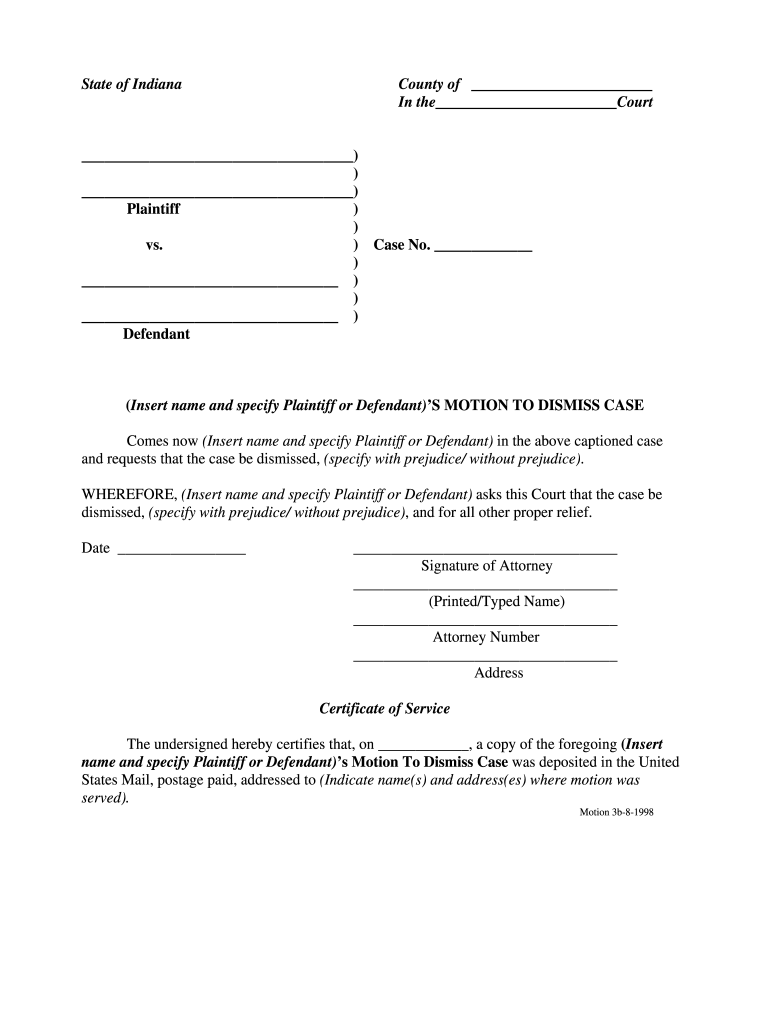
- Title of the Document: Clearly label the document as a "Motion to Dismiss."
- Case Caption: Include the court name, case number, and names of both parties. This identifies the specific case to which the motion pertains.
- Statement of Facts: Provide a concise summary of relevant facts that lead to the legal argument for dismissal.
- Legal Grounds for Dismissal: Identify the legal basis on which you are requesting the dismissal, citing relevant statutes or case law.
- Conclusion: Summarize your request succinctly, restating your motion's purpose.
Incorporating these elements ensures that your motion adheres to legal standards and effectively communicates your position to the court.
Important Terms Related to Motion to Dismiss Indiana Form
Understanding key legal terminology related to the motion to dismiss is critical for crafting effective legal documents:
- Jurisdiction: The authority of a court to hear a particular case.
- Plaintiff: The party who initiates a lawsuit.
- Defendant: The individual or entity being accused or sued.
- Statute of Limitations: The time period within which a legal action must be initiated.
- Service of Process: The procedure of legally notifying a party of the legal action against them.
Grasping these terms will aid in navigating legal documents and processes related to your motion.
Legal Use of the Motion to Dismiss Indiana Form
The motion to dismiss is a powerful legal tool, employed strategically in several situations:
- Early Resolution: It aims to resolve cases quickly without the need for lengthy trials when there are clear shortcomings in the plaintiff's claims.
- Cost-Efficiency: Filing a motion to dismiss can significantly reduce litigation costs by eliminating frivolous claims before they proceed.
- Legal Precedent: Citing applicable case law during your motion can bolster your argument and provide the court with a precedent for dismissal.
- Protecting Rights: It can safeguard defendants from unjust claims, allowing them to assert their rights effectively within the legal system.
Utilizing the motion to dismiss effectively helps parties navigate the legal landscape with greater efficiency and protection from unfounded lawsuits.
Who Typically Uses the Motion to Dismiss Indiana Form
Various parties may utilize the motion to dismiss in Indiana legal proceedings:
- Defendants: Commonly, defendants use this motion to challenge the validity of the claims against them early in the litigation process.
- Plaintiffs: In some cases, plaintiffs may file a motion to dismiss their own claims if they choose to withdraw or if they believe the claims are no longer valid.
- Pro Se Litigants: Individuals representing themselves may also file motions to dismiss when they recognize legal defects in the complaints against them.
Understanding the roles of different parties in the motion to dismiss process can guide individuals through their legal actions, whether they are defending or initiating a claim.