




01. Edit your custom home selection sheet template online
Type text, add images, blackout confidential details, add comments, highlights and more.

Type text, add images, blackout confidential details, add comments, highlights and more.

Draw your signature, type it, upload its image, or use your mobile device as a signature pad.

Send material selection sheet template via email, link, or fax. You can also download it, export it or print it out.
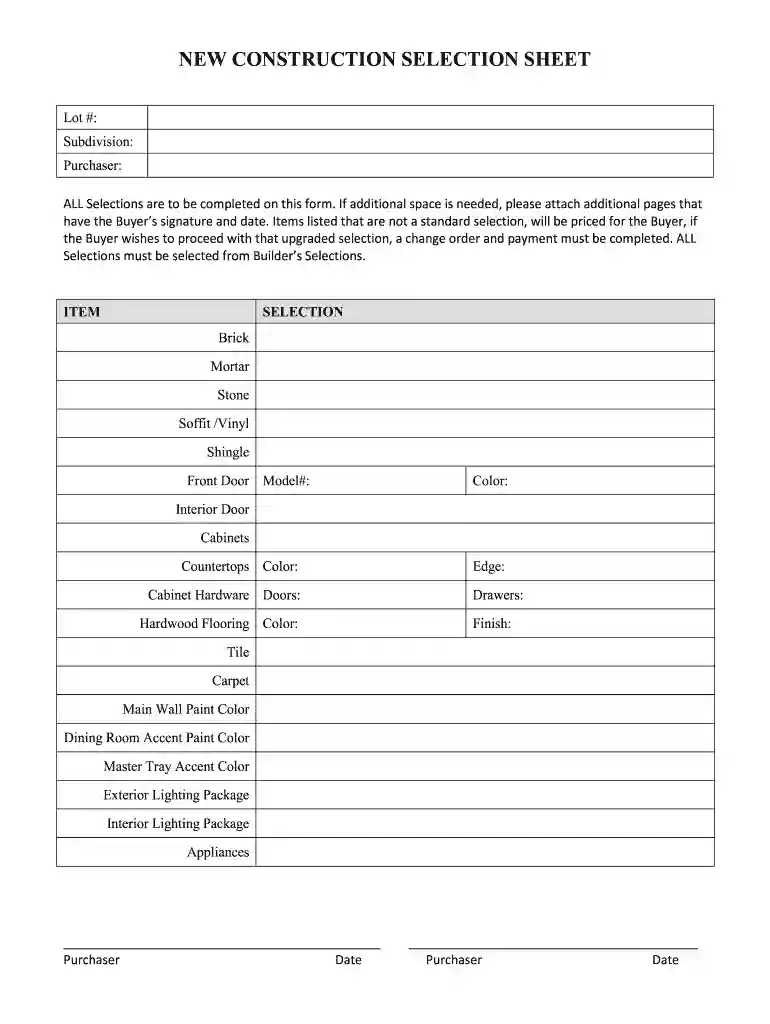
A selection sheet is a form commonly used in the construction and interior design industries that helps clients and builders make decisions regarding the materials, finishes, and features of a new home or renovation project. It provides a comprehensive layout for homeowners to outline their preferences, ensuring that all selections are documented clearly and concisely.
Using a selection sheet assists builders in managing client decisions, streamlining the process, and ensuring that all specifications are clearly understood and agreed upon before moving forward.
Documenting selections through a structured form is critical in the construction process:
Prevents Misunderstandings:
Facilitates Order Tracking:
Optimizes Client Decision-Making:
A new home construction selection sheet typically includes various critical sections that guide homeowners through their decision-making process. Each section serves a specific purpose and can be tailored to individual client needs.
Standard Features:
Custom Features:
Flooring and Tile Selections:
Appliance Choices:
Lighting and Electrical:
Using a selection sheet involves a structured approach to ensure all relevant decisions are captured. The following steps outline how clients can effectively utilize this form:
Review Available Choices:
Make Initial Selections:
Consider Budget Implications:
Final Review with Builder:
Sign Off on Selections:
When completing a selection sheet, homeowners should be aware of common pitfalls that can delay the process or result in dissatisfaction with final outcomes.
Rushing the Decision-Making Process:
Neglecting Importance of Details:
Failing to Communicate Changes:
Understanding the legal implications of using a selection sheet is crucial for both builders and clients. While the selection sheet is primarily a practical tool, its aspects can have legal ramifications:
Contractual Obligations:
Cost Adjustments:
Protects Rights:
Clarifies Responsibilities:
Interior design projects require a nuanced approach when using selection sheets, as numerous aesthetic details can heavily influence the final output.
Be Open to Collaboration:
Utilize Visual Aids:
Conduct Regular Meetings:
Maintain Flexibility:
Ensuring a thorough understanding of the selection sheet's utility and meticulous attention to detail can significantly enhance the overall construction and design experience for homeowners.
At DocHub, your data security is our priority. We follow HIPAA, SOC2, GDPR, and other standards, so you can work on your documents with confidence.
While pressing the Cal button, press and release the ON/OFF button to enter the. User Reset selection menu. The screen will display rSt on the bottomRead more
Jun 10, 2025 Low-Scored Site Initiative Application Contractor Selection Sheet. Home Divisions Division of Waste Management Petroleum RestorationRead more
A custom home selection sheet is a document or form that is used by home builders or homeowners to specify and make selections for various customizable featuresRead more


