

TEACHERS PERCEPTIONS OF CONSTRAINTS ON IMPROVING STUDENT 2026

Get Form
TEACHERS PERCEPTIONS OF CONSTRAINTS ON IMPROVING STUDENT Preview on Page 1

Here's how it works

01. Edit your form online
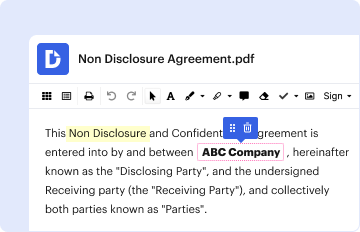
Type text, add images, blackout confidential details, add comments, highlights and more.
02. Sign it in a few clicks
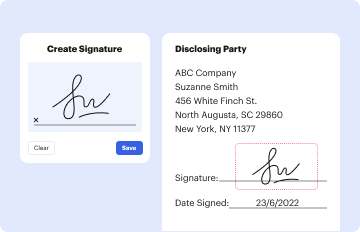
Draw your signature, type it, upload its image, or use your mobile device as a signature pad.
03. Share your form with others
Send it via email, link, or fax. You can also download it, export it or print it out.

How to use or fill out TEACHERS PERCEPTIONS OF CONSTRAINTS ON IMPROVING STUDENT with our platform

Form edit decoration
9.5
Ease of Setup
DocHub User Ratings on G2
9.0
Ease of Use
DocHub User Ratings on G2
  1. Click ‘Get Form’ to open the TEACHERS PERCEPTIONS OF CONSTRAINTS ON IMPROVING STUDENT document in the editor.
  2. Begin by filling out your personal information in the designated fields, including your name, educational background, and teaching experience.
  3. Proceed to the section regarding teacher-related constraints. Carefully read each statement and select your level of agreement using the provided scale from 'Strongly Agree' to 'Strongly Disagree'.
  4. Next, address the student-related constraints section. Again, indicate your agreement with each statement about students' perceptions and behaviors that may affect their thinking skills.
  5. Continue to the curriculum-related constraints section. Reflect on how you perceive the curriculum's impact on improving student thinking skills and mark your responses accordingly.
  6. Finally, complete the external factors section by evaluating how outside influences may hinder or help improve student thinking skills.
  7. Once all sections are filled out, review your responses for accuracy before submitting the form.

Engage with our platform today to streamline your document editing and enhance your workflow!

be ready to get more

Complete this form in 5 minutes or less

Get form

Got questions?

We have answers to the most popular questions from our customers. If you can't find an answer to your question, please contact us.
Contact us
Perception of learning can also influence current learning by helping students identify areas in their study where they need to improve. Sometimes, students may need help to see how their learning is making a difference in the real world.
Teacher perceptions refer to the cognitive, emotional, and attitudinal perspectives and beliefs held by educators regarding various aspects of their professional roles, the teaching and learning process, and the educational environment.
In particular, teachers perspectives on learning often emphasize three ideas, and sometimes even take them for granted: (1) curriculum content and academic achievement, (2) sequencing and readiness, and (3) the importance of transferring learning to new or future situations.
Classroom management, student engagement, differentiated instruction, work-life balance, and limited resources are challenges that can be overcome with strategic approaches, collaboration, and a focus on student needs.
Some qualities of a good teacher include skills in communication, listening, collaboration, adaptability, empathy and patience. Other characteristics of effective teaching include an engaging classroom presence, value in real-world learning, exchange of best practices and a lifelong love of learning.

Security and compliance

At DocHub, your data security is our priority. We follow HIPAA, SOC2, GDPR, and other standards, so you can work on your documents with confidence.

Learn more
ccpa2
pci-dss
gdpr-compliance
hipaa
soc-compliance
be ready to get more

Complete this form in 5 minutes or less

Get form

People also ask

Teacher perceptionsthe thoughts or mental images teachers have about their studentsare shaped by their background knowledge and life experiences. These experiences might involve their family history or tradition, education, work, culture, or community.
These constraints are learning skill/action related occurring factors (that needs to be adapted to it doesnt disappear) that may get in the way of learning and they are in the domains of individual (structural and task), environment and task.

Related links