






Definition and Importance of a Safety Plan for Crisis Prevention in Hawaii
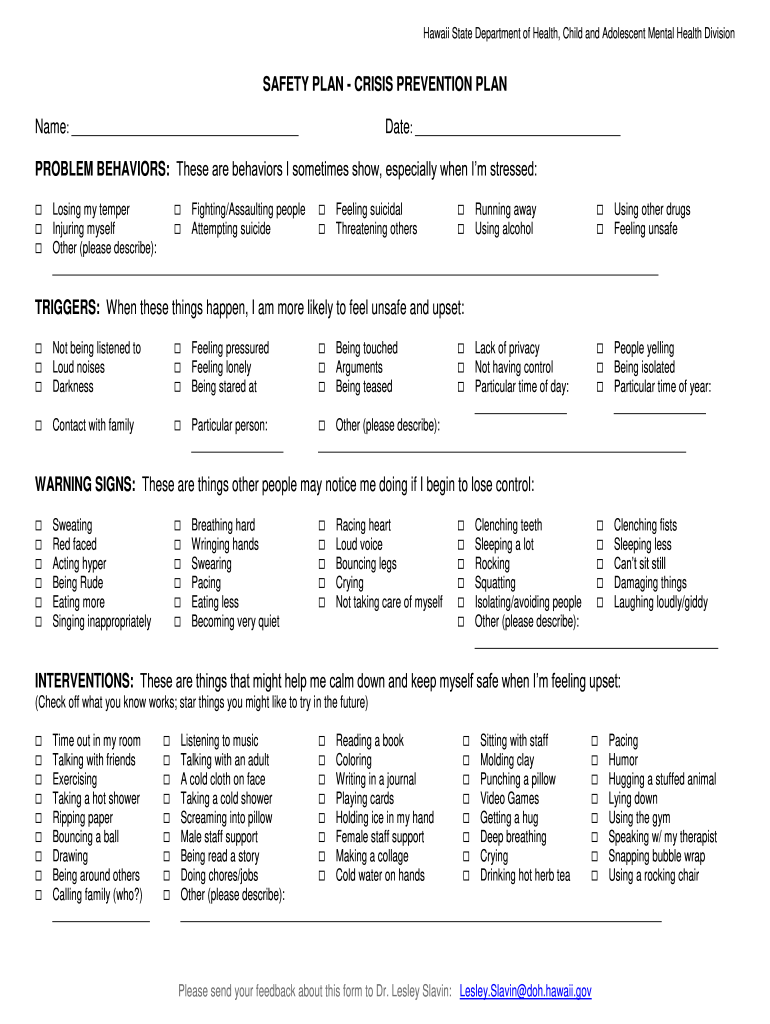
A safety plan for crisis prevention in Hawaii is a structured framework designed to address potential crises that individuals—particularly children and adolescents—may face. It serves as a proactive measure to identify risks, outline coping strategies, and establish a support system to manage challenging situations effectively.
Essential Components of a Safety Plan
- Identifying Triggers: Understanding what events or circumstances lead to crises.
- Warning Signs: Recognizing early indicators that a crisis may be imminent.
- Coping Strategies: Outlining specific techniques or actions that can help an individual regain control.
- Support Resources: Listing individuals (parents, professionals, or peers) who can provide support.
The importance of such a plan lies in its ability to empower individuals to take ownership of their mental health and to establish a collaborative relationship between them and their caregivers. By actively participating in the development of the plan, young people are more likely to feel invested in the strategies outlined and therefore utilize them during challenging times.
How to Utilize the Safety Plan Crisis Prevention Plan in Hawaii
Effectively using a safety plan for crisis prevention involves several key steps that emphasize ownership, flexibility, and collaboration.
Step-by-Step Utilization
- Know Your Triggers: Engage the individual in identifying specific situations or interactions that typically prompt a crisis.
- Monitor Warning Signs: Teach the individual to recognize personal signs of distress (e.g., changes in mood or behavior) early on.
- Implement Coping Strategies: Collaborate to establish a list of coping techniques tailored to the individual’s preferences, such as deep breathing exercises or engaging in a favorite hobby.
- Access Support: Encourage the individual to know when and how to reach out for assistance from designated support persons.
The involvement of caregivers in this process is critical to ensure that the strategies are not only effective but also align with the individual's unique needs and circumstances. Regularly revisiting the plan to adapt to changes in the individual’s experiences or external environment is essential for maintaining its relevance.
Steps to Complete the Safety Plan Crisis Prevention Plan in Hawaii
Creating an effective safety plan for crisis prevention in Hawaii requires systematic steps to ensure clarity and applicability.
Comprehensive Steps to Develop a Safety Plan
- Gather Input: Organize a meeting with the individual and their support system, including caregivers and mental health professionals.
- Outline Key Sections: Structure the plan into distinct sections focusing on triggers, warning signs, coping strategies, and emergency contacts.
- Fill Out the Plan: Collaboratively complete each section, ensuring it is personalized and includes specific examples relevant to the individual.
- Review and Finalize: Go over the finished plan together, making adjustments as necessary, and confirm that all parties understand their roles.
- Implementation: Encourage the individual to practice using the plan in low-stress situations to build confidence before they might need it in a crisis.
Completing these steps not only results in a practical and personalized document but also ensures that everyone involved has a clear understanding of how to respond effectively when crises arise.
Key Elements of a Safety Plan for Crisis Prevention in Hawaii
A well-constructed safety plan comprises several crucial elements necessary for navigating potential crises successfully.
Important Elements Explained
- Personal Information: Basic details about the individual, including their preferences and values that might be relevant in a crisis.
- Crisis Triggers List: A detailed account of specific events or situations that may escalate to a crisis.
- Coping Skills Inventory: An array of strategies tailored to the individual, such as mindfulness techniques or sensory grounding practices.
- Emergency Contacts: A list of trusted individuals or professionals who can provide immediate support.
- Follow-Up Procedures: Steps for ensuring continual support and adjustments to the plan.
It is vital for the safety plan to be flexible; as individuals grow and circumstances change, the plan should evolve to reflect new challenges or coping mechanisms. Regular guides for review and revision can assist in keeping the safety plan relevant.
Who Typically Uses the Safety Plan for Crisis Prevention in Hawaii
The target users of a safety plan for crisis prevention in Hawaii range widely but generally include individuals and groups involved in supporting mental health.

Typical Users
- Children and Adolescents: Young individuals experiencing emotional or behavioral challenges.
- Parents and Caregivers: Adults involved in the upbringing and support of young people, especially those exhibiting signs of distress.
- Mental Health Professionals: Psychologists, counselors, or social workers who assist in developing and implementing the plan.
- Educators and School Staff: Teachers or school counselors who may utilize the plan within educational environments.
By understanding who benefits from the safety plan, it can be further tailored to meet the specific needs of these user groups, promoting a sustainable support system when crises occur.