Definition and Meaning of a Notice of Assessment
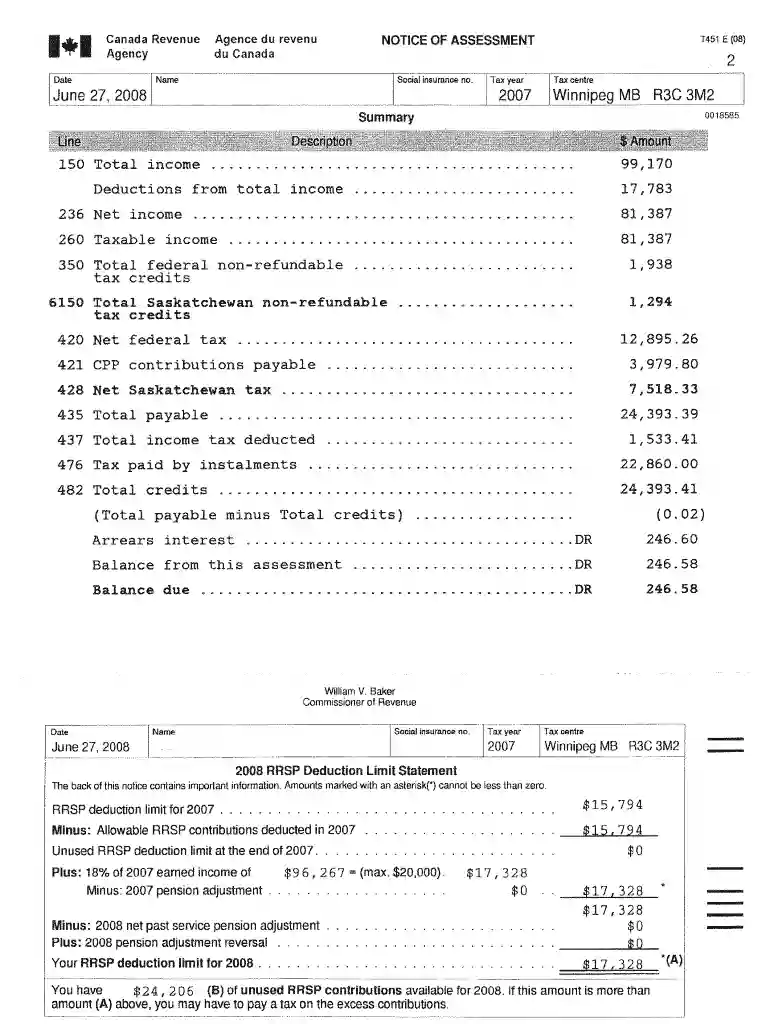
A notice of assessment is an official document issued by a tax authority, such as the Canada Revenue Agency (CRA) or the Internal Revenue Service (IRS), that summarizes a taxpayer's filing status and assesses the amount of taxes owed or the refund due. The notice typically details income, deductions, credits, and tax calculations relevant to a particular tax year. Its primary function is to inform the taxpayer of their tax situation in a clear, concise manner, enabling them to review their financial responsibilities and any actions needed regarding their taxes.
Key Components of a Notice of Assessment
- Tax Year: Identifies the specific tax year being assessed.
- Taxpayer Information: Includes the name and social insurance number or taxpayer identification number to match the assessment with the correct individual.
- Assessment Summary: A breakdown of reported income, tax payable, credits claimed, and any adjustments made by the tax authority.
- Balance Due/Refund: Clearly states the amount owed to the tax authority or the refund available to the taxpayer.
- Access Code: A unique identifier that can be used for online account management or for filing appeals.
How to Use a Notice of Assessment
To effectively utilize a notice of assessment, taxpayers should take the following steps:
- Review Details: Carefully read the entire document. Confirm that personal details, income, and deductions match your records to ensure accuracy.
- Compare with Tax Returns: Match the assessment against your submitted tax return to identify any discrepancies or changes made by the tax authority.
- Respond as Necessary: If you owe taxes, prepare to make the payment by the due date. If you disagree with the assessment, use the information provided to file an appeal or seek advice if needed.
- Retention: Keep a copy of the notice for your records, as it may be required for future references or audits.
Understanding and utilizing the notice of assessment helps maintain tax compliance and ensures accurate record-keeping.
Examples of Notices of Assessment
Sample Notice of Assessment from Canada Revenue Agency
Imagine you received your notice of assessment from the CRA for the 2022 tax year. This document shows:
- Income Information: Total income reported was $50,000, and deductions allowed were $10,000, leading to a net taxable income of $40,000.
- Tax Calculation: Reflects federal and provincial tax rates, showing total tax calculated as $6,000.
- Credits Applied: Takes into consideration basic personal and other eligible credits, resulting in a net tax payable of $3,000.
- Final Refund: Indicates a refund of $500 due to overpayment through payroll deductions.
Sample Notice of Assessment from Internal Revenue Service
A notice of assessment issued by the IRS might display:
- Filing Status: Indicating you filed as Married Filing Jointly.
- Reported Income: Total adjusted gross income of $80,000 with applicable adjustments.
- Tax Liability Calculation: Total tax owed is $14,000 with $16,000 already paid, leading to a refund of $2,000.
- Reason for Adjustments: Providing a concise explanation if your submitted deductions differ from IRS records.
These personalized examples of notices of assessment can clarify what to expect and highlight the essential details to note.
Important Dates Related to Notice of Assessment
Taxpayers must keep track of key dates related to their notice of assessment, including:
- Filing Deadline: Generally, for individual taxpayers in the U.S., this is April 15. In Canada, the personal tax return deadline is April 30.
- Assessment Issuance: Notices are typically sent within a few weeks to a few months following the submission of the tax return, depending on the volume of filings and potential discrepancies.
- Payment Due Date: Any taxes owed must typically be paid by the filing deadline or within the period specified on the notice to avoid penalties and interest.
- Appeal Submission Dates: If disputing the assessment, be aware of the window allotted for filing an appeal, which may vary by jurisdiction.
Understanding these timelines can help avoid unnecessary penalties and ensure that all tax obligations are met promptly.
Filing Deadlines and Important Dates
Filing deadlines are essential to maintaining compliance with tax regulations.
- U.S. Deadlines: The individual income tax return must be filed by April 15 unless extended. If you file for a six-month extension, the revised deadline is October 15.
- Canadian Deadlines: Personal income tax returns must be filed by April 30. For self-employed individuals, the deadline is June 15.
Late filings may result in penalties or interest on taxes due, reinforcing the importance of adhering to specified dates.
Required Documents for Filing a Notice of Assessment
To facilitate the filing process and ensure accurate assessment, individuals should gather specific documents beforehand:
- Income Statements: Pay stubs, tax forms (e.g., W-2, T4), and any self-employment income records.
- Deduction Records: Documents proving deductible expenses, such as receipts for charitable donations or medical expenses.
- Previous Tax Returns: It is advisable to keep copies of past returns for reference and comparison purposes.
- Documentation for Credits: Proof for any tax credits claimed, such as educational expenses or childcare costs.
Collecting and organizing these documents can streamline the assessment process and help minimize issues related to discrepancies.
Understanding Your Notice of Assessment
To fully grasp your notice of assessment, consider the following crucial factors:
- Terms to Comprehend: Familiarize yourself with critical terminology, such as adjusted gross income, tax credits, and net tax payable.
- Interpretation of Information: Learn how to break down the figures presented in the assessment so that you can analyze potential errors or adjustments made by tax authorities.
- Reviewing Status Changes: Understand what changes in personal circumstances, like marriage or retirement, may influence your notice of assessment.
Broadening your comprehension of these elements ensures that taxpayers are well-equipped to navigate their tax obligations accurately.