




01. Edit your aceable driving log online
Type text, add images, blackout confidential details, add comments, highlights and more.

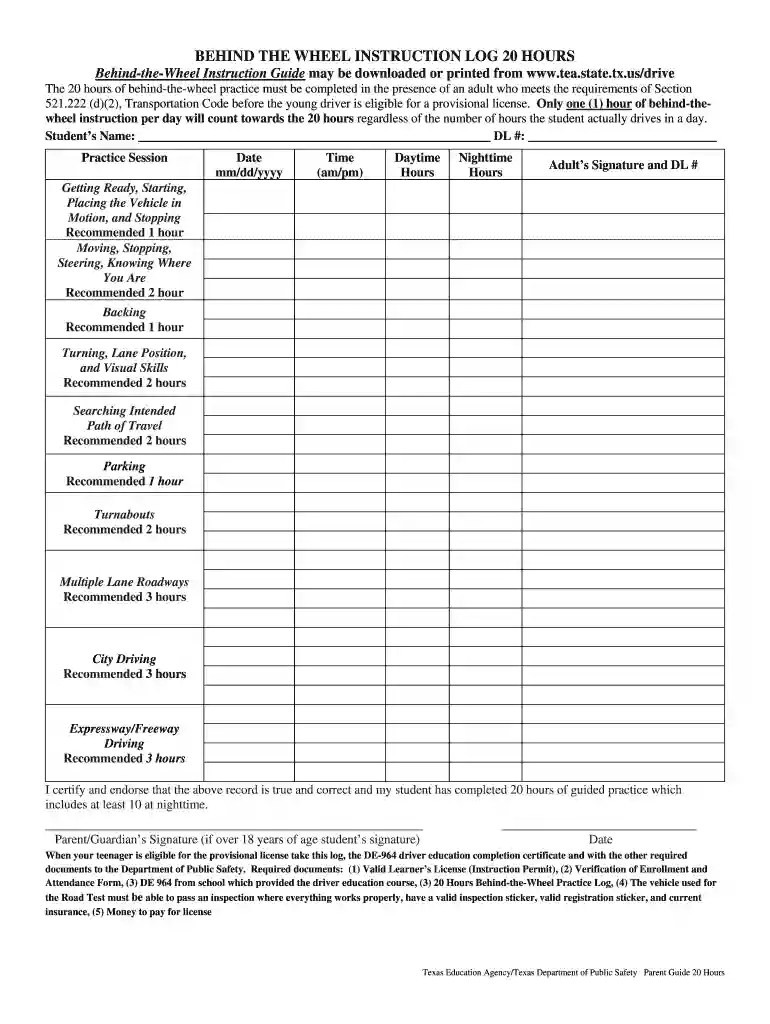
Type text, add images, blackout confidential details, add comments, highlights and more.

Draw your signature, type it, upload its image, or use your mobile device as a signature pad.

Send aceable driving log sheet via email, link, or fax. You can also download it, export it or print it out.
The 30 hour driving log is a crucial document for new drivers in the United States, particularly in states like Texas, where it is a requirement for obtaining a provisional driver's license. This log tracks the behind-the-wheel practice hours needed to ensure that drivers have adequate training before driving independently.
The main purpose of the 30 hour driving log is to document the time a learner driver spends practicing driving with a licensed adult. This period is essential to build skills and confidence on the road. Here are the key requirements:
Completing the 30 hour driving log involves several straightforward steps, ensuring that the process is clear and organized:
Effective logging of driving hours is not just a formality; it is integral to ensuring that new drivers meet state requirements and develop the necessary skills for safe driving. An accurate record can also prevent delays in obtaining a provisional license and avoid potential penalties for incomplete documentation.
Modern tools, such as mobile apps and digital forms, can simplify the process of maintaining a driving log. These tools may provide features for easy entry, reminders for upcoming driving sessions, and even the ability to share logs directly with driving instructors or parents. This tech approach can ensure that the log is always updated in real-time, minimizing any chances of lost or forgotten entries.
While this guide focuses on the Texas 30 hour driving log, it's important to note that requirements may vary by state. Learners should refer to their specific state's Department of Motor Vehicles (DMV) guidelines for any unique variations or additional requirements concerning behind-the-wheel practice logs.
At DocHub, your data security is our priority. We follow HIPAA, SOC2, GDPR, and other standards, so you can work on your documents with confidence.


Official record of 30 hours of driving with parent or guardian (This form should be on the reverse side of the Examiners Certificate copy to be official.).Read more
Nov 27, 2024 30 hours of behind the wheel driving practice, of which at least 10 hours must be at night with a licensed driver 21 years of age or olderRead more
According the FMCSA, a driver must be able to provide either the display or a print out of the data for the current 24-hour period and the previous seven (7)Read more


