Definition & Meaning of a Declaration of Domestic Partnership
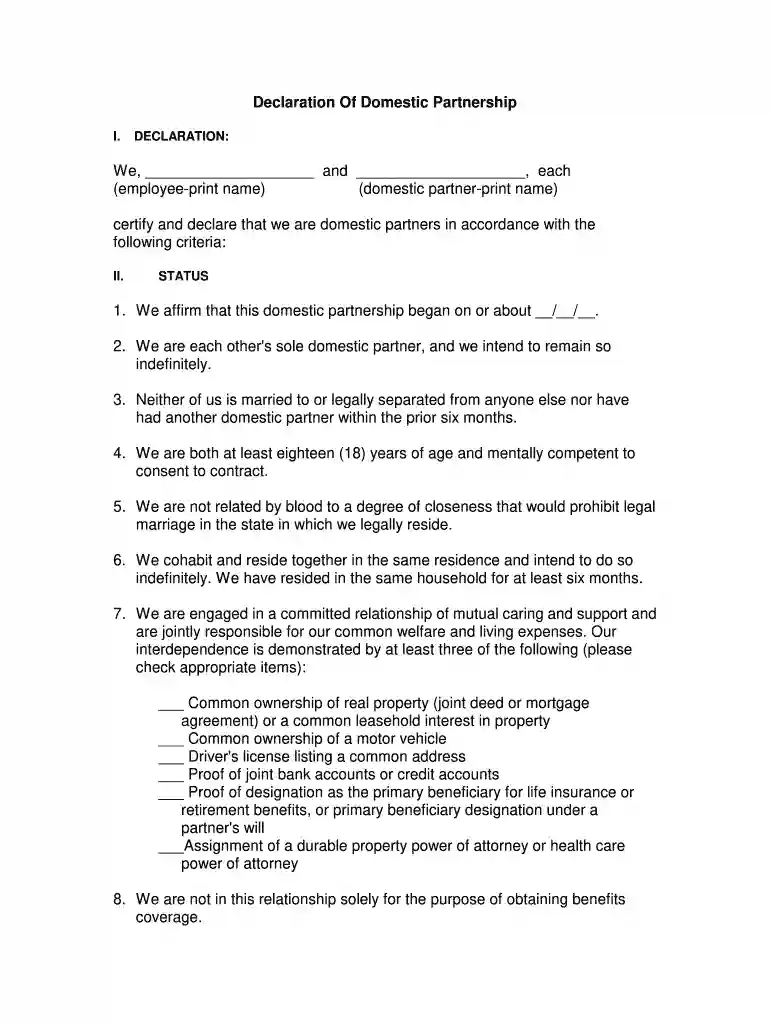
A declaration of domestic partnership is a legal document through which two individuals formalize their committed relationship as domestic partners. This document serves as a recognition of their partnership, granting certain rights and responsibilities under the law. It outlines key criteria, including mutual support, shared living arrangements, and legal eligibility to establish the partnership.
Key Components of the Declaration
- Affirmation of Relationship: Both parties must declare their commitment to live as domestic partners, sharing their lives and responsibilities.
- Cohabitation Requirements: Many jurisdictions require partners to reside together, which must be specified in the declaration.
- Support Obligations: The declaration often includes agreements regarding mutual financial support and caretaker responsibilities.
- Dependent Children: If applicable, the declaration should address any dependent children, outlining the partners' responsibilities in their upbringing.
Legal Implications
- Penalties for False Statements: Both parties certify the truthfulness of their declaration under penalty of perjury, underscoring the document's legal weight.
- Notice to Employers: Partners are obligated to inform their employers of any changes in partnership status, which may affect eligibility for benefits provided by organizations, including health insurance.
Steps to Complete a Declaration of Domestic Partnership
Completing a declaration of domestic partnership requires careful consideration of various legal and personal aspects.
- Determine Eligibility: Confirm both partners meet the criteria set forth by state laws, such as age and residency requirements.
- Gather Required Information: Collect necessary personal details, including names, addresses, social security numbers, and any information on dependents.
- Draft the Declaration: Create a document that includes all key components, including mutual obligations and cohabitation agreements. This can be customized based on personal circumstances.
- Sign the Document: Both partners must sign the declaration in the presence of a notary public to ensure it is legally binding. This notary may also verify the authenticity of signatures.
- File with Relevant Authorities: Depending on state regulations, submit the declaration to the appropriate governmental body, such as the county clerk's office.
Important Considerations
- State-Specific Requirements: Vary by jurisdiction, requiring familiarity with local laws.
- Legal Review: It may be beneficial to have legal counsel review the document to ensure compliance and adequacy for individual circumstances.
Benefits of a Declaration of Domestic Partnership
A declaration of domestic partnership can provide various benefits for the partners involved, especially regarding legal recognition and rights.
- Health Insurance Coverage: Many employers offer domestic partner benefits similar to those provided for spouses, such as health insurance through providers like Aetna. This is particularly significant for partners who may not have access to coverage otherwise.
- Legal Rights: Domestic partnerships typically grant rights related to inheritance, tax benefits, and decision-making in medical situations.
- Access to Benefits: By registering as domestic partners, individuals may gain access to shared benefits and entitlements, allowing for improved financial stability.
Specific Examples
- Aetna Domestic Partner Coverage: For partners registered under an Aetna domestic partnership, both parties may qualify for health insurance benefits, potentially covering medical, dental, and vision care.
- Tax Implications: In some cases, domestic partners may file joint tax returns, facilitating deductions and credits that can enhance financial outcomes.
Common Misconceptions About Domestic Partnerships
There are several misunderstandings surrounding the concept and implications of a declaration of domestic partnership.
- Not Equivalent to Marriage: Although domestic partnerships offer some similar rights, they do not confer all the benefits accorded to marriage in many jurisdictions.
- Recognition Varies by State: Some states may not recognize domestic partnerships, which can affect the legal status and rights of partners, particularly regarding health insurance and inheritance laws.
Clarifications Needed
- Eligibility Criteria: Misunderstandings about who qualifies as a domestic partner can lead to denied applications or benefits.
- Legal Assistance: Consulting a legal professional can help clarify the rights and responsibilities associated with domestic partnerships, ensuring partners understand their standing in various legal contexts.
Conclusion on Filing and Maintaining Your Declaration of Domestic Partnership
Undertaking a declaration of domestic partnership is a significant step for many couples. Ensuring that the declaration is properly filed and maintained is essential for validating the partnership under law.
- Regular Updates: Partners should keep the declaration updated, particularly following changes in personal circumstances, such as relocation or changes in dependents.
- Documentation: Retaining copies of the declaration and any communications regarding its status can prove beneficial for future reference and potential updates.
Through careful completion and understanding, a declaration of domestic partnership can effectively serve the needs and rights of both individuals involved, providing them with essential legal recognition and support.