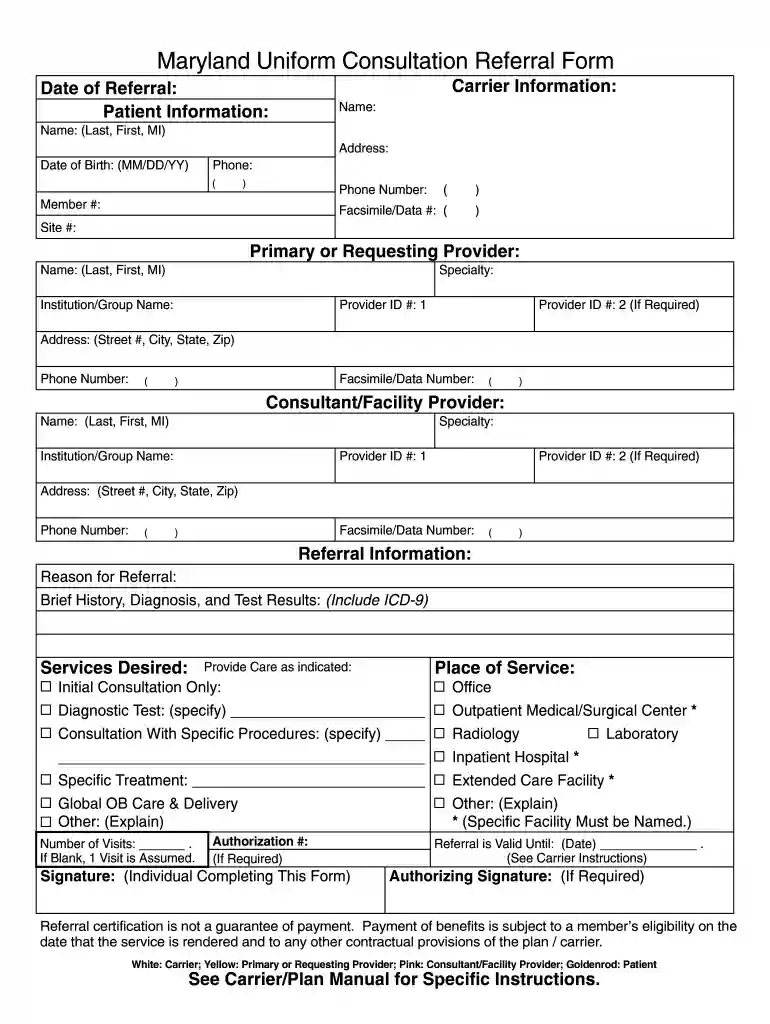
Definition and Meaning of the Johns Hopkins Referral Form
The Johns Hopkins Referral Form is a standardized document used primarily in the healthcare sector to facilitate referrals from one medical provider to another within the Johns Hopkins network. Its purpose is to ensure that patients receive the necessary evaluations and treatments from appropriate specialists, ensuring continuity of care and streamlined communication among healthcare providers. This form typically includes sections for patient information, referral details, and the reason for the referral, making it an essential tool for medical practitioners operating within the Johns Hopkins system.
- Purpose: The form assists in coordinating patient care by providing clear communication between referring physicians and specialists.
- Components: Key sections often comprise patient demographics, insurance information, medical history, and specific details regarding the referral, such as the requested specialty and urgency.
How to Use the Johns Hopkins Referral Form
Using the Johns Hopkins Referral Form involves several steps to ensure it is correctly filled out and submitted. Proper usage promotes effective collaboration among healthcare providers and timely patient care.
- Obtain the Form: Access the form through the Johns Hopkins network or official website, ensuring you have the latest version.
- Fill Out Patient Information: Enter the patient's full name, date of birth, contact information, and insurance details, ensuring accuracy for effective communication.
- Specify Referral Details: Clearly indicate the specialty required and the reason for the referral. Attach any relevant medical records or notes that can assist the specialist in understanding the patient's needs.
- Submit the Form: Send the completed form to the appropriate specialist's office, using the designated submission method (e.g., secure email, fax, or in-person delivery).
- Documentation: Keep a copy of the completed form for your records, as this can be necessary for follow-up communications.
Key Elements of the Johns Hopkins Referral Form
The key elements of the Johns Hopkins Referral Form are critical for its successful use and implementation in medical practice. Each component plays a significant role in ensuring that the referral process is clear and efficient.
- Patient Information: Includes personal and demographic details, which facilitate identification and communication.
- Provider Information: Contains data about the referring provider, ensuring accountability and clarity in communication.
- Referral Details: Specifies the type of specialist required, the urgency of the referral, and the reason for the referral. This section is crucial for prioritizing patient needs.
- Medical History and Notes: Allows attaching or referencing relevant patient medical history, which aids the specialist in providing informed care.
Steps to Complete the Johns Hopkins Referral Form
Completing the Johns Hopkins Referral Form requires attention to detail to ensure all relevant information is accurately presented.
- Gather Necessary Information: Collect all patient demographic and medical information before starting to fill out the form to minimize errors.
- Fill in the Patient Section: Include the patient's full name, date of birth, and contact details. Verify that these details are correct to avoid miscommunication.
- Complete the Referral Section: Enter the required specialty and the justification for the referral. Be specific about the symptoms or condition that necessitates the referral to ensure proper care.
- Add Provider Information: Fill in the referring provider's address, phone number, and email to allow the specialist to reach out for further info if needed.
- Review and Sign: Before submission, review the entire form for completeness and accuracy. Sign the form if necessary to validate the referral and provide authorization.
Important Terms Related to the Johns Hopkins Referral Form
Understanding specific terminology related to the Johns Hopkins Referral Form can enhance its proper use.
- Referral: A request from one healthcare provider to another to evaluate or treat a patient.
- Specialist: A healthcare provider with expertise in a specific area of medicine, such as cardiology, neurology, or oncology.
- Authorization: The consent given by the patient for the disclosure of their medical information as required for the referral process.
- Coordination of Care: The organization of patient care activities and sharing of information among all participants concerned with a patient's care.
Understanding these terms can improve communication between healthcare providers and ensure compliance with the patient's treatment pathway.