Definition and Significance of Tracking LPC Hours
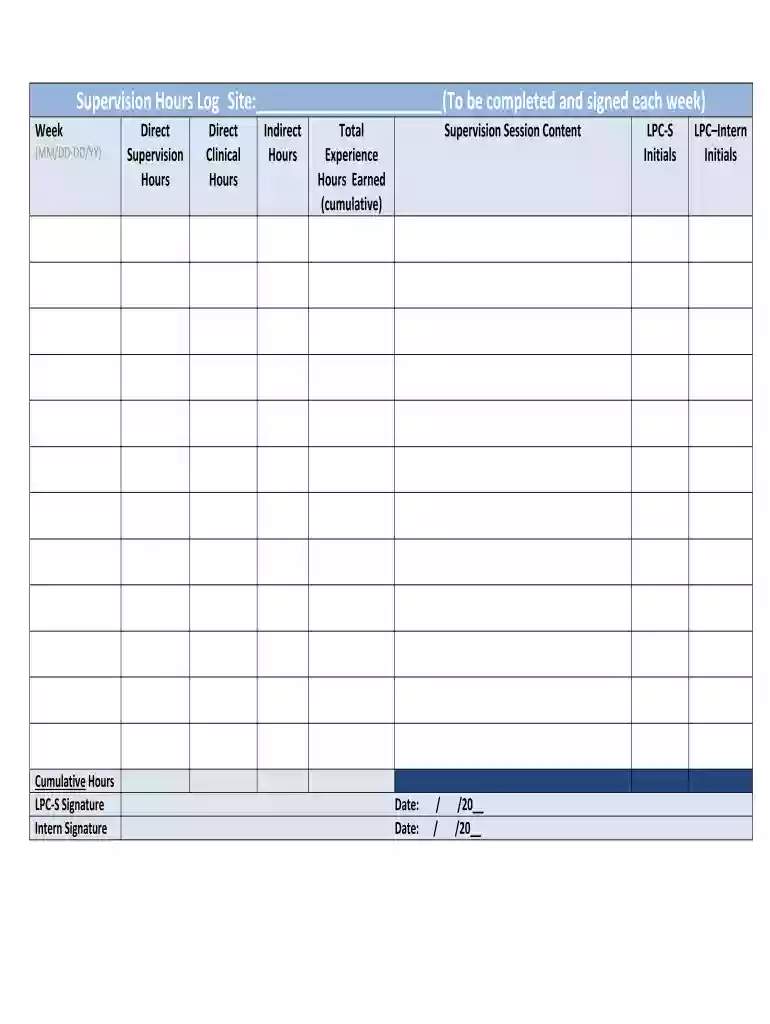
Tracking LPC hours through a dedicated spreadsheet is essential for licensed professional counselors who need to document their clinical supervision hours accurately. This process ensures compliance with state licensing requirements and provides a transparent record of professional development. Proper tracking is indispensable for obtaining licensure, renewing licenses, and demonstrating qualifications for various roles within the mental health field. An effective spreadsheet allows LPC interns and associates to manage and update their recorded hours efficiently, fostering a seamless pathway toward meeting state and federal guidelines.
The use of a structured LPC hours log also benefits supervisors, as they can monitor their supervisees' progress. Each entry typically includes the date, type of supervision, total hours worked, and a brief description of the activities undertaken during each session. This level of detail not only aids in fulfilling certification requirements but also enhances the quality of both supervision and professional practice.
Key Components of an LPC Hours Tracking Spreadsheet
An effective spreadsheet for tracking LPC hours should incorporate several critical components to streamline data entry, enhance clarity, and ensure accuracy. The following elements are fundamental to a comprehensive tracking system:
- Date of Supervision Sessions: Recording the dates for every session is essential for chronological documentation. This prevents any discrepancies in total hours logged.
- Supervisor’s Name and Credentials: Including the supervisor's full name and qualifications verifies the legitimacy of the supervision and facilitates accountability.
- Type of Supervision: Differentiating between individual, group, or online supervision helps in maintaining an accurate record and may meet varying state requirements.
- Session Duration: It is necessary to denote the total hours for each supervision session. This aids in easy calculations of total hours over a specific period.
- Details of Activities: Briefly describing the session content promotes reflection on the learning process and can serve as a basis for future discussions with the supervisor.
- Signature of Supervisor: A digital or physical signature acts as verification, confirming that the recorded hours are accurate and acknowledged by the supervising LPC-S.
- Cumulative Hours Tracker: Including a running tally of total hours can simplify monitoring progress toward the required number of hours for licensure.
Proper Usage of the LPC Hours Tracking Spreadsheet
Effectively utilizing a spreadsheet for tracking LPC hours involves several strategic practices. Here’s how to make the most of it:
- Regular Updates: Entering data after each supervision session allows for real-time tracking and helps in preventing data backlog, which can lead to inaccuracies.
- Consistent Formatting: Maintaining uniformity in how data is entered (dates, hours, and descriptions) enhances clarity and makes it easier to analyze trends over time.
- Backup Copies: Regularly creating backups of the completed tracking spreadsheet protects against data loss. Utilizing cloud storage solutions ensures accessibility even on different devices.
- Review and Audit: Periodically reviewing the logged hours with a supervisor helps confirm accuracy and allows for invaluable feedback on professional development.
- Utilizing Filters: Most spreadsheet software provides filtering options, which can help isolate specific types of supervision or analyze hours over selected periods.
Utilizing these practices can significantly improve the efficiency of tracking LPC hours and enhance the process of obtaining licensure.
Steps to Complete the LPC Hours Tracking Spreadsheet
Completing a tracking spreadsheet for LPC hours is a straightforward process when following these key steps:
- Open the Spreadsheet: Launch the software (Excel, Google Sheets) and open your LPC hours tracking template.
- Enter Personal Information: Fill in your name and relevant details at the top of the spreadsheet for easy identification.
- Input Date of Supervision: Start entering the date for each supervision session, ensuring the correct chronological order.
- Specify Supervisor Details: Next, document the supervisor’s name and credentials to validate the supervision.
- Log Session Information: For each entry, document the type of supervision, session duration, and a brief description of the supervision activities.
- Calculate Cumulative Hours: Use formulas to automatically tally the total hours based on your entries, ensuring you remain informed of your progress.
- Save and Backup: After completing the entry for each session, save the document and create a backup for security.
Following these structured steps helps maintain accuracy and keeps your records organized.
Importance of Accurate LPC Hours Tracking
An accurate tracking of LPC hours is critical for multiple reasons:
- Licensure Requirements: Most states require specific supervised hours and detailed records for obtaining licensure. Failure to maintain accurate records may delay or obstruct the licensure process.
- Professional Growth: Reflecting on your supervision sessions through a structured log aids in identifying areas for improvement and reinforces learning from supervisors.
- Legal Compliance: Adhering to state regulations regarding documentation not only protects the counselor’s professional standing but also provides a defense in the event of licensing audits or disputes.
- Collaboration with Supervisors: A well-maintained log facilitates meaningful discussions during review sessions with supervisors, improving feedback cycles and the quality of supervision.
The importance of meticulously documenting LPC hours cannot be overstated, as it directly impacts career progression and compliance.
Common Users of LPC Hours Tracking Spreadsheets
The spreadsheet for tracking LPC hours is utilized by a variety of stakeholders, including:
- LPC Interns and Associates: Primarily, these individuals need to track supervised hours to meet licensure requirements. They benefit significantly from structured documentation.
- Licensed Supervisors (LPC-S): These professionals utilize the logs to oversee their supervisees’ progress, ensuring comprehensive feedback and compliance with state mandates.
- Mental Health Organizations: Agencies employing LPC interns may require documentation for their records, ensuring that their practices remain compliant and that interns receive appropriate supervision.
- State Licensing Boards: These regulatory bodies benefit from structured hours logs during evaluations and audits, facilitating the oversight of licensure compliance.
Each group plays a crucial role in the validity and effectiveness of the LPC hours tracking process.

State-Specific Considerations for LPC Hours Tracking
Each state may have unique requirements regarding the tracking of LPC hours, which can influence how individuals maintain their records. Some considerations include:
- Minimum Supervision Hours: States may mandate various minimum numbers of hours required for licensure; understanding local regulations is essential for compliance.
- Approved Supervisors: Some states require that supervision be conducted by LPC-S professionals who meet specified qualifications. Tracking should reflect this requirement clearly.
- Reporting Periods: Certain states necessitate log submissions within defined reporting periods, affecting how often and when LPC hours should be documented and submitted for review.
- Recertification Requirements: Awareness of ongoing hourly requirements for licensure renewal is vital for continual professional standing.
Being cognizant of these state-specific rules helps ensure that tracking efforts are not only accurate but also compliant with regional regulations.