






Definition and Purpose of the Trial Social Skills Checklist
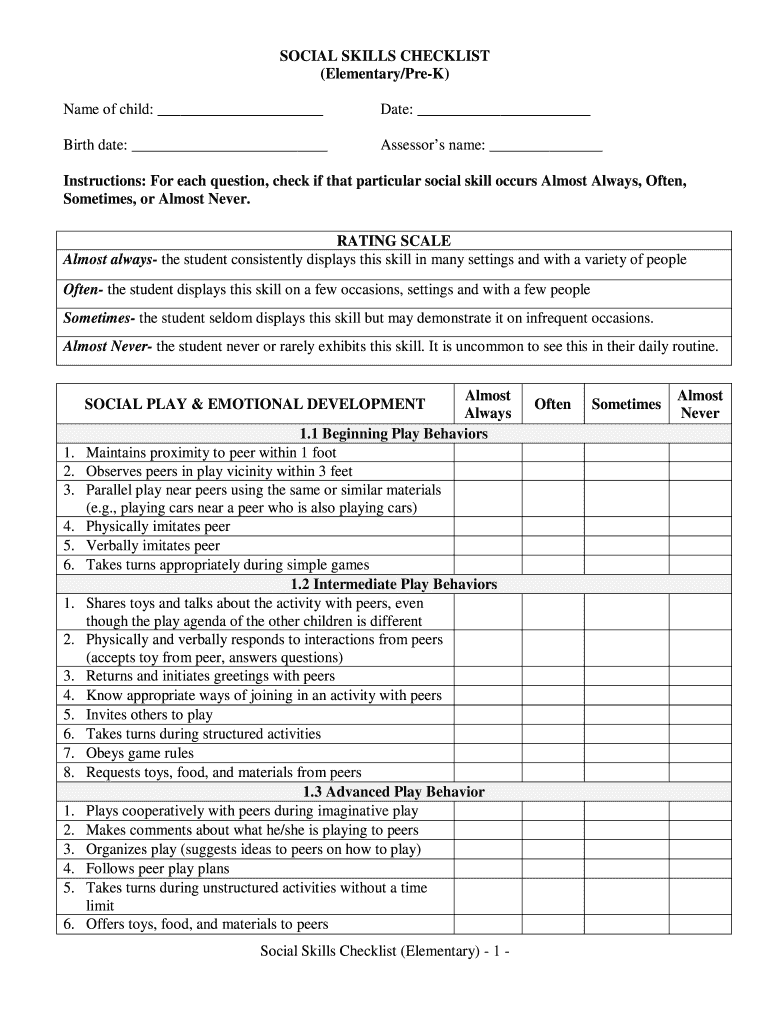
The trial social skills checklist serves as a structured assessment tool primarily used for evaluating the social competencies of individuals, particularly children. This checklist is designed to examine various aspects of social skills, which may include:
- Play Behaviors: Assesses fundamental play interactions, enabling evaluators to gauge a child's ability to engage in cooperative play with peers.
- Emotional Understanding: Evaluates a child's awareness of their own emotions as well as the emotions of others, providing insight into their empathy skills.
- Self-Regulation: Measures the ability of an individual to manage their emotions and behavior in different social settings, which is crucial for establishing and maintaining relationships.
- Conversational Skills: Observes the effectiveness of a person’s verbal interactions, including turn-taking, topic initiation, and listening skills.
The checklist includes ratings that range from 'Almost Always' to 'Almost Never,' enabling a quantifiable analysis of skill levels. This standardized approach aids parents, teachers, and professionals in identifying areas requiring support with specificity.
How to Use the Trial Social Skills Checklist Effectively
Utilizing the trial social skills checklist involves several steps to ensure accurate and insightful assessment. It is typically implemented in various settings, including at home, in educational environments, or in therapeutic contexts.
-
Preparation: Gather necessary materials such as the checklist document and any supplementary observation forms. Be familiar with the skills being assessed.
-
Observation: Conduct informal or formal observations of the individual’s social interactions. Take detailed notes on behaviors to provide context to your assessments.
-
Completion:
- Utilize the checklist to accurately rate observed behaviors on a defined scale.
- It is helpful to involve multiple observers, such as parents and teachers, to get a well-rounded view.
-
Analysis: After completing the checklist, analyze the results to identify strengths and areas for potential growth. This analysis can highlight specific social skills that may need targeted interventions.
-
Documentation: Keep a record of the completed checklists for ongoing assessments and progress tracking over time. This is particularly helpful in educational settings for both teachers and students.
Key Elements of the Trial Social Skills Checklist
The checklist encompasses various key elements that facilitate comprehensive assessment of social skills. Understanding these elements can enhance its utility.
- Structured Categories: The checklist is divided into distinct categories that touch on critical areas of social interaction.
- Rating Scale: Each skill is rated on a scale, providing a nuanced view of a child's competencies. This scale simplifies the identification of developmental milestones.
- Specificity: Each item includes specific descriptors to clarify what each rating represents, ensuring that evaluators understand the expectations.
- User-Friendliness: The checklist is typically laid out cleanly, making it easy to navigate for various users, including educators and therapists.
Important Terms Related to the Trial Social Skills Checklist
Familiarity with relevant terminology enhances understanding and accuracy when using the trial social skills checklist. Some key terms include:
- Functional Social Skills: Essential skills necessary for everyday interactions that facilitate successful communication and socialization.
- Assessment Inventory: A systematic collection of evaluation tools aimed at measuring specific traits or skills.
- Intervention: Targeted support strategies implemented after identifying social skills deficits through the checklist.
- Rating Scale: A standardized method of quantifying observations regarding a subject's social capabilities.
Examples of Using the Trial Social Skills Checklist in Different Settings
Implementing the trial social skills checklist can vary depending on the context. Here are examples illustrating its application:
-
In Schools: Teachers can use the checklist as part of a broader assessment of students’ social-emotional health. Incorporating it in parent-teacher meetings allows for constructive discussions on student progress.
-
In Therapy: Therapists may utilize the checklist as a pre- and post-intervention assessment tool, assessing improvements in social skills after implementing specific techniques.
-
At Home: Parents can use the checklist during family activities to observe their child's interaction with siblings or during playdates, offering insights that guide discussions on the child's social development.
Each example underscores the checklist’s flexibility as a meaningful assessment resource across various environments and populations.