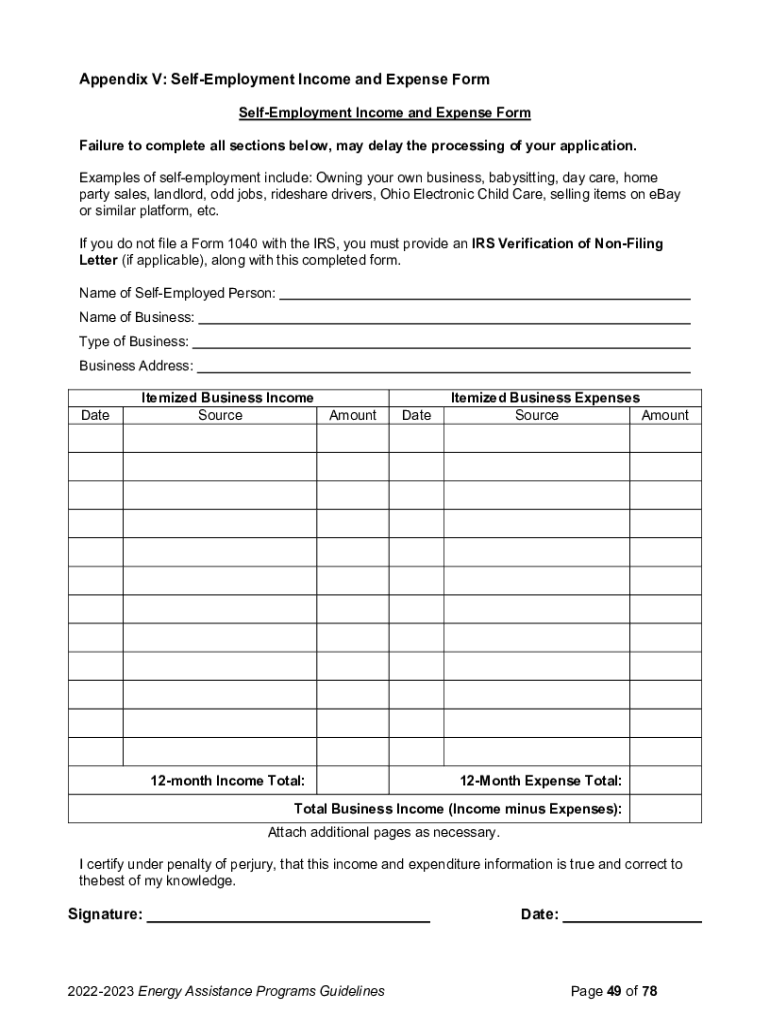







Definition and Meaning
The Self-Employment Income and Expense Form is a crucial document for individuals who earn income from self-employment. This form is commonly used for tax purposes, helping to calculate taxable income by detailing earnings and deductible expenses. Individuals like freelancers, independent contractors, and sole proprietors typically use this form to report their business income to the IRS.
Understanding this form is essential because it distinguishes personal income from business earnings, ensuring that self-employed individuals accurately report their financial activity. This clarity aids in tax reporting, financial planning, and ensures compliance with IRS regulations.
How to Use the Self-Employment Income and Expense Form
To effectively use the Self-Employment Income and Expense Form, one should follow a systematic approach:
-
Gather Financial Records: Collect all income statements, receipts, invoices, and financial documents related to your business activities.
-
Document Income: Record all sources of self-employment income. This includes payments for services, freelance gigs, consulting fees, and any other business-related earnings.
-
Itemize Expenses: List all deductible business expenses. Common deductions include office supplies, travel, utilities, and advertising costs. These expenses directly reduce your taxable income.
-
Calculate Net Profit or Loss: Subtract total expenses from total income to determine the net profit or loss. This figure is critical for completing tax returns.
-
Review for Accuracy: Double-check all entries for accuracy. Errors can lead to issues with tax filings and potential audits.
Using this form accurately can help you maximize deductions and effectively manage your tax liability.
Steps to Complete the Self-Employment Income and Expense Form
Completing the Self-Employment Income and Expense Form requires careful attention to detail. Follow these steps:
-
Enter Personal Information: Include your name, Social Security number, and business information to establish identity and business structure.
-
List Income Sources: Clearly identify all forms of income associated with your self-employment activities.
-
Detail Expenses: Break down expenses into categories such as travel, meals, supplies, and more. This precision helps in claiming eligible deductions.
-
Calculate Totals: Sum up income and expenses separately to find the net business income or loss.
-
Cross-Verify Information: Ensure all figures align with your records to prevent discrepancies in tax filings.
-
Submit or Integrate with Tax Returns: Once completed, incorporate the form into your tax return submission or use tax software to file electronically.
Important Terms Related to the Form
Understanding key terms is vital for accurately completing the Self-Employment Income and Expense Form:
- Gross Income: The total revenue generated from business activities before expenses.
- Deductible Expenses: Costs directly related to the operation of your business that are eligible for tax deductions.
- Net Income: The profit calculated after subtracting expenses from gross income.
- Schedule C: A tax form used by self-employed individuals to report income and expenses when filing taxes.
Familiarity with these terms ensures you accurately navigate the form and maximize financial efficiency.
IRS Guidelines
The IRS provides specific guidelines for using the Self-Employment Income and Expense Form:
- Record Keeping: Maintain accurate and thorough records of all income and expenses for at least three years.
- Expense Eligibility: Ensure all reported expenses meet IRS criteria for deductible business costs.
- Estimated Taxes: Self-employed individuals might need to make quarterly tax payments throughout the year.
Understanding and adhering to IRS guidelines can prevent potential legal issues and penalties.
Required Documents
Several key documents are necessary for completing the Self-Employment Income and Expense Form:
- Income Statements: Documents that verify all business income, like invoices and 1099 forms.
- Expense Receipts: Proof of purchases and transactions related to business expenses.
- Bank Statements: Records of all business financial activity, serving as supplementary evidence.
Having these documents readily available streamlines the form completion process, reduces errors, and aids in answering any IRS inquiries.
Business Entity Types That Benefit Most from the Form
Different business entity types utilize the Self-Employment Income and Expense Form for tax purposes:
- Sole Proprietorships: Business owned and operated by one individual.
- LLCs (Single-Member): Limited liability companies managed by a single member, often treated as sole proprietorships for tax purposes.
- Freelancers/Consultants: Individuals providing services to various clients without a registered business entity.
Proper usage of this form assists these entities in adhering to tax obligations and maintaining financial health.
Business Types That Benefit Most from Utilizing the Form
Certain business types gain significant advantages from using the Self-Employment Income and Expense Form by optimizing their tax processes:
- Freelancers and Gig Workers: Simplifies the tracking of diverse income sources and qualifying expenses.
- Consultants: Enables precise deduction claims, enhancing fee profitability.
- Home-Based Businesses: Effectively manages home office expenses, utility costs, and other deductions.
By catering the form usage to specific business types, self-employed individuals can streamline their tax management processes and optimize financial outcomes.