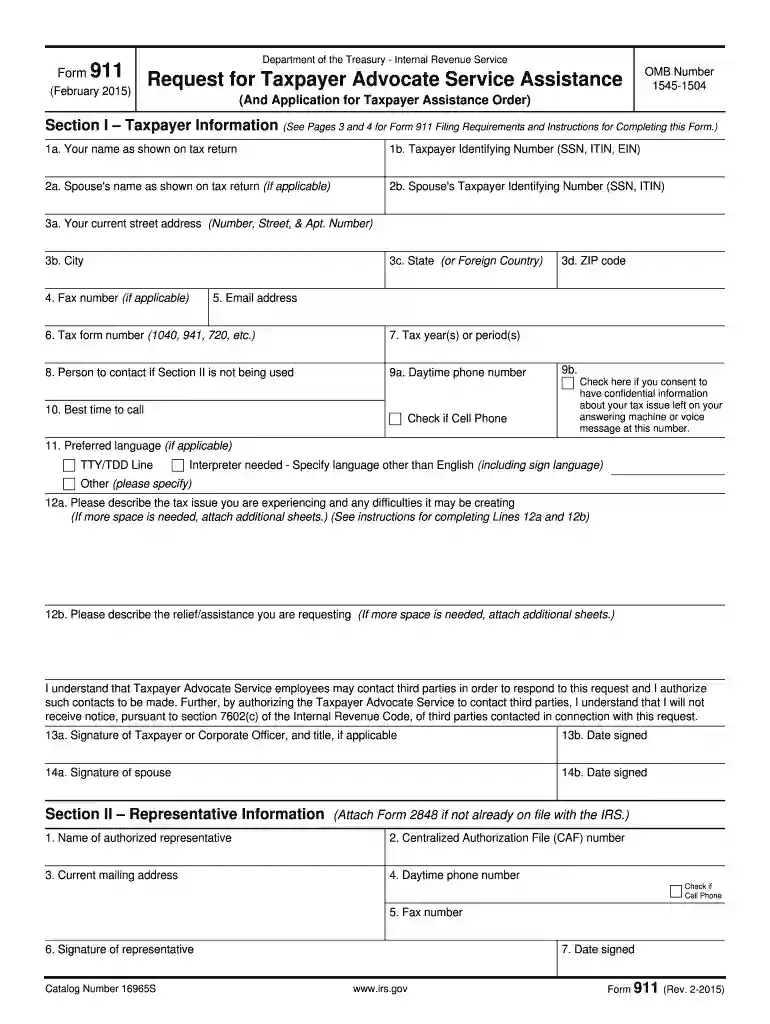
Form 911: Overview and Purpose
Form 911, also known as the Request for Taxpayer Advocate Service Assistance, is a document utilized by taxpayers in the United States who encounter unresolved issues with the Internal Revenue Service (IRS). The form is vital for those who require the intervention of the Taxpayer Advocate Service (TAS), an independent organization within the IRS that helps taxpayers resolve their problems with the IRS efficiently and fairly.
Steps to Complete Form 911
Obtain the Form: Begin by downloading Form 911 from the IRS website or request a physical copy from a local IRS office.
Provide Personal Information:
- Full name, address, and Social Security Number or Employer Identification Number.
- Contact details, including phone number and email address.
Describe the Issue:
- Clearly articulate the tax problem you are facing, including relevant tax year(s) and any specific IRS correspondence received.
Explain the Relief Sought:
- Specify what resolution or relief you are seeking from the IRS with TAS assistance.
Sign and Date: Ensure the form is signed and dated before submission.
How to Obtain Form 911
Form 911 can be accessed and downloaded through various channels:
- Visit the official IRS website to download a PDF version.
- Request a form through the IRS toll-free number for mail delivery.
- Collect a hard copy from an IRS Taxpayer Assistance Center.
Who Typically Uses Form 911
Form 911 is commonly used by individuals, businesses, and non-profit organizations:
- Individuals: Those dealing with personal tax issues, including erroneous account adjustments or problems with tax credits.
- Businesses: Corporate entities facing tax liens, levies, or payroll tax disputes.
- Non-Profits: Organizations experiencing issues with tax-exempt status or compliance notifications.
Key Elements of Form 911
- Taxpayer Identification: Essential for processing and matching with the IRS database.
- Issue Description: Detailed account of the problem requiring resolution.
- Desired Outcome: Clarity on the resolution sought aids quicker TAS intervention.
- Signature and Date: Legal requirement to validate the request for assistance.
IRS Guidelines for Using Form 911
- Submitting the Form: Send the completed form via fax or mail to the appropriate TAS office. Check the IRS website for current TAS office addresses.
- Follow-Up: After submission, taxpayers can expect contact from a TAS representative for further discussion or clarification.
Filing Deadlines and Important Dates
- No Specific Deadlines: Unlike tax returns, Form 911 does not have a defined submission deadline.
- Timeliness: Early submission is advised once an issue is identified to expedite the assistance process.
Form Submission Methods
- Online: Forms can be emailed as PDF attachments under certain circumstances. Verify the process on the IRS site.
- Mail: Traditional postal submission remains a trusted option.
- In-Person: Submission at local IRS offices for those preferring face-to-face assistance.
Examples of Form 911 in Use
- Self-Employed Taxpayer: Resolving disputes over quarterly estimated payments incorrectly applied.
- Retirees: Addressing confusion over taxability of Social Security benefits.
- Small Businesses: Seeking relief from erroneous penalty assessments or levies impacting operations.
Legal Use and Compliance
- Confidentiality: Information submitted via Form 911 is protected under IRS privacy guidelines.
- Correct Process: Ensure full compliance by following IRS instructions meticulously.
Software Compatibility
While Form 911 is primarily a paper form, it can be scanned and managed using document management tools like DocHub, which simplifies editing and submitting completed forms to the IRS or TAS.
This detailed breakdown of Form 911 provides a comprehensive guide for taxpayers seeking assistance from the Taxpayer Advocate Service, ensuring clear understanding and actionability for resolving IRS-related issues.