







Definition & Meaning
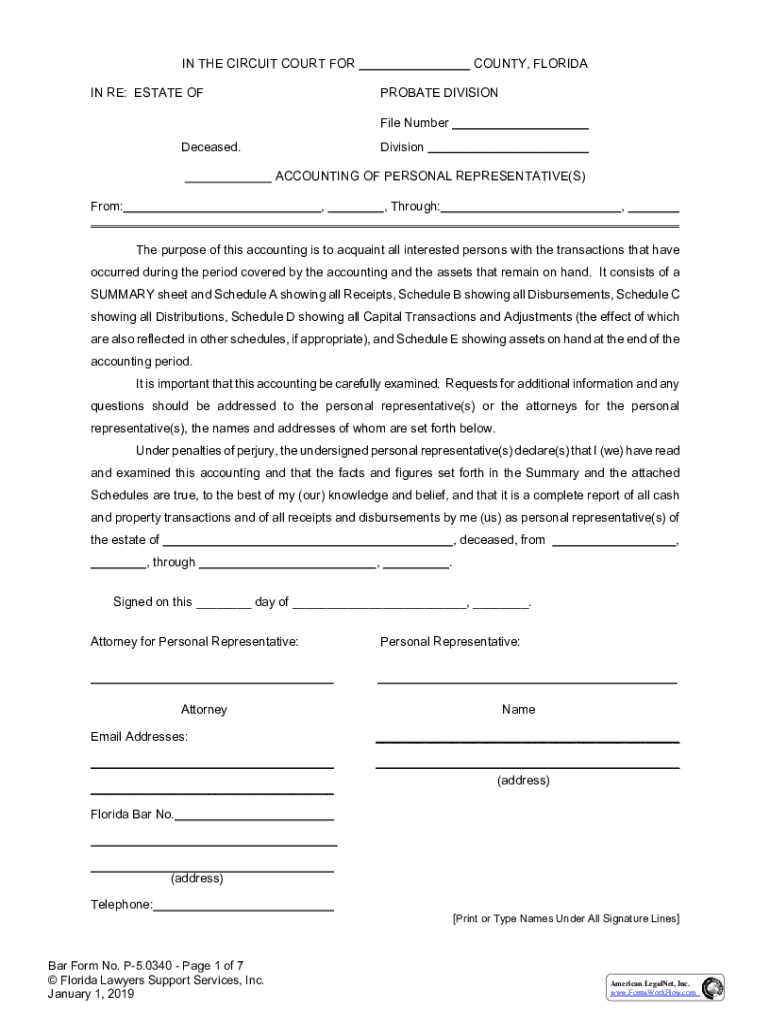
The Florida Probate Accounting Form is an essential legal document used in the probate process to provide a detailed accounting of an estate's financial activities. This form is primarily used by personal representatives or executors to outline all transactions involving the estate’s assets and liabilities. It serves as a formal record to ensure transparency and compliance with Florida’s probate laws.
The form accounts for all income received by the estate, payments made, and any changes in asset value. It is critical for presenting a clear financial picture to the beneficiaries, court, and interested parties. Understanding its purpose helps stakeholders verify that estate management aligns with the decedent’s wishes and legal requirements.
Key Components
- Income Received: Includes dividends, interest, rental income, and other revenue.
- Disbursements: Details payments made to settle debts, taxes, and expenses.
- Property Sales or Transfers: Outlines any sale or transfer of real property or significant assets.
- Ending Inventory: Lists the remaining assets at the end of the reporting period.
How to Use the Florida Probate Accounting Form
Using the Florida Probate Accounting Form involves systematically collating and entering all relevant financial information regarding the estate. Personal representatives should begin by gathering documentation such as bank statements, bills, and receipts.
- Compile Financial Data: Collect all necessary financial documents related to the estate.
- Fill Out Income Section: Record all income the estate received during the accounting period.
- List Expenditures: Document all payments made, specifying the purpose and amount.
- Detail Assets and Liabilities: Include the current value of assets and any remaining estate obligations.
- Review and Verify: Double-check entries for accuracy and compliance.
Common Mistakes to Avoid
- Incorrect Valuations: Always use accurate and current market values for assets.
- Incomplete Documentation: Ensure all transactions are supported by receipts or records.
- Omitting Entries: Double-check to include all income and disbursements.
Steps to Complete the Florida Probate Accounting Form
Completing the form requires attention to detail and a structured approach to ensure compliance and transparency.
Step-by-Step Guide
- Gather Required Documents: Collect all estate-related financial documents, including bank statements and bills.
- Record Initial Inventory: List all assets and their values as of the date of death.
- Detail Income and Gains: Enter all sources of income and any gains from asset sales.
- Note Disbursements: Record payments made on behalf of the estate, such as debts or administrative costs.
- Account for Transfers: Document any transfer or sale of estate assets during the accounting period.
- Prepare Summary: Summarize all transactions and calculate the ending balance.
- Review and Adjust: Make necessary adjustments for any omitted or corrected transactions.
Tips for Accuracy
- Use Spreadsheet Tools: Utilize software for automated calculations and accurate reporting.
- Consult Professionals: An attorney or accountant can offer guidance and verify accuracy.
Important Terms Related to Florida Probate Accounting Form
Understanding the terminology is critical for accurately completing and interpreting the form.
Common Terms
- Fiduciary Duty: The legal obligation to manage the estate in the best interest of beneficiaries.
- Disbursements: Payments made from the estate to settle obligations.
- Receipts: Income or assets received by the estate.
- Inventory: A detailed list of assets and their values as of a specific date.
- Beneficiary: An individual or entity entitled to receive benefits from the estate.
Legal Use of the Florida Probate Accounting Form
The form is legally mandated for personal representatives to file with the court during probate proceedings. It ensures the proper handling and distribution of the decedent's assets according to the estate plan and state laws. Legal compliance involves submitting the form within specified timelines and ensuring it accurately reflects all financial activities.
Compliance Requirements
- Timely Filing: Submit within deadlines set by the probate court.
- Accurate Reporting: Ensure all entries are precise and supported by documentation.
- Court Approval: Obtain court validation of the accounting to proceed with asset distribution.
Key Elements of the Florida Probate Accounting Form
The form’s structure is designed to capture all necessary financial information, providing a clear and complete picture of estate management.
Essential Sections
- Receipts and Disbursements Summary: Overview of income received versus payments made.
- Asset Management: Details of how assets have been managed, sold, or distributed.
- Liability Settlement: Disclosure of how debts and obligations have been addressed.
- Current Value Reporting: Updated valuation of estate assets at the end of the accounting period.
State-Specific Rules for the Florida Probate Accounting Form
Florida law governs the specific requirements and processes for probate accounting, making an understanding of state-specific rules vital for compliance.
Key Considerations
- Statutory Requirements: Follow Florida’s specific legal obligations regarding form submission.
- Documentation Needs: Maintain thorough records to support all reported figures.
- Professional Assistance: Consider working with Florida-based probate attorneys for guidance.
Regional Variations
- County-Specific Practices: Procedures may vary slightly by Florida county; check local court requirements.
Exploring these elements ensures comprehensive understanding and accurate completion of the Florida Probate Accounting Form, thereby ensuring compliance and smooth probate proceedings.




