







Definition and Meaning
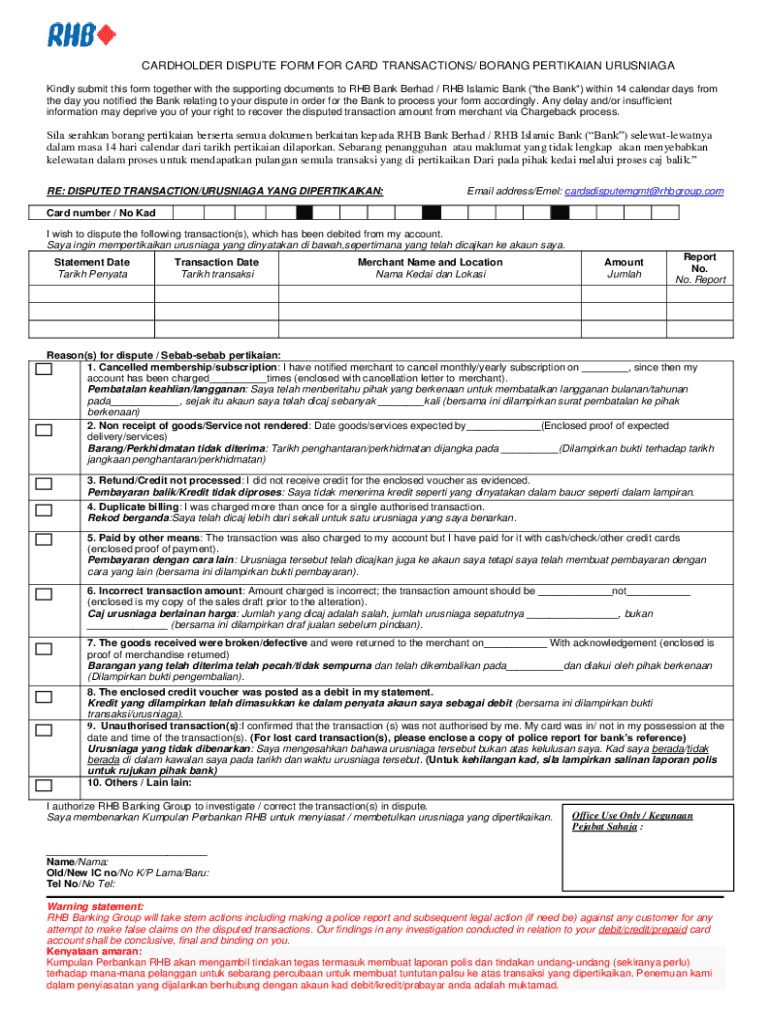
The Cardholder Dispute Form for Card Transactions is a structured document used by consumers to formally dispute specific transactions on their credit or debit card accounts. This form is an essential tool that allows cardholders to challenge unauthorized, fraudulent, or incorrect charges made to their cards. The disputes may arise from situations such as billing errors, services not rendered, or goods not delivered as promised. The form acts as a formal declaration from the cardholder, detailing the nature of the dispute and providing the necessary information for the bank or financial institution to investigate the claims.
How to Obtain the Cardholder Dispute Form
The Cardholder Dispute Form can typically be accessed through several channels. Most banks and credit card issuers offer the form on their websites; users can download, fill out, and submit it electronically. Alternatively, cardholders may request a physical copy by visiting their local bank branch or contacting customer service via phone. It's important to ensure that you have the latest version of the form, as requirements and formats may change over time.
Steps to Complete the Cardholder Dispute Form
- Identify the Transaction: Start by gathering details on the transaction you wish to dispute, including the transaction date, amount, and merchant's name.
- Fill Out Personal Information: Provide your name, contact information, and account number associated with the transaction.
- Detail the Issue: Clearly explain why you are disputing the charge. Include any supporting evidence, such as receipts, emails, or purchase agreements.
- Submit the Form: Send the completed form along with copies of any supporting documents to your bank. This may be done via online submission, mail, or visiting a bank branch in person.
- Follow Up: Keep a copy of the form and follow up with your bank to ensure the dispute is being processed within the expected timeframe.
Key Elements of the Cardholder Dispute Form
- Transaction Details: A section requiring specifics about the disputed transaction (date, amount, merchant information).
- Reason for Dispute: Here, cardholders must outline the nature of their dispute. Common reasons include unauthorized charges, double billing, or undelivered goods.
- Supporting Documents: A checklist or space for listing the documents you are including to back up your dispute claim.
- Declaration and Signature: The form will require a signature to confirm the accuracy of the information provided and to authorize the dispute process.
Who Typically Uses the Cardholder Dispute Form
The primary users of the Cardholder Dispute Form are individual consumers who wish to contest card transactions they did not authorize or were improperly charged. Small businesses may also use this form if unauthorized charges appear on their company credit cards. Additionally, people who have experienced identity theft often use this form as part of the process to resolve fraudulent charges.


Legal Use of the Cardholder Dispute Form
The form is governed by federal regulations and card network rules, which stipulate how financial institutions must handle disputes. It serves as a record of your claim that must be thoroughly investigated by the issuing bank. Completing this form initiates the legal framework under regulations such as the Fair Credit Billing Act, which protects consumers' rights to dispute billing errors and ensures their prompt resolution.
Required Documents for Submission
Submitting a Cardholder Dispute Form generally requires several supporting documents:
- Receipts or Invoices: Proof of purchase agreements or conditions.
- Communication Records: Email or text exchanges with the merchant regarding the transaction.
- Bank Statements: Highlighting the disputed transaction.
- ID Proof: Verification of identity to ensure the legitimacy of the dispute claim.
Form Submission Methods
The form can be submitted through various channels based on your bank's capabilities:
- Online Submission: Many banks offer portals on their websites for digital submission of the form.
- Mail: Print the completed form and mail it to the customer service address of your card issuer.
- In-Person: Visit a local bank branch to submit the form directly to a representative.
Examples of Using the Cardholder Dispute Form
- Fraudulent Charges: A consumer notices a charge for a purchase they did not make and uses the form to dispute it.
- Billing Error: A cardholder is charged twice for the same transaction and files a dispute to address this error.
- Non-Delivery of Goods: An item purchased online never arrives, prompting the buyer to dispute the charge for non-delivery.
In each case, the cardholder should provide substantial documentation to support their claim and facilitate the resolution process.




