Statutory Warranty Deed 2026

Get Form
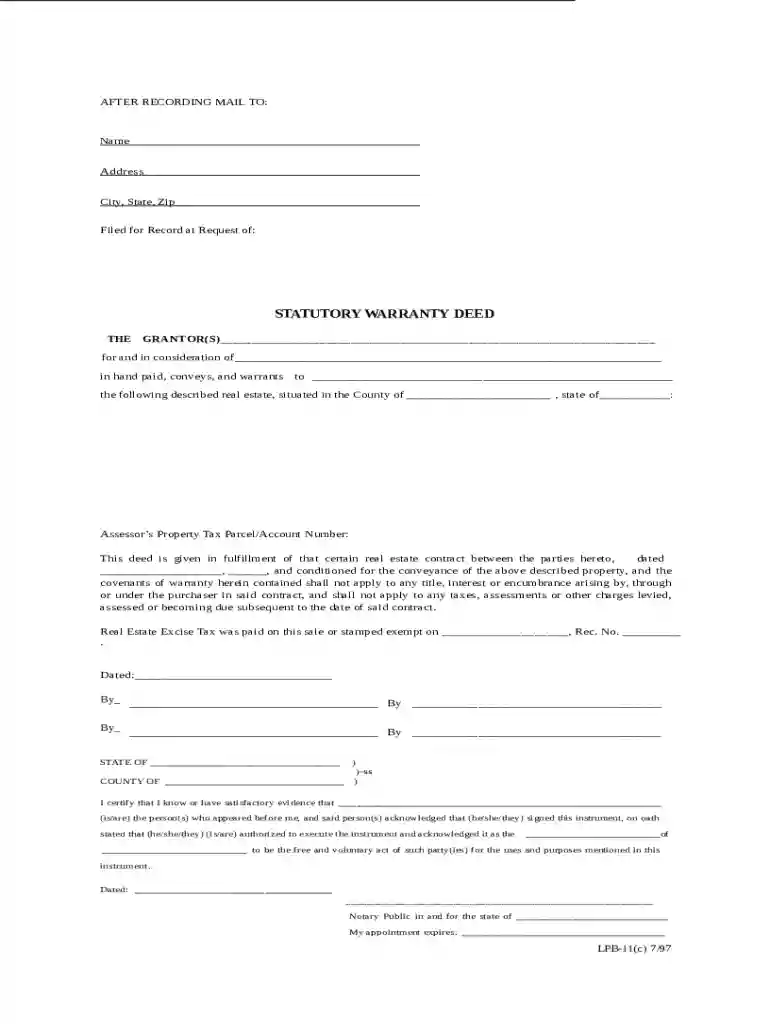
Statutory Warranty Deed Preview on Page 1

Here's how it works

01. Edit your form online
Type text, add images, blackout confidential details, add comments, highlights and more.

02. Sign it in a few clicks
Draw your signature, type it, upload its image, or use your mobile device as a signature pad.

03. Share your form with others
Send it via email, link, or fax. You can also download it, export it or print it out.

Definition & Meaning

A Statutory Warranty Deed is a legal document used in real estate transactions to transfer ownership of a property. This deed not only conveys the property but also offers the greatest level of protection to the buyer. It guarantees that the seller holds clear title to the property and has the legal right to transfer it. Additionally, it ensures the buyer that the property is free from any encumbrances, liens, or claims, unless explicitly mentioned in the deed.

Types of Deeds

  • General Warranty Deed: Covers the entire chain of title, offering the most buyer protection.
  • Special Warranty Deed: Limits the warranty to the period the seller owned the property.
  • Quitclaim Deed: Transfers whatever interest the seller has without guaranteeing clear title.

Key Aspects

  • Grantor and Grantee: The parties involved in the transaction.
  • Description of Property: Legal description of the property being transferred.
  • Covenants of Title: Legal promises contained in the deed.

How to Obtain the Statutory Warranty Deed

Obtaining a Statutory Warranty Deed involves a series of steps to ensure a secure and valid transaction. Buyers typically work through a real estate agent or attorney to facilitate this process.

  1. Search for Property: Identify the desired property through real estate listings.
  2. Make an Offer: Submit a purchase offer through a real estate agent.
  3. Negotiate Terms: Discuss conditions like price, repairs, and contingencies.
  4. Hire a Title Company: Engage a title company to perform a title search.
  5. Draft the Deed: Have a legal professional draft the Statutory Warranty Deed.
  6. Review and Approve: Examine the deed for accuracy and completeness.
  7. Sign the Deed: Both parties sign the deed in the presence of a notary or witnesses if required by state law.

Steps to Complete the Statutory Warranty Deed

Completing a Statutory Warranty Deed ensures the legal transfer of property and the protection of both parties' rights.

Step-by-Step Process

  1. Verify Names: Ensure the full legal names and addresses of all parties are accurate.
  2. Legal Description: Include a thorough legal description of the property.
  3. Covenants: Clearly state all warranties and covenants provided by the seller.
  4. Consideration: Specify the amount paid for the property.
  5. Execution: The grantor and a notary public or witnesses, if required, must sign.
  6. Recording the Deed: File the deed with the county recorder's office to make it public.

Why Use a Statutory Warranty Deed

A Statutory Warranty Deed provides the highest protection level for property buyers. It assures the purchaser that the property has a clean title and offers recourse if any claims or issues arise later.

Key Benefits

  • Legal Assurance: Guarantees the seller owns the property and can sell it.
  • Risk Mitigation: Reduces the risk of hidden encumbrances affecting the buyer.
  • Recourse Availability: Offers legal recourse if any title defects are discovered post-sale.

Who Typically Uses the Statutory Warranty Deed

Various entities and individuals utilize Statutory Warranty Deeds, emphasizing its popularity and importance in secure property transactions.


decoration image ratings of Dochub

Common Users

  • Homebuyers: Individuals purchasing a property with full protection against past defects.
  • Real Estate Investors: Seeking assurance of a clear title and recourse options.
  • Lenders: Require it to guarantee the property's title is free from claims.
decoration image

Important Terms Related to Statutory Warranty Deed

Understanding key terms associated with Statutory Warranty Deeds is crucial for navigating real estate transactions effectively.

Essential Terminology

  • Grantor: The person or entity transferring property ownership.
  • Grantee: The recipient of the property.
  • Encumbrance: Any claim, lien, or liability attached to property.
  • Covenant: A promise in a deed to do or not do a particular act.

Legal Use of the Statutory Warranty Deed

The Statutory Warranty Deed is used legally to offer the most comprehensive warranties concerning the property title's integrity. States may have specific legal requirements for executing these deeds, which must be adhered to for valid transactions.

Compliance and Legality

  • Notarization Requirements: Deeds often require acknowledgment by a notary.
  • State-Specific Laws: Adherence to particular state laws relating to disclosure and signing.
  • Public Record Filing: Deeds must be recorded to serve as an official public notice of a title change.

Key Elements of the Statutory Warranty Deed

Several critical elements must be present in a Statutory Warranty Deed to ensure it fulfills its intended purpose and legal obligations.

Essential Components

  • Grantor and Grantee Information: Complete details of both parties involved.
  • Legal Description of Property: Accurate and detailed property description.
  • Consideration Clause: Statement of the sale price or value exchanged.
  • Covenants of Warranty: Explicit guarantees by the grantor concerning the title's validity and freedom from objections.

State-Specific Rules for the Statutory Warranty Deed

Each state in the U.S. may impose unique requirements and rules regarding statutory warranty deeds. These stipulations can affect how deeds are prepared and processed.

Examples of State Differences

  • California: Requires acknowledgment before a notary and recording within a reasonable time.
  • Texas: Uses statutory language to create warranty deeds and mandates specific disclosures.
  • Florida: Includes a mandatory homestead exemption release when applicable.

Examples of Using the Statutory Warranty Deed

Practical examples of using Statutory Warranty Deeds highlight their application and the protection they provide in real estate transactions.

Real-World Scenarios

  • Residential Home Purchase: A first-time homebuyer in Texas uses a statutory warranty deed and is reassured the builder had no rights to place additional liens post-transaction.
  • Investment Properties: An investor buying multiple properties acquires statutory warranty deeds to ensure clear titles and potential future sales benefits.
  • Family Transfers: A parent transferring a home to a child uses a statutory warranty deed to affirm there are no outstanding claims that might affect ownership.

These sections offer a thorough understanding of the Statutory Warranty Deed, ensuring both comprehensive knowledge and practical guidance on utilizing these critical legal documents in real estate.

be ready to get more

Complete this form in 5 minutes or less

Get form

Security and compliance

At DocHub, your data security is our priority. We follow HIPAA, SOC2, GDPR, and other standards, so you can work on your documents with confidence.

Learn more
ccpa2
pci-dss
gdpr-compliance
hipaa
soc-compliance
be ready to get more

Complete this form in 5 minutes or less

Get form