
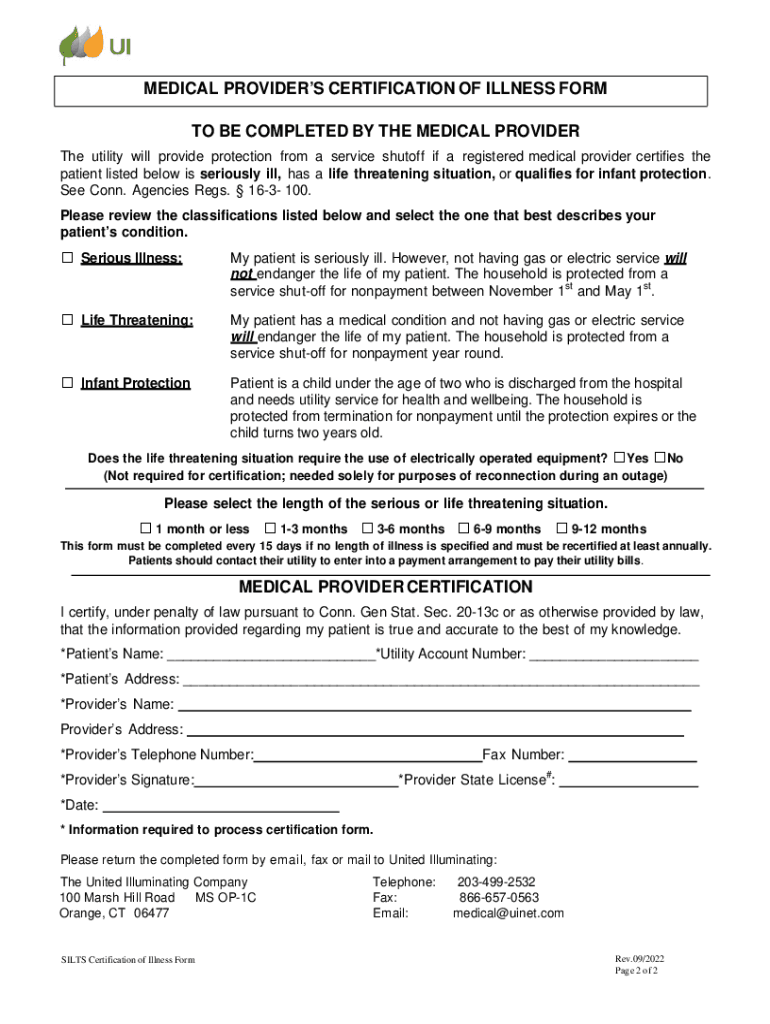







Definition & Meaning
The Medical Provider's Certification of Illness Form is a crucial document used to affirm a patient's medical condition. This form serves multiple purposes, primarily facilitating temporary protection from utility service shutoffs for individuals unable to pay due to their medical situation. Completed by a licensed medical provider, the document verifies the patient's health status, which may qualify them for specific protections or benefits under certain circumstances. It is an essential communication tool between healthcare providers and service providers, ensuring that medical needs are considered in administrative processes.
How to Use the Medical Provider's Certification of Illness Form
-
Patient Identification: Start by accurately filling in the patient's personal information, including their full name, address, date of birth, and contact details, to ensure that the form relates to the correct individual.
-
Medical Assessment: The healthcare provider must conduct a thorough examination or review the patient's medical history to confirm their illness. This section should detail the diagnosis and the expected duration of the illness, as needed for the form's purpose.
-
Certification: The medical provider certifies the information by signing and dating the form, providing their contact information, and often their medical license number. This ensures accountability and verifiability of the medical opinion presented.
-
Form Submission: Once complete, the form is typically submitted to the relevant utility company, employer, or organization requiring verification of illness. It is critical to follow specific submission guidelines, whether online, by mail, or in person.
Steps to Complete the Medical Provider's Certification of Illness Form
-
Step 1: Gather Required Information
Collect patient's details and relevant medical records. Ensure all necessary documentation is available to support the certification process. -
Step 2: Fill Out Patient Details
Enter personal information accurately, including any identification numbers or additional data required by the form specifics. -
Step 3: Complete Medical Details
The medical provider should then fill out the section requiring medical information, ensuring all fields are completed thoroughly and accurately. -
Step 4: Provider's Signature
The provider must sign the document, adding the date and any required authorization numbers. -
Step 5: Review and Submit
The completed form should be reviewed for accuracy before submission to the appropriate entity. Maintain a copy for personal records.
Who Typically Uses the Medical Provider's Certification of Illness Form
-
Patients with Chronic Illnesses: Individuals dealing with long-term health issues may need this form to ensure they receive continuous service without interruption.
-
Utility Companies: These providers often require such forms to confirm a medical reason for service continuation despite payment delays.
-
Employers: Companies might request this form to validate an employee's medical leave or adjusted work duties due to their health condition.


Key Elements of the Medical Provider's Certification of Illness Form
-
Patient Information Section: Essential for matching the certification to the correct individual.
-
Medical Diagnosis: Details of the illness, including diagnosis, treatment plan, and expected recovery time, if applicable.
-
Certification by Provider: Includes provider's signature, date, and contact information, which is crucial for the form's validity.
-
Submission Instructions: Guidance on how and where the form should be submitted, ensuring adherence to protocols.
State-Specific Rules for the Medical Provider's Certification of Illness Form
Regulations may vary by state, affecting how the form is used. Some states have specific requirements regarding who can complete the form or additional criteria for eligibility. It's important to familiarize yourself with the local regulations that pertain to the Medical Provider's Certification of Illness Form to ensure compliance and proper execution.
-
California: May have additional requirements for patient protection programs.
-
New York: Could stipulate specific health conditions that qualify for utility service continuation.
Legal Use of the Medical Provider's Certification of Illness Form
This form holds legal significance in safeguarding patient rights regarding utility services and employment. It is used as part of compliance with laws such as the Americans with Disabilities Act (ADA), which ensures that patients with qualifying medical conditions are not discriminated against in access to essential services.
Examples of Using the Medical Provider's Certification of Illness Form
-
Utility Service Continuation: A patient undergoing chemotherapy might use this form to prevent the shutoff of electricity, which is critical for their medical equipment.
-
Employer Verification: An employee diagnosed with a severe illness could use the form to validate extended sick leave or telecommuting needs.
-
Disability Applications: In instances where the form supports eligibility for temporary disability benefits, verifying the condition's severity and duration becomes imperative.
Required Documents
When dealing with the Medical Provider's Certification of Illness Form, ensure that you provide necessary accompanying documentation, such as:
-
Medical Records: Relevant excerpts that support the condition claimed in the certification.
-
Identification Proof: A copy of a driver’s license or another form of ID to verify the patient's identity.
-
Insurance Details: If applicable, providing insurance information might help in the form’s processing or relevance.




