Definition & Meaning
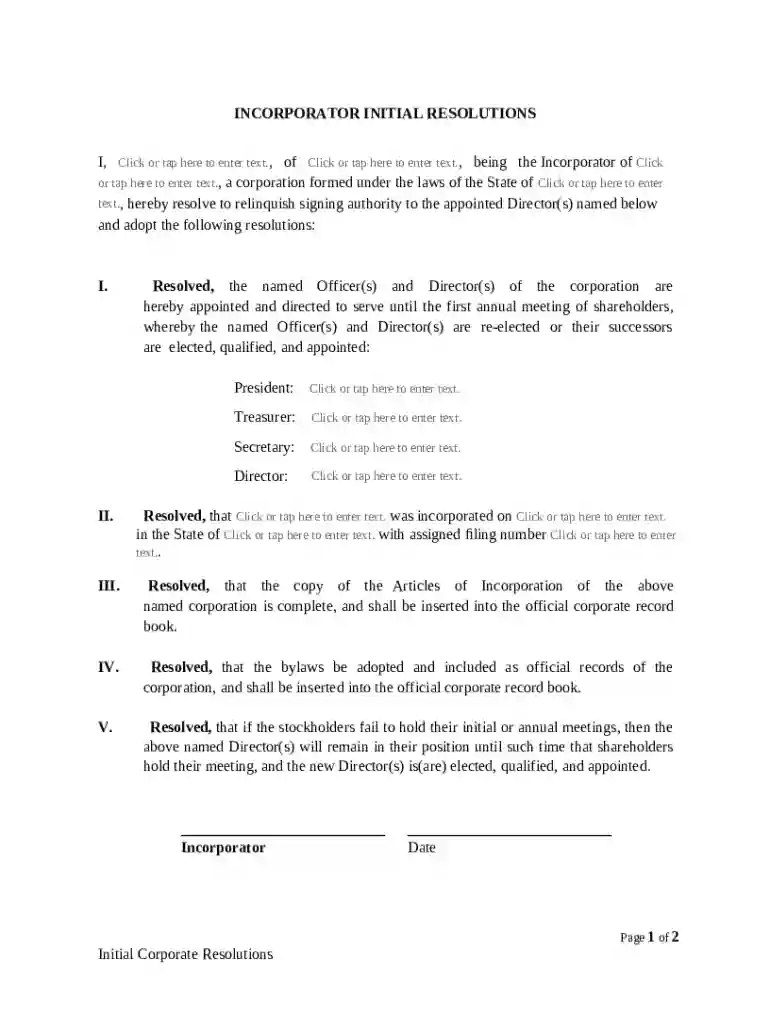
"Incorporator Initial Resolutions" refer to the formal decisions made by the incorporator of a corporation at the time of formation. These resolutions typically include the appointment of initial officers and directors, the adoption of corporate bylaws, and any other essential early decisions necessary for establishing the legal and operational framework of the corporation. These resolutions act as the first official record of corporate actions and lay the groundwork for the corporation's governance and management.
Purpose and Importance
- Establish Initial Governance: They ensure that the corporation has a clear set of guidelines and leadership structure from its inception.
- Legal Compliance: Necessary for fulfilling legal requirements and creating a documented history of the corporation's early decisions.
- Operational Foundation: Guides future corporate actions and decisions by providing a foundational structure.
Key Elements of the Incorporator Initial Resolutions
The primary components of the Incorporator Initial Resolutions include the appointment of officers, election of directors, and the adoption of bylaws. These elements are crucial for setting the direction and operational procedures of the new corporation.
Appointment of Officers
- Roles Defined: Typically includes positions such as President, Treasurer, and Secretary.
- Official Responsibilities: Officers are assigned specific duties that align with the corporation's goals and strategic plan.
Election of Directors
- Board Structure: Defines the composition and structure of the board of directors.
- Decision-Making Authority: Directors are granted the authority to make significant corporate decisions and oversee the corporation's activities.
Adoption of Bylaws
- Rules and Procedures: Bylaws provide a framework for how the corporation will be run, including meeting procedures and voting rights.
- Amendment Processes: Outlines how changes to the bylaws can be made, ensuring flexibility and adaptability as the corporation grows.
Steps to Complete the Incorporator Initial Resolutions
Completing Incorporator Initial Resolutions involves several key steps that ensure the formation process is thorough and compliant with legal requirements.
- Drafting Resolutions: Start by drafting resolutions that detail the decisions to be made, including the selection of officers and the adoption of bylaws.
- Approval by Incorporator: The incorporator reviews and formally approves the resolutions to ensure all necessary decisions align with the corporation’s objectives.
- Document Execution: Have the incorporator sign the resolutions to legally formalize the decisions. This step is essential for creating a binding record.
- Filing with State Authorities: Depending on your state’s requirements, submit the resolutions as part of the incorporation documents or keep them as part of your internal records.
Examples of Resolutions
- Appointment of Initial Board of Directors: A resolution formally naming the individuals serving on the initial board.
- Adoption of Corporate Bylaws: Specific language detailing the adoption of an initial set of bylaws.
Legal Use of the Incorporator Initial Resolutions
Incorporator Initial Resolutions are legally significant as they establish the corporation’s authority and governance structure from the onset.
Legislative Framework
- Corporate Guidelines: These resolutions should adhere to state corporate laws, ensuring that the corporation's foundational decisions are within legal parameters.
- Formal Authorization: They provide formal documentation that the corporation is authorized to conduct business and make decisions.
Real-World Compliance
- Documentation Proof: Often required during audits, business dealings, or legal proceedings to show the corporation's legitimacy and governance.
- Validation of Actions: Helps in validating decisions made by officers and directors as authorized actions within their roles.
State-Specific Rules for the Incorporator Initial Resolutions
Different states may have varying requirements and guidelines for the Incorporator Initial Resolutions. It is crucial to be aware of these variations to ensure proper compliance.
Common State Variations
- Resolution Content: Some states may specify additional content or decisions that must be included in the resolutions.
- Filing Requirements: While some states require filing with the Secretary of State, others may not, altering how and where these documents are stored.
Importance of Local Compliance
- Consult with Legal Experts: Given the potential complexity of state laws, consulting with a legal advisor familiar with local requirements can prevent compliance issues.
- Tailoring Resolutions: Customize the initial resolutions to accommodate state-specific mandates, which preserves legal standing and corporate validity.
Key Users
- Incorporator: The individual or entity responsible for establishing the corporation and executing the initial paperwork.
- Legal Advisors: Attorneys often assist in drafting and reviewing these resolutions to ensure they meet legal standards and effectively support corporate governance.
Broader Applications
- Corporate Management: Once established, these resolutions guide new corporate officers and directors in understanding their roles and responsibilities.
Examples of Using the Incorporator Initial Resolutions
To better understand the utility and application of Incorporator Initial Resolutions, consider these scenarios:
Scenario 1: Startup Company Formation
- Situation: A group of entrepreneurs establishes a tech startup. The incorporator uses the initial resolutions to appoint a CEO, adopt initial bylaws, and create a board of directors.
- Outcome: The resolutions set the operational and governance framework, enabling the company to start business operations seamlessly.
Scenario 2: Multistate Corporation
- Situation: A company plans to register in multiple states. The incorporator drafts resolutions that cater to the primary state but smartly references bylaws to comply with all relevant state mandates.
- Outcome: This ensures legal compliance across jurisdictions and supports streamlined corporate governance.
Scenario 3: Evolution of a Nonprofit Organization
- Situation: A nonprofit wishes to incorporate to receive tax-exempt status. Initial resolutions are used to appoint a board and adopt bylaws essential for IRS compliance.
- Outcome: The organization is structured to pursue its mission effectively while satisfying regulatory requirements.
Combining legal adherence, corporate governance, and strategic planning, the Incorporator Initial Resolutions are essential for the smooth inception and operation of new corporations.