






Definition & Meaning
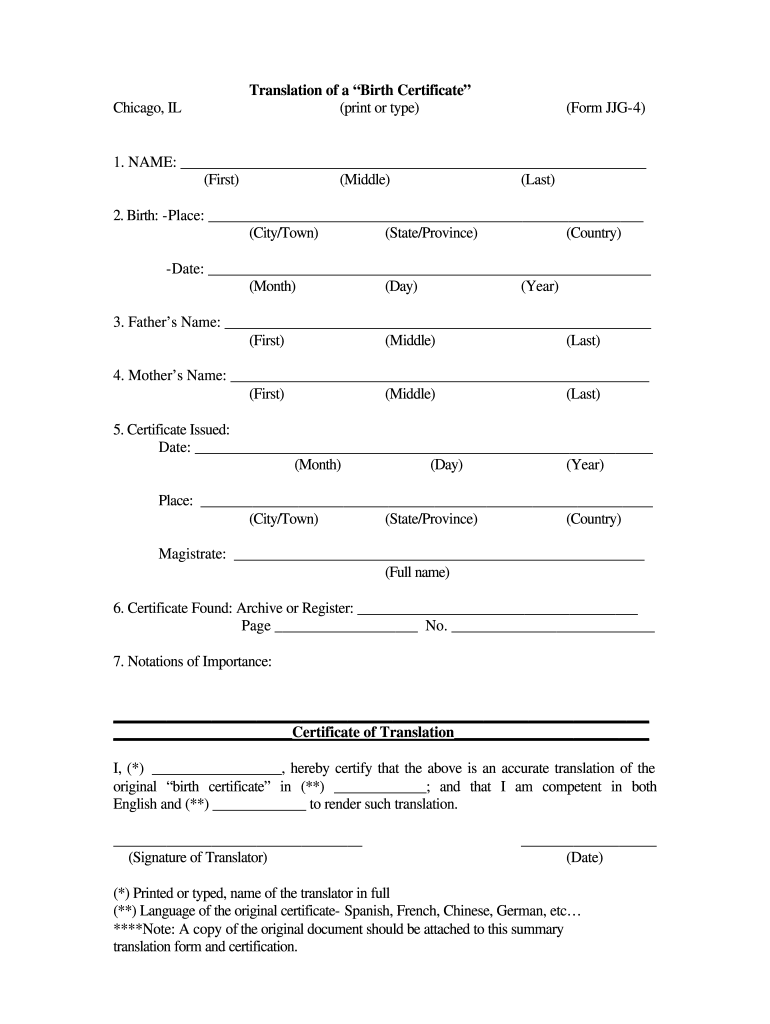
A Birth Certificate Translation Form is used to officially transcribe the details of a birth certificate from one language to another, ensuring that all vital information is accurately reflected in the target language. This form is essential for legal clarity, allowing individuals born in non-English-speaking countries to present their birth information in English for official purposes. It includes translations of the individual's name, birth date, place of birth, and parental information.
How to Use the Birth Certificate Translation Form
To utilize the Birth Certificate Translation Form effectively, follow these steps:
-
Obtain the Original Birth Certificate: Ensure that you have a clear and legible copy of the original birth certificate requiring translation.
-
Select a Certified Translator: Choose a qualified translator who is certified to translate legal documents. For official use, translations often require a certified translator's statement of accuracy.
-
Complete the Translation Form: Accurately fill out the translation form, including all pertinent details found on the original birth certificate. Ensure that every field reflects the corresponding translated information.
-
Review and Certify: The translator must review the completed form for accuracy and certify it, as required by many agencies, to validate the translation's accuracy and completeness.
-
Submit to the Relevant Authorities: Submit the translated document alongside the original birth certificate to the appropriate institution or authority, as instructed.
Steps to Complete the Birth Certificate Translation Form
Completing the Birth Certificate Translation Form involves several detailed steps, which ensure that the translated document is both accurate and legally acceptable.
-
Gather Necessary Information: Collect all the information from the original birth certificate, including the individual's full name, parents' names, birth date, and place of birth.
-
Fill Out the Personal Information: Enter the individual's personal details into the translation form, ensuring the translated names and dates match the original document.
-
Transcribe Parental Information: Carefully translate and input the parental information — including names and birthplaces — into the form.
-
Provide Additional Details: Some forms may require additional data, such as registration numbers or other identifiers found on the birth certificate.
-
Certification and Signatures: The translator must sign the form, affirming the translation's accuracy, and, in some cases, the form may need notarization depending on its use.
Key Elements of the Birth Certificate Translation Form
The Birth Certificate Translation Form contains several crucial elements that must be addressed to ensure completeness:
- Personal Details: Full legal names, birth date, and birthplace of the individual.
- Parental Information: Names and birthplaces of both parents.
- Certification Statement: A declaration that verifies the translator's proficiency and the accuracy of the translation.
- Translators Details: Contact information and credentials of the translator, including their certification number if applicable.
Legal Use of the Birth Certificate Translation Form
The legal use of a Birth Certificate Translation Form typically involves scenarios where an individual needs to provide their birth details in a language different than the original for government, educational, or employment purposes. Legal uses include:
- Immigration Applications: Legal residency or visa applications often require English translations of vital documents.
- School Enrollment: Educational institutions may require English-translated birth certificates for enrollment.
- Employment Verification: Employers might need translated documents to verify identity and eligibility.
Who Typically Uses the Birth Certificate Translation Form
This form is commonly used by:
- Immigrants: Individuals applying for residency or citizenship who need to present their birth details in English.
- Students: Non-English speakers enrolling in U.S.-based schools or universities.
- Employers and HR Professionals: Organizations that require verified identity documents within legal and compliance processes.
- Government Agencies: Departments processing legal documents for domestic or international applications.


State-Specific Rules for the Birth Certificate Translation Form
Though generally standardized, some states may impose additional regulations regarding the translation and submission of these forms:
- Certification Requirements: Some states require the translator to be certified by a recognized authority or translated documents to be notarized.
- Submission Guidelines: States may differ in whether they accept electronic submissions or only paper forms.
- Additional Documentation: Certain states may request supplemental documents, such as affidavits, to accompany the translated form.
Important Terms Related to Birth Certificate Translation Form
Understanding key terms related to the Birth Certificate Translation Form can aid in accurate completion:
- Certified Translation: A translation accompanied by a signed statement attesting to its accuracy and completeness.
- Notarization: A formal process involving a notary public who certifies the authenticity and witnessing of signatures.
- Affidavit: A written statement confirmed by oath or affirmation, for use as evidence in court, often required with translations for legal verifications.