




01. Edit your form online
Type text, add images, blackout confidential details, add comments, highlights and more.

Type text, add images, blackout confidential details, add comments, highlights and more.

Draw your signature, type it, upload its image, or use your mobile device as a signature pad.

Send it via email, link, or fax. You can also download it, export it or print it out.
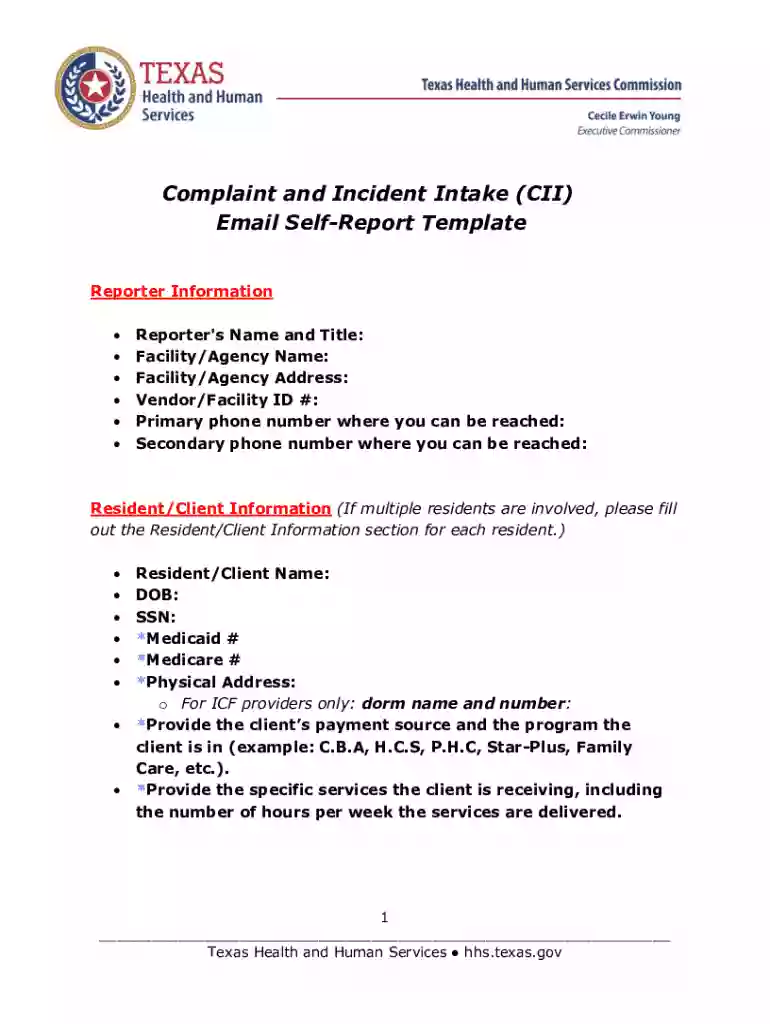
The Complaint and Incident Intake Form (CII) serves as a critical tool for documenting grievances, complaints, or incidents that occur within an organization or facility. This form captures detailed information about the nature of the complaint or incident, including the parties involved, the date and time of occurrence, and a description of the events. The purpose of this form is to create a formal record that can be reviewed and investigated. By providing a structured way to collect this information, organizations can ensure that all necessary details are captured, which supports effective resolution and accountability.
Using the Complaint and Incident Intake Form requires careful attention to detail to ensure that all relevant information is accurately captured. Start by collecting reporter details, including their name, title, and contact information. Proceed to document specific information about the complaint or incident, such as the date, time, and location. Utilize the form's sections for detailed incident descriptions and include any supporting materials or evidence. It's crucial to follow any provided guidelines about how and when to submit the form after completion.
Collect Reporter Information:
Describe the Incident:
Involve Additional Parties:
Evidence and Documentation:
The Complaint and Incident Intake Form comprises several critical components designed to ensure comprehensive documentation. Key elements include:
The Complaint and Incident Intake Form carries significant legal implications, serving as an official record that may be used in investigations or legal proceedings. It is crucial to ensure that all information entered into the form is truthful and comprehensive. The form can help protect both the organization and the complainant by creating a documented trail that proves proper procedure was followed. Adherence to privacy regulations is necessary when handling personal data contained within the form.
The primary users of the Complaint and Incident Intake Form include:
This form is essential in environments where accurate documentation of complaints and incidents is needed to maintain operational integrity and legal compliance.


While the general format of the Complaint and Incident Intake Form may remain consistent, state-specific regulations can affect its usage. Different states may have varying requirements regarding the timeframes for submission and retention periods. It is imperative to consult local laws and company policies when handling such forms to ensure compliance. Considerations about mandatory reporting, privacy laws, and the protection of sensitive information are particularly important.
Completing the Complaint and Incident Intake Form involves several systematic steps to ensure all pertinent information is captured accurately:
Prepare Required Information:
Fill out the Form:
Review for Completeness:
Submit the Form:
Real-world scenarios where the Complaint and Incident Intake Form is integral include:
By using this form in various scenarios, organizations can manage and resolve issues efficiently, minimizing the risk of future occurrences and safeguarding organizational reputation.
At DocHub, your data security is our priority. We follow HIPAA, SOC2, GDPR, and other standards, so you can work on your documents with confidence.




Complaint and Incident Intake. Call 800-458-9858 to report complaints about the care or treatment of someone served by a Regulatory ServicesRead more
Jun 3, 2014 Transporting officials will only accept an inmate who has a health record review documenting no evidence of medical complaints/symptomsRead more
Please provide a detailed explanation of the alleged violation/incident to include information about exactly what the subject/s of the complaint did thatRead more


